TL;DR
The Web3 market now includes more than one company type. Some firms build full products. Some focus on smart contract security. Others provide core infrastructure. That is why this list includes agencies, security leaders, and platform players, not only classic software studios.
TokenMinds stands out for enterprise-grade Web3 adoption with a clear finance angle. Consensys brings deep Ethereum and institutional infrastructure depth. OpenZeppelin leads in smart contract security. LeewayHertz adds AI and blockchain crossover depth. Alchemy powers large-scale developer infrastructure. Antier Solutions adds full-service blockchain product delivery across tokenization, dApps, and smart contracts. Appinventiv brings broad product engineering strength with blockchain delivery capabilities.
This article helps buyers narrow the field faster. It shows what each web3 development company is actually best at. It also shows which partner fits best. It then highlights the stronger options for enterprise blockchain delivery and Web3 infrastructure.
Best Web3 Development Companies in 2026 Overview
These Web3 development companies bring different strengths to the market. Some are known for blockchain development and dApp delivery. Others stand out in smart contract security, developer infrastructure, or enterprise-grade Web3 solutions.
Company | Specialty | Best Fit For |
TokenMinds | Finance-focused Web3 builds, tokenization, agentic payments, smart contracts | Banks, fintechs, tokenization teams, enterprise Web3 rollout |
Consensys | Ethereum infrastructure, enterprise blockchain, developer stack | Institutions building on Ethereum or needing deep protocol alignment |
OpenZeppelin | Smart contract standards, audits, onchain security | Protocols, tokenized asset issuers, teams needing strong contract assurance |
LeewayHertz | AI plus blockchain development, enterprise delivery models | Firms that want AI features inside a Web3 product roadmap |
Alchemy | Blockchain developer infrastructure and APIs | Teams that need scale, uptime, and faster onchain product delivery |
Antier Solutions | Custom blockchain development, smart contracts, tokenization, dApps | Businesses that need a full-service Web3 build partner across product, engineering, and launch |
Appinventiv | Large-scale product engineering with blockchain services | Enterprises needing a large delivery team and broader product scope |
What is a Web3 Development Company?
A web3 development company builds digital products on blockchain networks. Its work often includes smart contract development, dApp development, and wallet integration. They also help with tokenization and other Web3 infrastructure. Many blockchain development companies also support architecture, security, and post-launch maintenance. What sets them apart is their ability to handle onchain logic, digital assets, and protocol-level integration.
Web3 Development Landscape in 2026
Web3 has moved beyond experimentation. Fortune Business Insights projects the blockchain market at $47.96 billion in 2026. The World Economic Forum also expressed positive predictions. 2026 marks a turning point for digital assets and blockchain adoption in the enterprise. That's why more and more companies are now exploring Web3 products, tokenization, and digital payments.
Top Web3 Development Companies in 2026 Breakdown
1. TokenMinds
Headquarter | Singapore |
Founded | 2017 |
Best fit for | Banks, fintechs, regulated firms, and enterprises that need structured blockchain development |
Notable client | Khan Bank, UXLINK, Bitget, KuKoin |
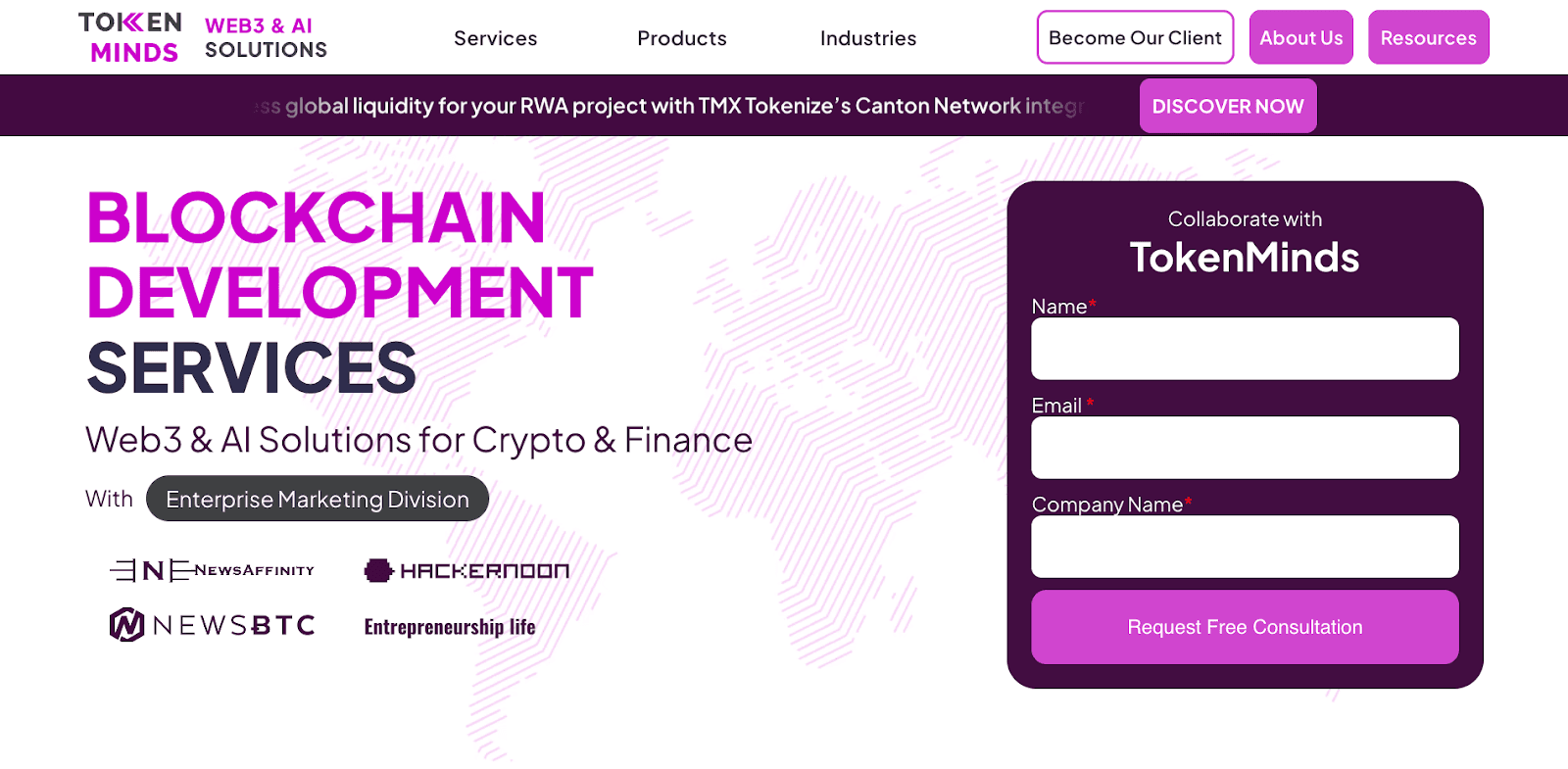
TokenMinds focuses on enterprise-grade blockchain development. The team helps companies move from traditional systems into Web3 environments. That makes TokenMinds a strong fit for asset tokenization and financial infrastructure projects. The company also offers TMX Tokenize, a platform built to manage the tokenization lifecycle. It supports compliance controls, reporting needs, and integration with existing financial systems.
TokenMinds also helps financial institutions adopt blockchain in a more practical way. Its services include DeFi integration that works with existing financial infrastructure. This setup can improve cash management and payment workflows. It also helps institutions launch new products without replacing core systems.
Beyond blockchain delivery, TokenMinds also builds AI systems for finance. These systems support digital asset management and risk monitoring. Through TMX Agentic Finance, TokenMinds helps automate payments, loans, and client interactions. This gives institutions a more secure and scalable path into Web3.
2. Consensys
Headquarter | Fort Worth, Texas |
Founded | 2014 |
Best fit for | Ethereum-native infrastructure, enterprise blockchain, institutional pilots |
Notable client | Swift |
Consensys is one of the most recognized names in the Ethereum market. The company says it builds infrastructure for consumers, developers, enterprises, and protocols. Its stack includes MetaMask, developer tools, enterprise software, staking, and protocol services. This broad reach gives it strong weight in any Web3 development company comparison.
Consensys is especially relevant for institutions that already see Ethereum as a core part of their roadmap. This includes tokenized asset pilots, digital money programs, and enterprise blockchain projects. These use cases often need deeper Ethereum expertise than a general software vendor can offer. Its work with Swift supports that institutional profile.
3. OpenZeppelin
Headquarter | Distributed organization |
Founded | 2015 |
Best fit for | Smart contract development standards, audits, tokenized asset security, on-chain operations. |
Notable client | Coinbase |
OpenZeppelin plays a different role from most blockchain development companies. It does not focus on full product delivery. It focuses on contract standards, security reviews, and tools for on-chain systems. That is why it remains a key name in this market.
OpenZeppelin is a strong fit when contract security is the main concern. Stablecoin issuers, DeFi protocols, and financial institutions often need that support. OpenZeppelin Contracts are used by 9 of the top 10 stablecoins. They are also used by 10 of the top 10 tokenized funds by market cap. This strengthens its role in on-chain finance.
4. LeewayHertz
Headquarter | San Francisco, California |
Founded | 2007 |
Best fit for | AI-enabled Web3 products, blockchain plus automation, enterprise digital builds |
Notable client | 3M |
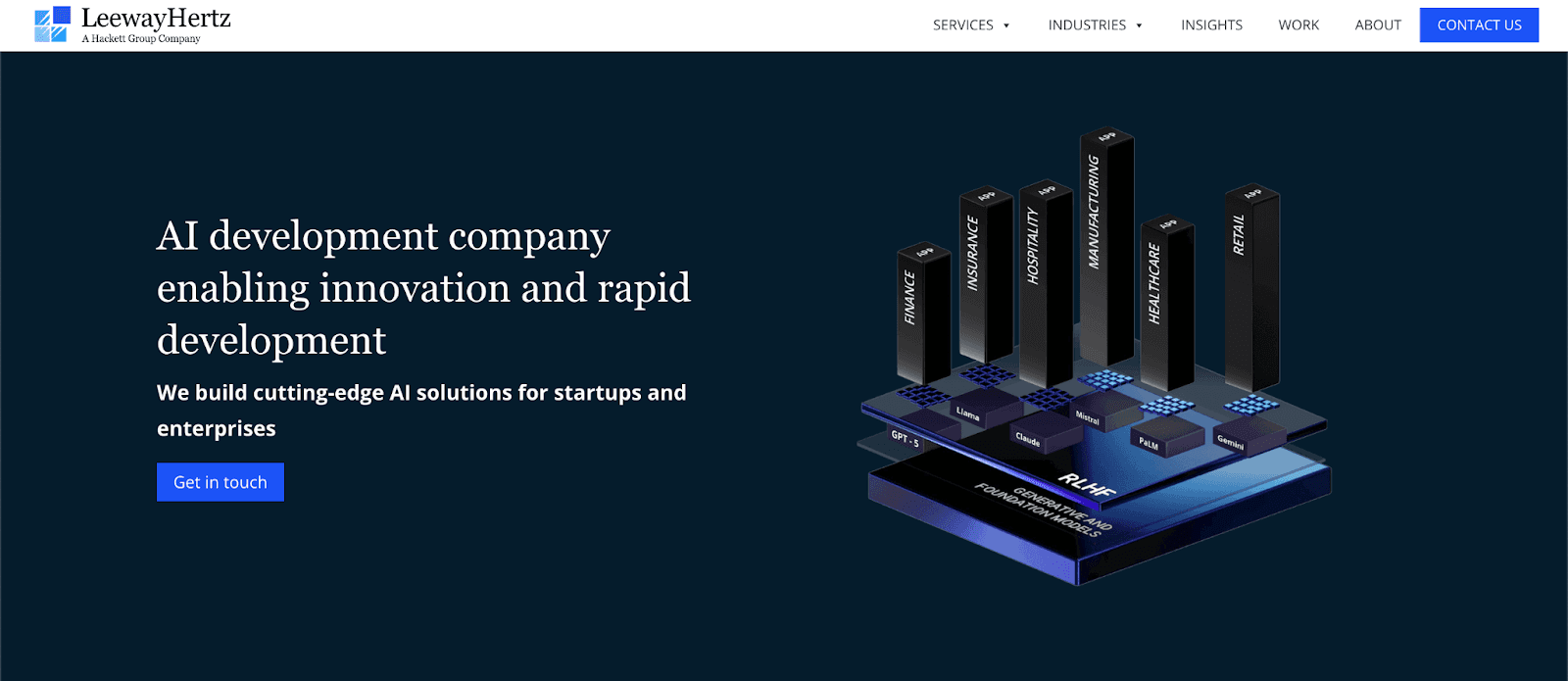
LeewayHertz adds variety to this list because it works across both AI and blockchain. Its current positioning leans more toward enterprise AI. Even so, its work still includes blockchain product delivery. Also with the project execution and engineering support for decentralized systems. That makes it a relevant option for buyers who want AI features inside a Web3 roadmap, not just a blockchain-only build.
LeewayHertz is not the most Web3-focused company on this list. That can also be a strength. Some buyers need AI agents, analytics, or automation inside a blockchain product. For them, this crossover model may be more useful than a narrower smart contract studio.
5. Alchemy
Headquarter | San Francisco, California |
Founded | 2017 |
Pricing | Free from $0. Pay as you go from $5. |
Best fit for | High-scale dApp infrastructure, blockchain APIs, faster product delivery |
Notable client | Visa |
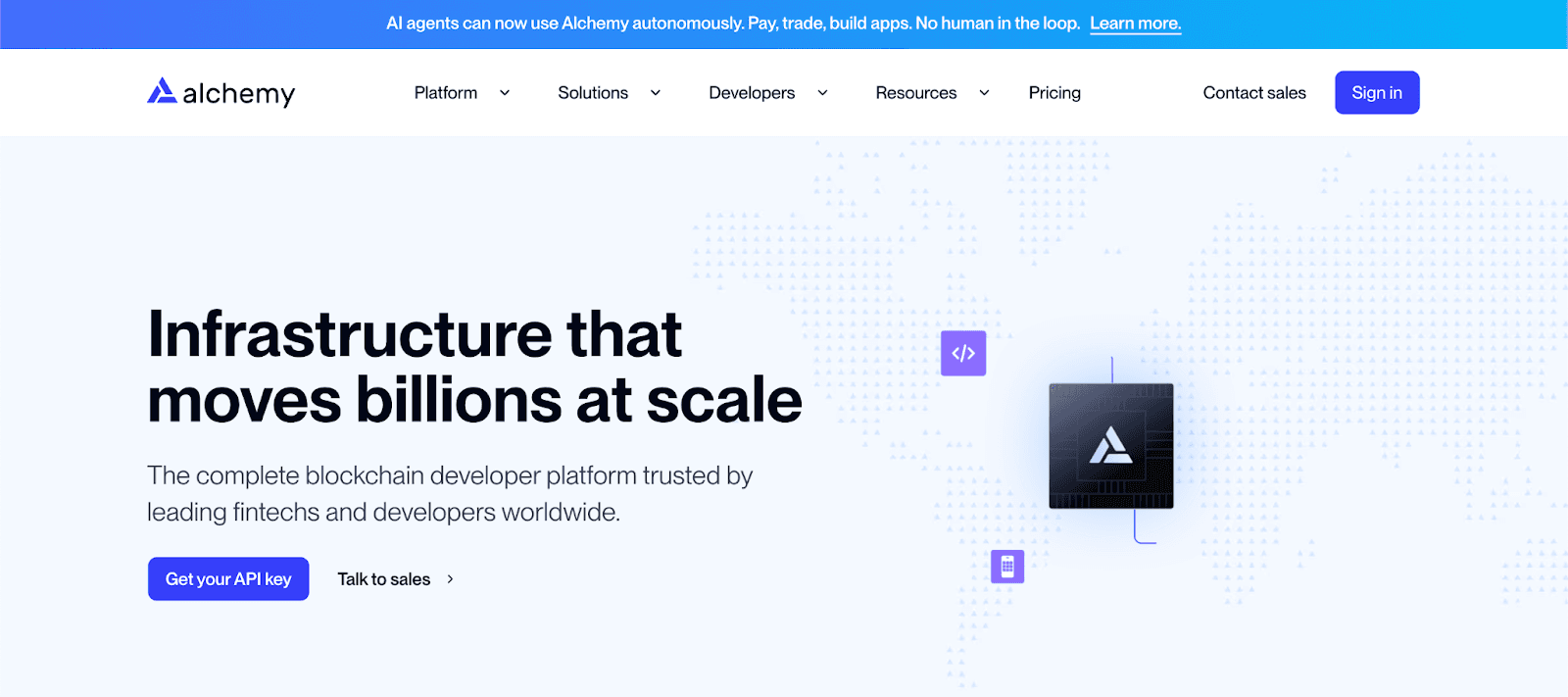
Alchemy is different from a typical custom build agency. It works as a blockchain developer platform. That difference matters. Buyers do not choose Alchemy for end-to-end product strategy. They use it to speed up development and improve reliability. They can help to avoid rebuilding node and API infrastructure from scratch.
Alchemy is best viewed as infrastructure, not outsourced engineering. That still makes it one of the most important vendors in this space. Some teams already have product strategy and smart contract direction. What they need is uptime, APIs, monitoring, and developer tools at scale. In that case, Alchemy can be more useful than a general blockchain development company.
6. Antier Solutions
Headquarter | Sahibzada Ajit Singh Nagar, India |
Founded | 2011 |
Best fit for | Custom blockchain builds, tokenization platforms, smart contracts, and dApps |
Notable client | Cardax |
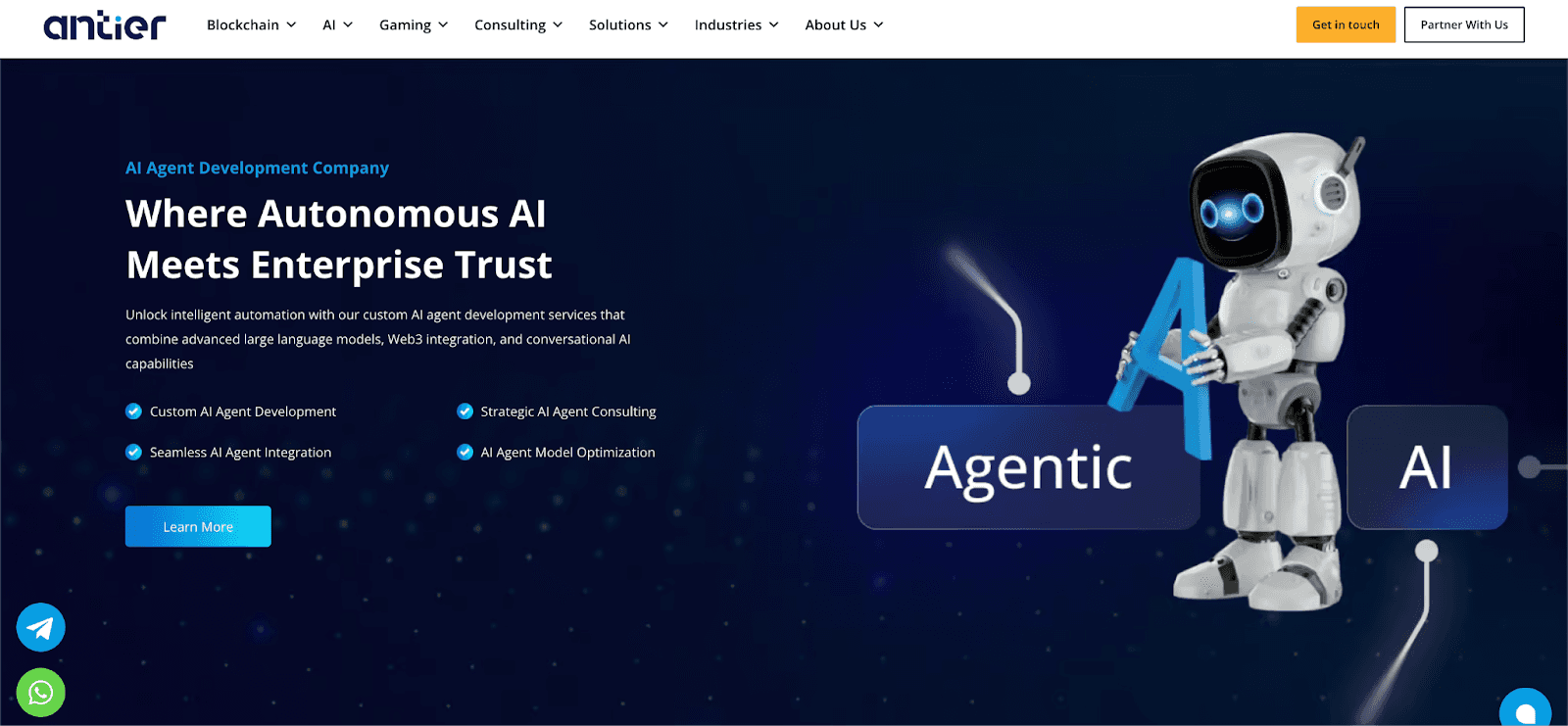
Antier Solutions fits this ranking well. It works as a blockchain development company for startups and enterprises. Its work covers tokenization, exchanges, gaming, rollups, smart accounts, and digital asset infrastructure.
Antier fits buyers who want a more traditional blockchain development company. It can support strategy and product design. It also covers smart contracts, platform development, and implementation. This makes it a practical choice for businesses that want end-to-end Web3 delivery.
7. Appinventiv
Headquarter | Noida, Uttar Pradesh |
Founded | 2015 |
Pricing | $50,000+ min project size |
Best fit for | Large-scale product engineering, enterprise dApps, broader digital transformation programs |
Notable client | Adidas |
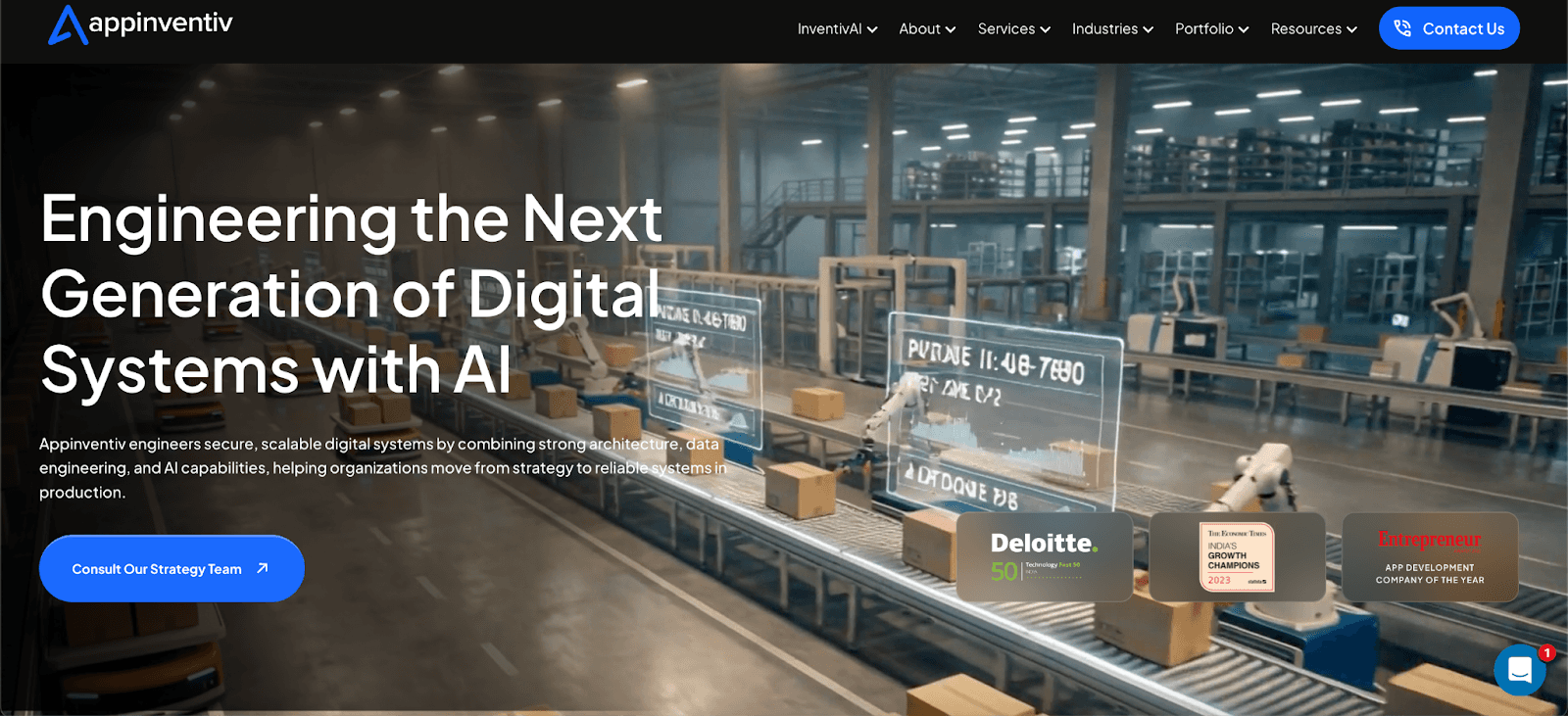
Appinventiv enters this list from a broader product engineering angle. It is not as Web3-native as Consensys or OpenZeppelin. Still, it has the scale, delivery reach, and dedicated blockchain service pages that many enterprise buyers look for. Its blockchain offering sits within a larger engineering service model.
Appinventiv is the best fit here for buyers who need a large engineering partner first. Blockchain capability comes second. Its blockchain development services cover dApps, wallet development and other blockchain work.
How to Choose the Best Web3 Development Company as a Partner
Start with the business model first
Do not choose a partner based on brand name alone. A tokenization platform needs a different web3 development company than a wallet launch. A smart contract-heavy protocol also needs a different partner than a consumer dApp.
Check where the main risk sits
If smart contract development is the main risk, OpenZeppelin should move up the shortlist. If Web3 infrastructure is the bigger concern, Alchemy becomes more relevant. If the challenge includes finance and enterprise blockchain rollout. TokenMinds and Consensys may be a better fit.
Separate builders from platform providers
Some blockchain development companies can own more delivery scope. TokenMinds, Appinventiv, and Antier fit that model better. Others support a narrower layer. Alchemy supports blockchain infrastructure. OpenZeppelin strengthens the contract layer.
Match the partner to your internal team
Some companies need full support across strategy, product design, and delivery. Others only need help with dApp development, blockchain integration, or security review. The right web3 development company depends on how much your internal team can already handle.
Compare service scope
Some blockchain development companies focus on full product delivery. Others focus on smart contract security, wallet development, or protocol tools. Buyers should shortlist partners based on scope. Also internal team maturity and long-term support needs.
Services a Web3 Development Company Should Have
A strong web3 development company should offer more than one technical skill. The best firms usually cover both product delivery and blockchain execution. That helps companies move faster and avoid fragmented vendor support.
Key web3 development services to look for include:
Smart contract development
This covers the logic that runs on-chain. It often includes tokens, payments, staking, and asset workflows.
dApp development
This focuses on user-facing blockchain products. It includes front-end, back-end, wallet connection, and on-chain interaction.
Tokenization services
This helps companies turn real or digital assets into blockchain-based instruments. It often includes issuance, lifecycle management, and compliance support.
Wallet development
This includes custodial and non-custodial wallet solutions. It also covers secure asset access and transaction signing.
Blockchain consulting
This helps teams choose the right chain, architecture, and rollout model. It is important for companies moving from Web2 systems into Web3.
NFT marketplace development
This covers minting, trading, royalties, wallet integration, and marketplace logic. It is still relevant for brands, gaming, and digital ownership models.
Tech Stack and Blockchains Covered
A strong Web3 development company should support more than one chain and toolset. That gives clients more flexibility during product planning and rollout.
Common blockchains and technologies include:
Ethereum
Often used for smart contracts, DeFi, and tokenization.
Polygon
Often used for scalable dApps and lower-cost transactions.
Solana
Often used for high-speed applications and consumer-facing products.
Solidity
A core language for Ethereum-based smart contract development.
Rust
Commonly used for Solana and other performance-focused blockchain systems.
IPFS
Used for decentralized file storage and content hosting.
Chainlink
Used for oracle services and real-world data feeds.
This matters because blockchain development services often depend on the right stack choice. The best Web3 development company should match the tech stack to the product goal. ALso with the security needs and user scale.
Benefits of Hiring a Web3 Development Company
A web3 company can be hired to minimize the risk of delivery. It is also able to accelerate execution. Key benefits include:
Faster time-to-market
Seasoned teams will be able to progress to construction quicker.
Security expertise
Powerful partners are familiar with smart contracts, audits, and onchain risks.
Better cost efficiency
This may be more viable as compared to creating a complete in house blockchain team.
Access to specialists
Firms are exposed to blockchain developers, architects and Web3 product experts.
Final Thoughts
The best web3 development company in 2026 depends on the actual job. TokenMinds is the best fit for finance-led Web3 adoption, tokenization, and payment-related builds. Consensys is the strongest Ethereum and institutional infrastructure name. Hedera is a serious network choice for compliant enterprise applications. OpenZeppelin is the clear security specialist. LeewayHertz adds AI and blockchain depth. Alchemy leads in developer infrastructure. Appinventiv fits large-scale product engineering needs.
That is why this market should not be read as a list of interchangeable blockchain development companies. Each player above solves a different problem. The smartest shortlist starts with the use case, the stack, and the delivery gap. Then the ranking becomes much easier to act on.
Transition to Web3 with TokenMinds
TokenMinds supports institutions, enterprises, and web3 projects in implementing Web3 technology.
Explore the TokenMinds Web3 and blickchain development services page. Or schedule a free consultation to discuss your enterprise AI implementation roadmap.
FAQs on Web3 Development Company
What does a Web3 development company do?
A web3 development company builds blockchain-based products. This can include smart contracts, dApps, wallets, tokenization platforms, and Web3 infrastructure.
How do I choose the best Web3 development company?
Start with the business goal first. Then compare each company by technical focus, industry fit, security depth, and delivery scope.
How long does Web3 development take?
The timeline depends on the product scope. A simple build may take a few weeks, while a larger platform can take several months.
What industries use Web3 development services?
Finance, gaming, retail, real estate, and supply chain use Web3 development services. More companies also use them for payments, tokenization, and digital asset products