

BLOCKCHAIN AND AI SOLUTIONS FOR TRADE FINANCE
Web3 & AI Solutions for Crypto & Finance


 Entrepreneurship Life
Blockchain in Trade Finance
Trade finance can be described as a blockchain that integrates banks, traders and logistics on the same workflow. It aligns document status, approval and signatures among all participants.
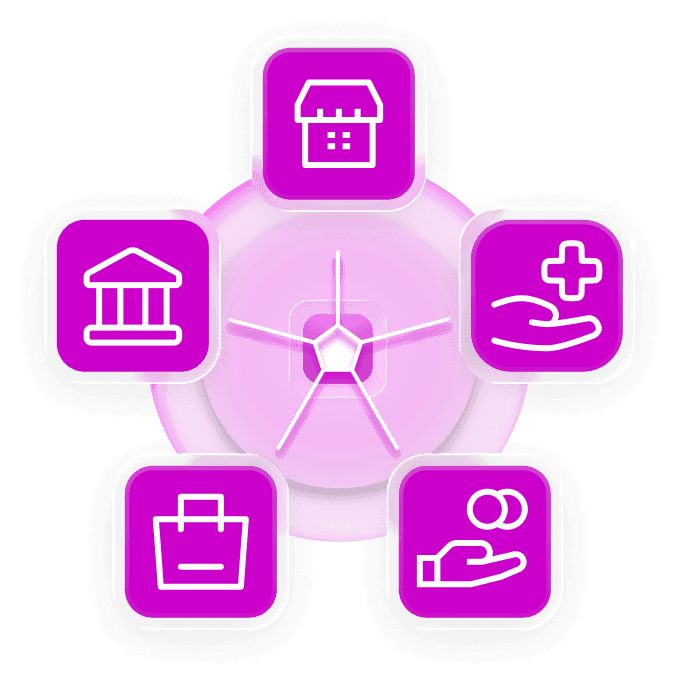
What TokenMinds Builds for Trade Finance Teams
Our blockchain and ai solutions support shared workflows, document control, and governance.
Blockchain Modules
Event Settlement
Trigger settlement when verified shipment, delivery, or quality events occur.
Smart Escrow
Lock funds on-chain until agreed conditions get verified.
Obligation Automation
Automate LC-like obligations using predefined execution rules and timelines.
Protection Contracts
Pay guarantees and trade cover when objective breach conditions validate.
Receivables Tokens
Tokenize invoices and route repayment to receivable holders automatically.
Oracles and Indexing
Verify off-chain events and index contract logs for reporting.
AI Modules
Document Extraction
Extract invoice and delivery fields into structured trade records.
Exception Triage
Flag mismatches and route cases to the right operations queue
Awards
Ranked Where Investors Read, Every Year Since 2019
- HackerNoonTop token-sale marketing firms2019
- NewsAffinityBest crypto marketing firms2020
- NewsBTCBest crypto and NFT agencies2022
- Entrepreneurship Life#1 of the top 5 Web3 agencies2023
- MSNTop blockchain development companies2024
- CoinrankingTop AI agent development companies2025
- FinboldMost innovative blockchain companies2026
End-to-End Trade Flow with Blockchain in Trade Finance
Share trade documents across participants with permissioned access.
- 1
Agree Terms
Buyer and seller confirm terms and required documents.
- 2
Request Financing
Seller applies for bank-backed payment or receivables finance online.
- 3
Share Documents
Participants submit documents and approvals on a shared ledger.
- 4
Encode Rules
Smart contracts encode commercial and shipping terms for the deal.
- 5
Update Shipment
Logistics updates shipment status as goods move and arrive.
- 6
Trigger Settlement
Contracts trigger payment notifications when conditions are met.
- 7
Record Audit Trail
Events keep timestamps and signatures for audit and dispute review.
- 8
AI Support
Extract invoice fields and flag missing data before approvals.
Blockchain Solutions for Freight Invoice Settlement and Financing
Support AR settlement and working capital across 30–60 day payment terms.
On-Chain Invoice Records
Record invoice status and approvals on a shared ledger.
Tokenized Receivables
Tokenize approved invoices as transferable payment claims.
Invoice Financing Flows
Route receivable claims to approved financing partners.
Event-Based Settlement
Trigger settlement after verified payment or delivery events.
Transfer Controls
Enforce eligibility rules for every claim transfer.
Use Case: Freight Invoice Settlement Workflow
Using blockchain, freight invoices can settle in one to two business days. Traditional payment delays create a gap that forces costly workarounds.

Blockchain Path
- 1
Book shipment
- 2
Lock funds in Smart Escrow
- 3
Deliver goods
- 4
Submit Delivery Event
- 5
Verify via Oracle
- 6
Release payment in 1–2 business days
- 7
Keep Audit Trail on ledger
Traditional
- 1
Define use case and data boundaries
- 2
Wait 30–180 days
- 3
Sell invoice to a factor
- 4
Get paid in ~10 days
- 5
Pay factoring fees


Blockchain in Trade Finance Results
94%
Faster Approvals
Having clear ownership at each workflow step.
75%
Cleaner Documents
through invoice to transaction matching.
80%
Quicker Settlement
through structured logs and exports.
How Blockchain Changes Trade Finance Operations
| Area | Before Blockchain Implementation | After Blockchain Implementation |
|---|---|---|
| Document Status | Multiple records across parties | One shared status record |
| Version Control | Email threads and PDF copies | Tracked updates with signatures |
| Approvals | Manual routing and follow-ups | Rule-based workflow steps |
| Audit Trail | Fragmented logs across systems | Time-stamped event history |
| Disputes | Slow evidence gathering | Faster traceability per event |
| Settlement Triggers | Manual checks after milestones | Event-based triggers for release |
| Receivables Tracking | Limited visibility for financiers | Real-time status and ownership |
| Data Sharing | Reconciliation across silos | Permissioned access by role |
Who This Is For
Trade Finance Teams and Banks
Trade Finance Fintechs
Exporters and Importers
Logistic Supply Chain Operators
Guarantee Providers and Insurers
Cryptocurrency Trade Finance Projects
Governance-Ready Blockchain in Trade Finance
Establish policies prior to bringing on board banks, traders, and service providers. Risk, dispute, and network change management is handled by using a rulebook.
Governance Checklist
Define who can join and how onboarding works.
Set roles and data access rules for each participant.
Agree on document formats and signing requirements.
Set audit logs, retention, and reporting access.
Approve workflow steps and event triggers for settlement.
Define integration scope and API boundaries.

Explore Our Latest Training Videos on Web3 & AI
Tokenize business assets with the right custody, security, and incorporation.
Press
In the Publications Investors Read



Recent and upcoming events
Meet Us Where Business Owners and Their Advisors Meet
We speak and host at investor summits, family office gatherings and entrepreneur events across Asia and Europe. Book a meeting at any of them.
The next dates are being confirmed. These are our most recent events.

iFX EXPO Asia 2026
7 to 9 Oct 2026
Hong Kong Convention and Exhibition Centre, Hong Kong
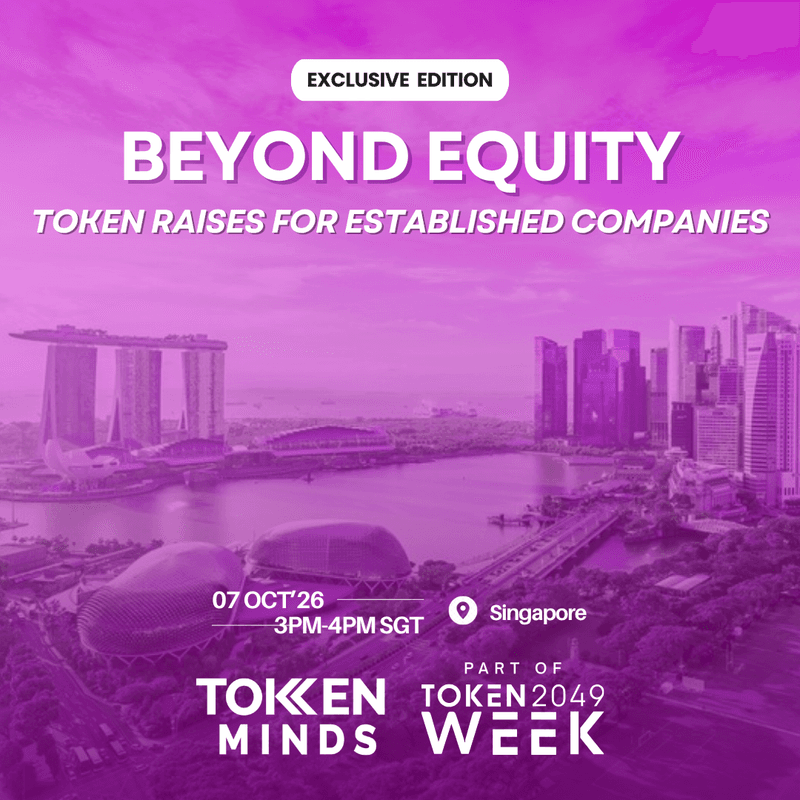
TokenMinds x Token2049 Singapore 2026
Beyond Equity: Token Raises for Established Companies
7 Oct 2026
Singapore

AI Visibility Live @ Coinfest Asia 2026
How to Get Your Web3 Project Mentioned in ChatGPT, Perplexity, Gemini & Google AI
21 Aug 2026
Coinfest Asia, Bali, Indonesia
Reviews
What Clients Said After the Raise
Published by the companies themselves. Each card links to the original post.
“Big thank you to our PR partners TokenMinds. An amazing job utilizing digital and print media and top influencers to broadcast the OnPlanet brand and ideas across all outlets and platforms.”
Source
OnPlanet
@OnPlanet
“We wanted to thank TokenMinds for their great work. They helped us become a very fast growing project with their PR strategy and influencer marketing.”
Source
Lucky.Fury
@Lucky.Fury
“Thank you to everyone who participated in our session. It was a fantastic opportunity to connect and share about the project. A special thanks to TokenMinds.”
Source
Arthur Capital
@ArthurCapitalPa
What Sets Us Apart?

First Mover
Established in 2016 as a Web3 agency, TokenMinds is a first mover in the Web3 and gaming space. With strong partnerships across exchanges, investors, and influencers. We bring proven success in launching tokens, gaming platforms, and interactive communities.
360 Degree
We offer complete support for Web3 and gaming projects. From development and tokenomics to marketing and community growth, our integrated approach ensures long-term success across both ecosystems.
White Glove
A trusted partner offering tailored gaming solutions and Web3 strategies built for impact. We work as an extension of your team to deliver results with care and measurable impact.

Brochure
Token Launch for Established Businesses
Capital without giving up equity, made credible to crypto investors.
Since 2017 · Singapore
Brochure
Prefer to Read First? Download the Brochure
How token fundraising works for an established business, what a token launch costs and what the timeline looks like.
- How a token offering raises capital without dilution
- What it costs, stage by stage, including third-party fees
- What investors check, and how we prepare it
Trusted by








FAQ
FAQs on Trade Finance
What changes with blockchain in trade finance networks?
It shares trade documentation across network participants with permissions. Records stay immutable with timestamps and cryptographic signatures.
Who typically joins a trade finance blockchain network?
Participants include banks, trading companies, and insurance companies. Networks can also include buyers, sellers, and logistics organizations.
What is the mechanism of the work of governance through these networks?
A participation rulebook identifies the participation regulations, risk management, and dispute management.
What are the smart contract applications in trade finance processes?
Smart contracts represent commercial and shipping agreements among participants. When some prerequisite conditions are met, they send out payment alerts.
Why is blockchain in trade finance important?
Blockchain enhances transparency, automation of the execution of contracts. It also minimizes settlement times having fixed shared records.
Kick-Off Your Project Now
Get expert guidance for your project. Request a free consultation today.
- A fixed fee, quoted in writing
- No percentage of your raise
Takes one minute. A reply within one business day.
Who you will talk to