NFT driven products now sit inside real business lines. Game studios use NFTs to power items, seasons and access passes. Finance teams, exchanges and iGaming brands use tokens for loyalty, gated content and digital ownership. For these teams, choosing the right NFT marketing services shapes user growth, revenue streams and long term trust.
This guide brings together the strategies, agencies and decision points that matter in 2026. It includes a full explanation of how NFT marketing works, a clear comparison of notable agencies and step by step advice for leaders who need a shortlist they can act on.
Along the way, you will also find internal resources, such as the TokenMinds NFT marketing guide to help you plan deeper strategy and technical foundations.
What NFT Marketing Is
NFT marketing began to take shape in late 2019 when early digital art drops on Ethereum gained niche traction. The market exploded in 2021 as brands, artists, and creators used social media, influencers, and community-driven campaigns to push NFT collections into mainstream culture. Growth matured in 2022–2023 as speculation cooled and marketing shifted toward utility, long-term engagement, and ecosystem value. Today, NFT marketing refers to strategic efforts that promote NFT projects across channels such as social, community, partnerships, paid media, and storytelling to build trust, drive sales, and sustain holder engagement across Web3 and traditional audiences.
Read this article to learn more about NFT Sale Strategy on How to Build a Community-to-Mint Funnel
Key Strategies Used by Top NFT Marketing Services
Below are strategies that leading agencies and in-house teams actually use. Each supports a different stage of growth for NFT, gaming, and finance products.
Community building on Discord and Telegram
Strong servers act as always-on focus groups. Teams share roadmap updates, early builds, and reward structures tied to real actions, such as testnet usage or in-game milestones. Clear rules, trained moderators, and weekly rituals, like town halls or office hours, keep communities stable instead of chaotic.
Influencer marketing and KOL outreach
Top teams map KOLs by niche. For example, trading, gaming, or i-gaming. They brief creators with specific angles, such as “utility first” or “gameplay preview,” and track results with custom links or codes. Campaigns avoid over-promising returns and focus on product usage and feature adoption.
Content and SEO for NFTs
Founders and CMOs use content to answer hard questions early. Articles explain token logic, game economies, risk factors, and compliance touchpoints. SEO targets use cases like “NFT game items,” “on chain loyalty,” or “tokenized rewards,” bringing in users who already search for solutions.
Paid ads and crypto native placements
Because Google and Meta restrict crypto and i-gaming, teams combine compliant ads with Web3 native inventory. This includes sponsored newsletters, in-wallet banners, and placements on trading or gaming communities. The goal is clear actions. For example, whitelist signups, demo bookings, or KYC-ready users.
PR and earned media
Coverage on tiered outlets supports investor trust and enterprise buyers. Leaders plan stories around milestones, such as licensing deals, audits, or major in-game events. PR focuses on what changes for users or partners, not only on funding announcements.
Airdrops, giveaways, and utility driven engagement
Top projects design rewards around behaviors that matter. Examples include testnet feedback, in-game retention, or liquidity depth. Airdrops connect to future utility, such as discounts, access to tournaments, or governance rights, instead of one-off speculative hype.
Marketplace and listing strategy
Teams plan listings to match their audience. Gaming assets may focus on specific chains or marketplaces where players already trade. They invest in accurate metadata, clear rarity tiers, and collection pages that explain utility in simple language. Performance is tracked by volume quality, not only floor price.
What To Look For In An NFT Marketing Agency
Do they show real NFT or token work, not only generic digital projects
Can they explain strategy in simple language and link it to measurable KPIs
Are budgets, pricing ranges, and team sizes clear enough to plan with
Is there a record of client feedback, case studies, or at least samples
Comparison Table – Selected NFT Marketing Agencies
Rank | Agency | HQ | Founded | Team Size | Budget / Hourly Rate* | NFT relevant focus |
1 | TokenMinds | Singapore | 2017 | 10–49 | Min project 3,000+ USD, 50–99 USD per hour | Full stack NFT marketing, token launches, development, community growth |
2 | Coinbound | New York, USA | 2018 | 50–249 | Projects typically above 10,000 USD, average 225 USD per hour | Web3 and NFT influencer marketing, PR, social and paid campaigns |
3 | CrowdCreate | Los Angeles, USA | 2014 | 50–249 | Not listed | Web3 and NFT marketing, investor outreach, influencer and community work |
4 | Blockchain App Factory | India (multiple offices) | 2017 | 250+ | Not listed | NFT marketing tied to token, marketplace and blockchain development |
1. TokenMinds – Full Stack NFT Marketing and Product Support
Clutch
TokenMinds profile
Website
TokenMinds NFT marketing services
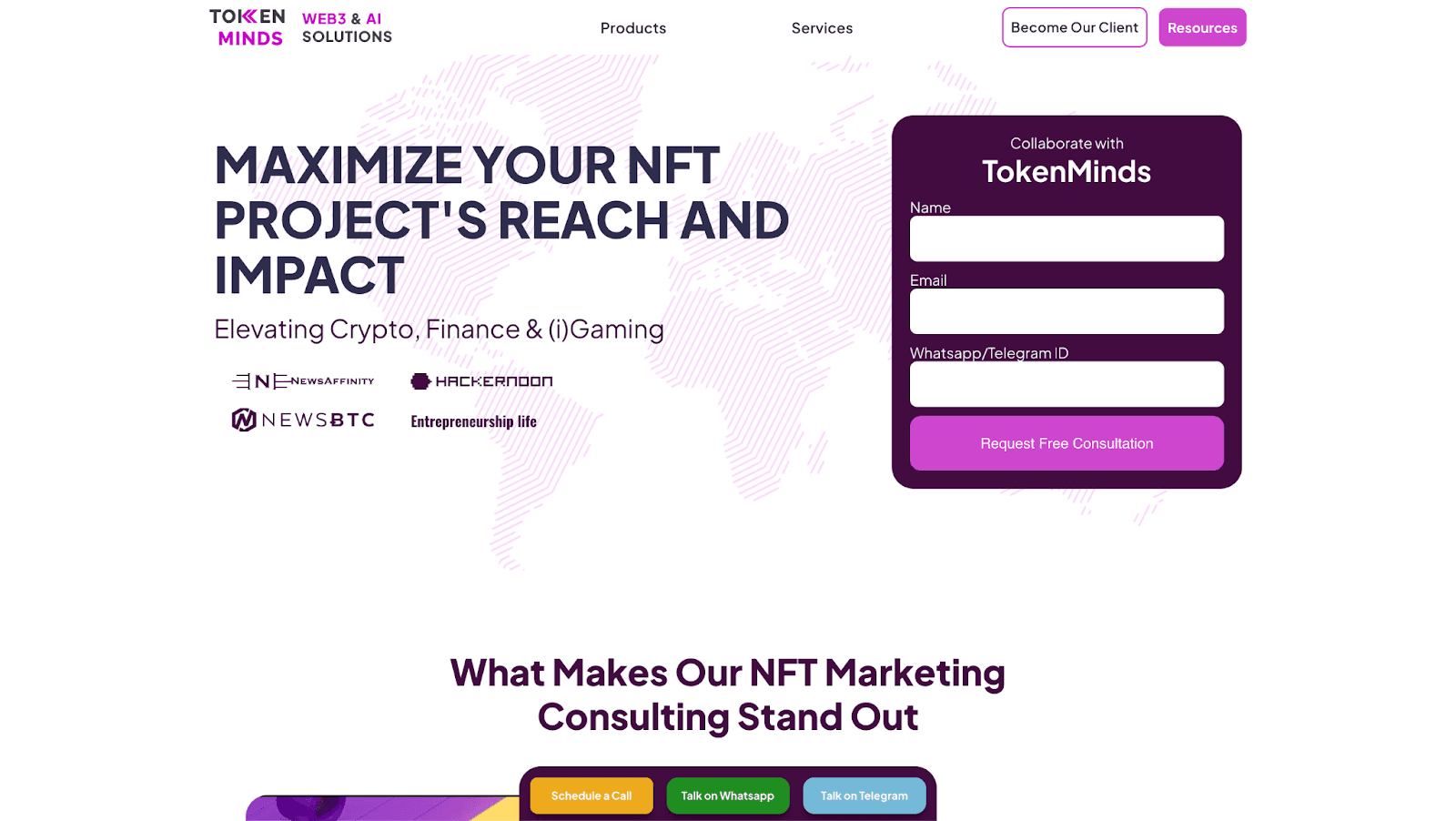
TokenMinds operates as a combined NFT marketing and development partner. The team works with token launches, NFT collections, marketplaces, GameFi projects, and wider Web3 products. Its model suits founders who want both marketing and light product work handled by one vendor.
Fast facts drawn from public data and TokenMinds’ own comparison content:
Headquartered in Singapore
Founded 2017
Team size in the 10–49 range
Minimum project size around 3,000 USD
Hourly rate listed between 50 and 99 USD
Clutch rating 5.0 from a small number of reviews
This mix positions TokenMinds as a reference point when executives compare NFT marketing agencies. It sets a baseline for what a combined product and growth partner can cover, without forcing any specific choice.
TokenMinds also has supported a mix of NFT and GameFi clients, including NFT-driven music platform Infanity, analytics project NFT Valuator, and gaming brands such as Gensokishi and Double Jump Tokyo, providing end-to-end development plus growth support. Public profiles also note campaigns for token and NFT projects like Birdchain, Remme, TruePlay, Ebakus, and CryptoBlades, with TokenMinds claiming to have helped clients collectively generate over $175M in token and NFT sales across launches and marketing programs.
2. Coinbound – Influencer Led Web3 and NFT Marketing
Clutch
Coinbound profile
Website
coinbound.io
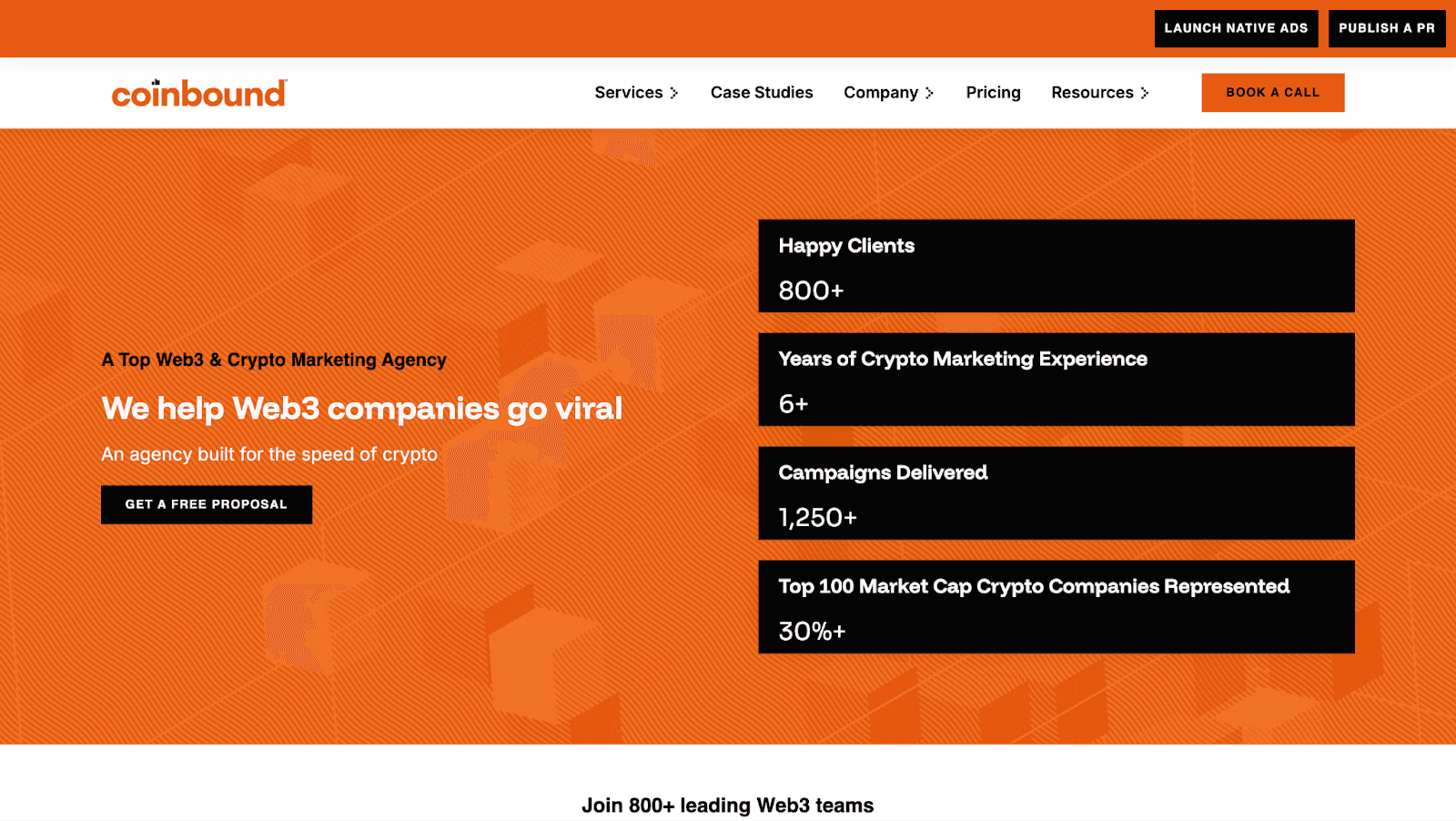
Coinbound presents itself as a Web3 marketing firm with strong focus on influencers and social reach. Their network spans creators on X, YouTube, TikTok, and other channels that crypto users follow closely.
Public sources describe the agency as:
Founded in 2018
Based in New York
Operating with a team size between 50 and 249
Working with a minimum project size above 10,000 USD
Charging average hourly rates around 225 USD
Coinbound’s site lists work across tokens, exchanges, DeFi platforms, and NFT launches. They highlight influencer campaigns, social media management, PR placement, and content as core services tied to Web3.
3. CrowdCreate – Network and Community Focused NFT Marketing
Clutch
CrowdCreate profile
Website
crowdcreate.us
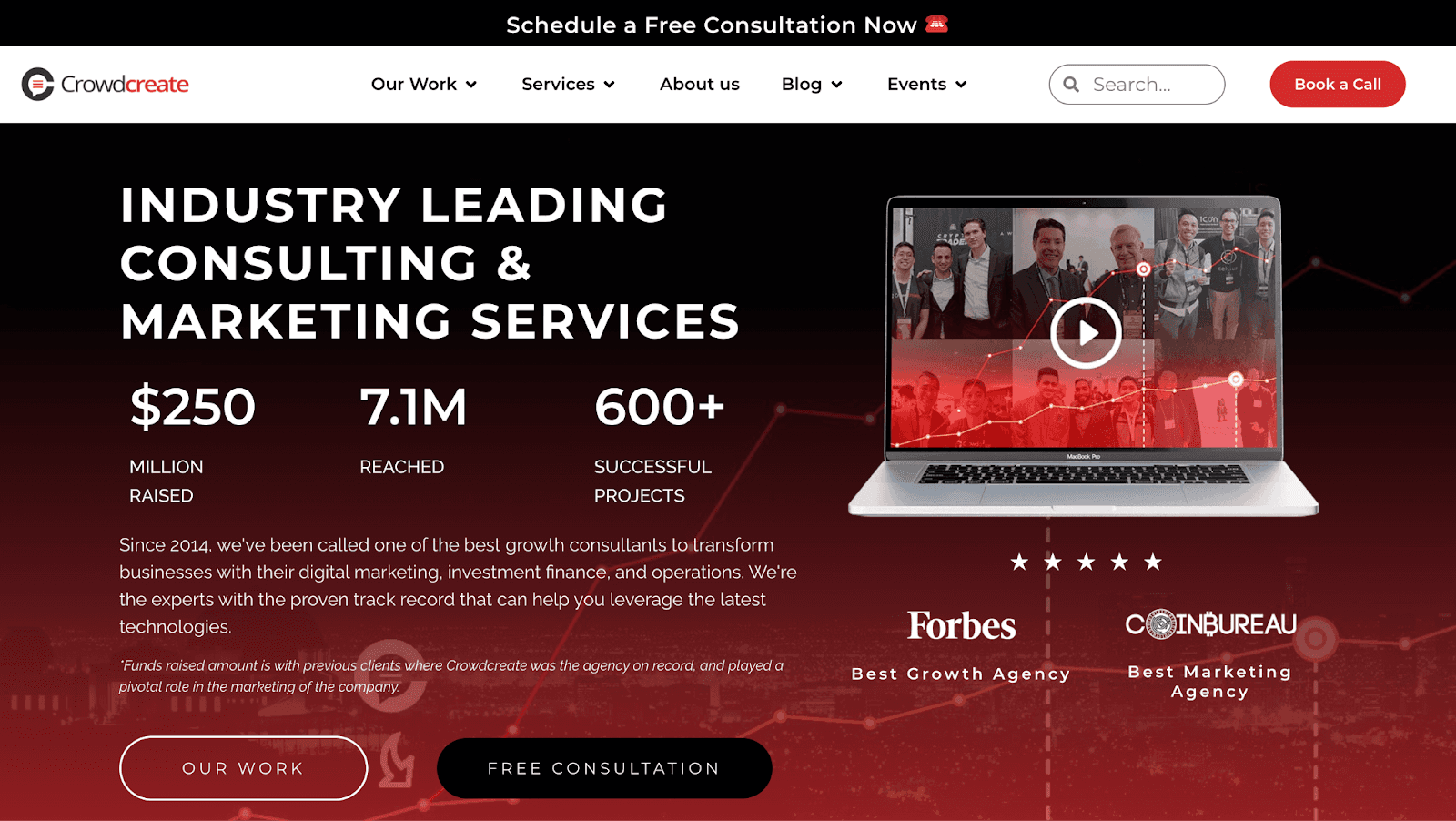
CrowdCreate positions itself as a Web3 friendly marketing and consulting agency. Over time it has built a network of founders, investors, influencers, and creators. That network sits at the center of many of their NFT and crypto campaigns.
Key points from public listings and their website:
Founded in 2014
Headquartered in Los Angeles
Team size between 50 and 249
Named by several outlets as a top crypto or Web3 marketing firm
Pricing structure is not fully detailed online. Minimum project size and hourly rate are not listed on Clutch at the time of writing. Interested teams need to contact CrowdCreate for current ranges.
4. Blockchain App Factory – Combined NFT Development and Marketing
Clutch
Blockchain App Factory profile
Website
blockchainappfactory.com
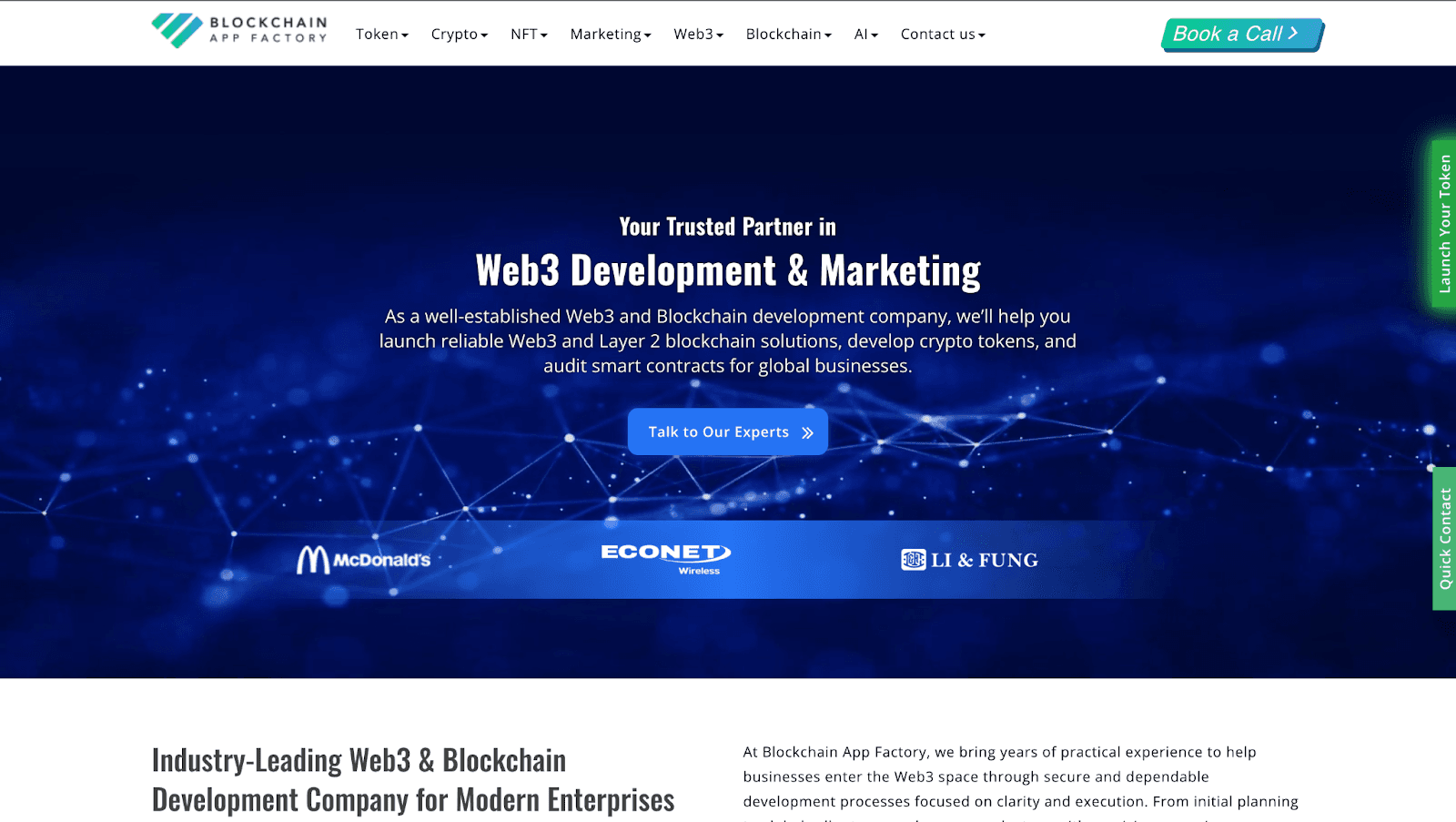
Blockchain App Factory, often shortened to BAF, works on both blockchain development and NFT marketing services. Its site lists solutions for token launches, exchanges, NFT marketplaces, metaverse projects, and related products. Alongside that build work, they run marketing programs.
From public data and directory listings, key points include:
Founded in 2017
Based in India, with more than one office location mentioned online
Team size above 250 people
Minimum budgets and hourly rates are not clearly stated on Clutch
How C-Level Leaders Can Use This Shortlist
The four agencies here don’t play the same role. TokenMinds and Blockchain App Factory combine development with NFT marketing. Coinbound and CrowdCreate focus more on communication, social reach, and exposure.
Senior leaders can use the list in a few ways.
Map agencies to project stage
Check NFT specific proof
Use a hybrid partner model
Keep compliance on the agenda
Risks to Watch For
The NFT world moves fast and includes scams, fake hype and bot driven community activity. Leaders should watch for:
Unverified influencers
Poor disclosure of paid promotions
False claims about user numbers
Strained budgets without clear projections
Advanced NFT Marketing Playbook for 2026
In 2026, strong NFT campaigns mix classic promotion with deeper technical and AI-driven execution. These layers help teams stand out in a crowded market and improve user trust.
AI-Driven Community and Growth Systems
Modern agencies now deploy AI agents that guide users inside Discord and Telegram, answer questions, and deliver timed updates without human delay. These agents shift their tone based on user behavior and keep engagement steady even during quiet hours.
Example:
A project might use a “Front-man” AI agent for chat flow and a “Product-man” agent to recommend utilities or drops based on user actions.
Technical Differentiators for Trust and Transparency
Top campaigns now highlight technical features like Chainlink VRF for fair draws, TON blockchain for simplified onboarding, or private-ledger payments using permissioned networks.
These additions build confidence, especially for users who care about transparency.
Example:
A rare-item drop that uses verifiable on-chain randomness earns more trust than one handled manually.
Gamified Loyalty and Utility Systems
Airdrops work best when tied to reward tiers, perks, or long-term utility. Many teams now run loyalty missions, gated perks, and progression-based incentives.
Example:
Members may unlock vouchers, whitelist priority, or gameplay bonuses when they complete community milestones.
Integrated Token Ecosystem Support
More NFT products now sit next to their own tokens, so agencies often build token-sale dashboards, vesting systems, staking pools, and fiat on-ramps.
This reduces friction and strengthens the ecosystem.
Example:
A project may pair its NFT launch with a simple investor dashboard that tracks allocations, vesting, and rewards in one place.
Real-Time Analytics and Sentiment Tracking
Agencies now use dashboards that monitor sentiment, conversion paths, channel spikes, and community health. This replaces guesswork with measurable insight.
Example:
A team may track which messaging sparks the most engagement, then adjust future events based on sentiment heatmaps.
FAQs
What do NFT marketing services usually include?
They include community building, influencer outreach, content and SEO, PR, paid placements, social media work and event planning.
How much do NFT marketing services cost?
Budgets vary. Small campaigns may start around a few thousand dollars. Larger programs often exceed 10,000 USD. The NFT marketing agency cost guide explains how teams set tiers and hourly rates.
Do all projects need an agency?
Not always. Some small artists or communities handle their own marketing, but most funded projects work with agencies to reduce risk and speed up results.
Are paid ads safe for NFT projects?
Paid ads are possible but must follow strict rules. Many teams use Web3 native channels to avoid compliance issues on Google or Meta.
How do I keep a community active after launch?
Use regular updates, events, utility releases and two way communication. Community members stay engaged when they feel included and rewarded.
Closing Thoughts
The market for NFT marketing services has grown fast. There is no single best choice for every project. What matters is the fit between your goals, stage, budget, and internal team.
TokenMinds, Coinbound, CrowdCreate, and Blockchain App Factory each bring different strengths. This article gives a structured starting point for CMOs, CEOs, and founders in crypto, gaming, i-gaming, and finance who want to shortlist agencies in a more informed way.