Web3 & AI

SOLUTIONS

Products

Services

Web3 & AI

SOLUTIONS

Services

Products

Industries

Become Our Client

About Us

Resources

Web3 & AI

SOLUTIONS

Services

Products

Industries

How Web3 Companies Can Use Thought Leadership Content Instead of Ads

How Web3 Companies Can Use Thought Leadership Content Instead of Ads

Written by:

Written by:

Dec 26, 2025

Dec 26, 2025

TL:DR

Web3 business leaders will learn why paid advertising is no longer as viable for Web3 businesses, how education based thought leadership can provide Web3 businesses with lower cost of acquisition, more customer trust and better quality of conversion, and how to establish an easily replicable content strategy that converts knowledge-based expertise into a lasting competitive advantage in their markets.

Why Traditional Ads Don't Work Well for Web3

Web3 companies face a problem that most other businesses do not face. Big social media platforms like Facebook and Google limit crypto ads because of strict rules and concerns about fraud, a dynamic examined in this comparison. This makes it very hard for Web3 projects to use paid advertising.

The cost to find new customers through ads is extremely high. At the same time, the results are disappointing. A Web3 company spending money on Google Ads might pay $1,500 for just one person to even ask about their product. Companies spending the same amount on other platforms might pay $4,000 per interested person. Meanwhile, companies with organic content get 10 qualified leads that cost nothing at all.

This is why smart Web3 companies are changing their strategy. Instead of paying for ads, they are sharing knowledge and building trust with content. This method works better and costs less in the long run.

What Is Thought Leadership and Why It Matters


Thought leadership is a term that refers to you being seen as a subject matter expert within your industry. Thought leadership is also simply about creating & sharing valuable knowledge or insight that will allow your customers to be able to think differently about the things that you're discussing. Thought leadership is NOT direct sales, but it IS to become the go-to resource that your customers come back to for answers.

Trust is everything in Web3. Since 2021, there have been countless scams, hacks, and failures of Web3 companies. Customers don't want to trust new companies. When a company demonstrates its knowledge and provides value through the creation of regular educational content, their customers can begin to trust them again. That trust is worth way more than all of the advertising dollars spent.

The Numbers Behind Thought Leadership Content

The data shows that content marketing works better than ads in Web3, a pattern increasingly visible in AI-driven marketing strategies discussed in this research. Consider these facts:

A Web3 company that completely redesigned its learning section saw a 41% increase in how many people actually used its platform. Users felt more confident because they understood what they were using.

When companies focus on education instead of sales, their conversion rate jumps to 25% or higher. That means 25 out of every 100 people who learn from the content actually become active users.

Companies using educational content see their trust scores go up by 280%. People feel three times more confident about trusting the company after learning from it.

One API company was spending money on paid ads in three different places. LinkedIn ads cost $4,000 per interested person. Google ads cost $1,500 per interested person. But their free webinars only cost $333 per interested person. Even worse, their blog posts brought in 10 good leads every month with zero cost. Yet they were not putting any marketing budget toward that blog.

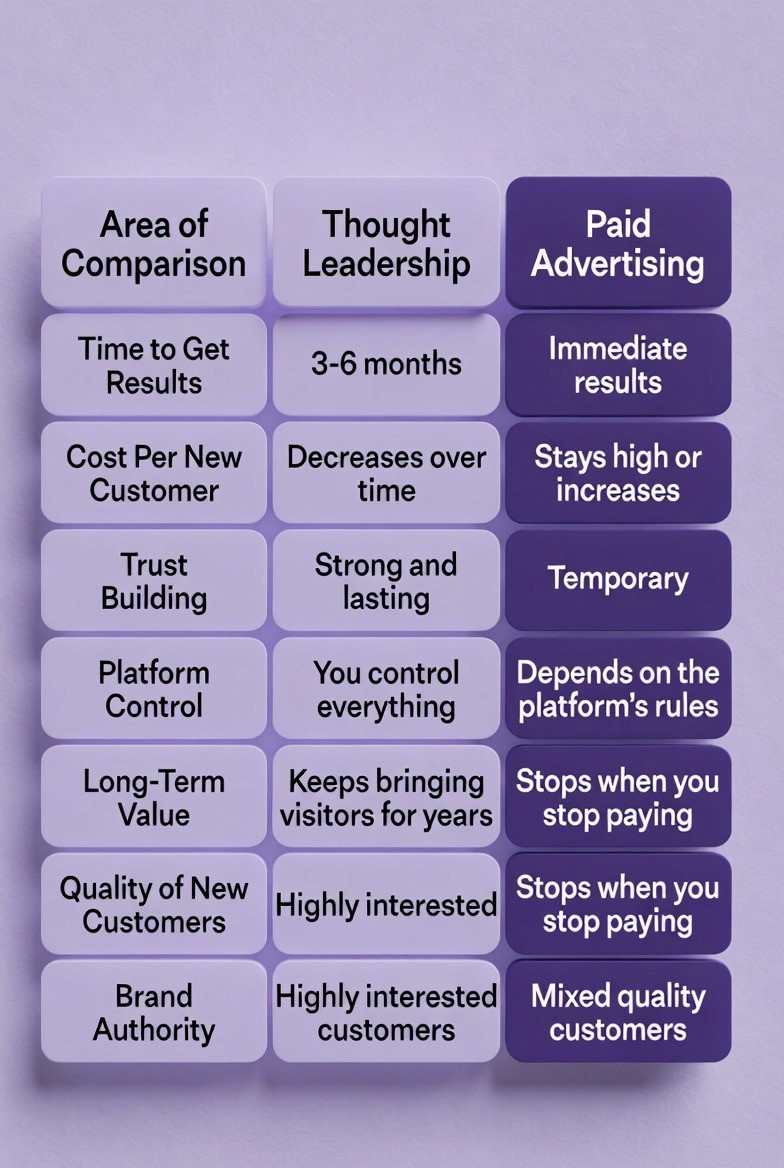
Table Comparing Content Marketing to Paid Ads

How to Create Thought Leadership Content

Creating thought leadership content requires a clear plan. It is not random posting on social media. It is a system designed to make your company the expert voice in your field.

Step One: Choose Your Focus Areas


Do not try to talk about everything in blockchain. Choose 2-4 specific areas where your team has real knowledge. If you are a DeFi company, focus on explaining how yield farming works, how to manage risk, and how DeFi helps people without bank accounts. If you are a wallet company, focus on security, easy-to-use design, and how to get new people to use crypto. This narrow focus makes you the expert people look for.

Step Two: Use Multiple Content Formats
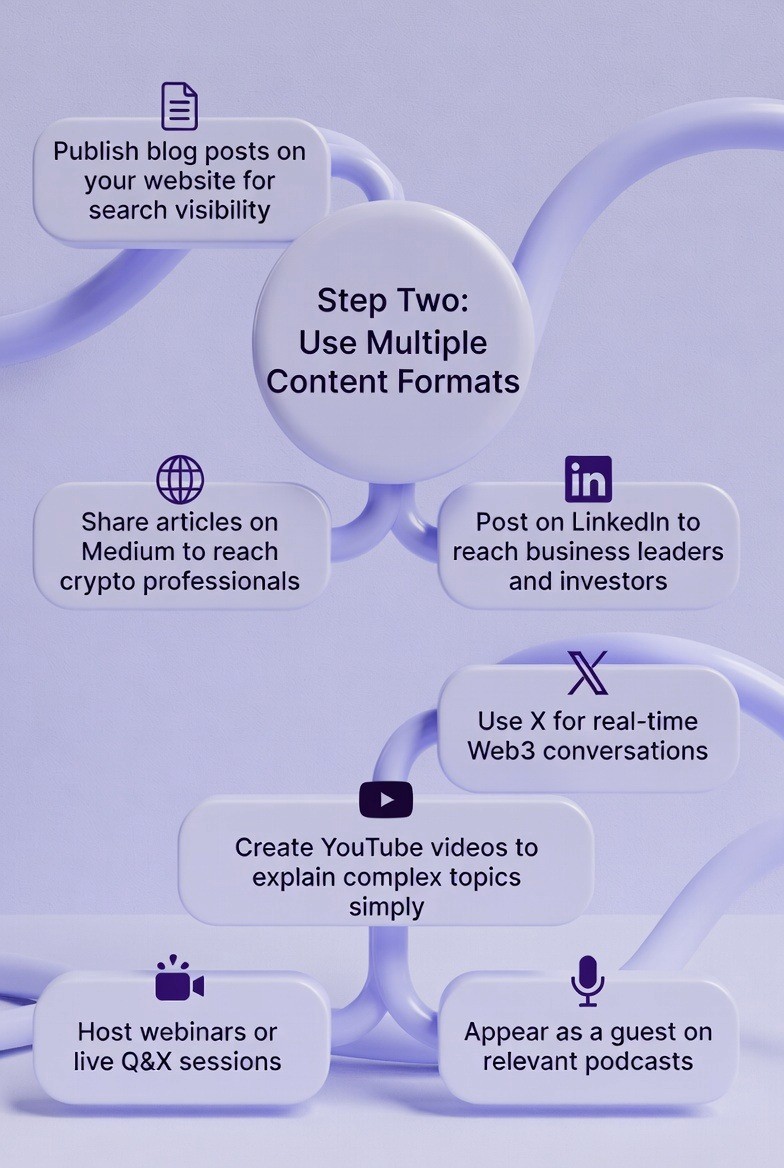

Blog posts are an excellent way to get higher search engine rankings. Articles posted on Medium are great for reaching crypto professionals who check Medium daily. LinkedIn is great for getting in front of business leaders and investors. X (formerly Twitter) allows you to post about cryptocurrency and be part of the ongoing conversation in real time. Making a video on YouTube to help simplify those complexities can be very valuable to your audience. Consider hosting webinars or doing live question and answer sessions to interact with your audience. And finally, there are many podcast opportunities available for you to appear as a guest. Using multiple formats will allow you to reach different audiences.

Step Three: Consistency Is Key


A single blog post doesn’t create a thought leader. To establish yourself as a thought leader you need to be consistently publishing high-quality articles (at least once per week), guest blogging (at least once every two weeks) on relevant websites and hosting webinars (at least monthly). The consistency will show that your organization is committed to creating, sharing and providing knowledge to others.

Step Four: Focus on Real Knowledge
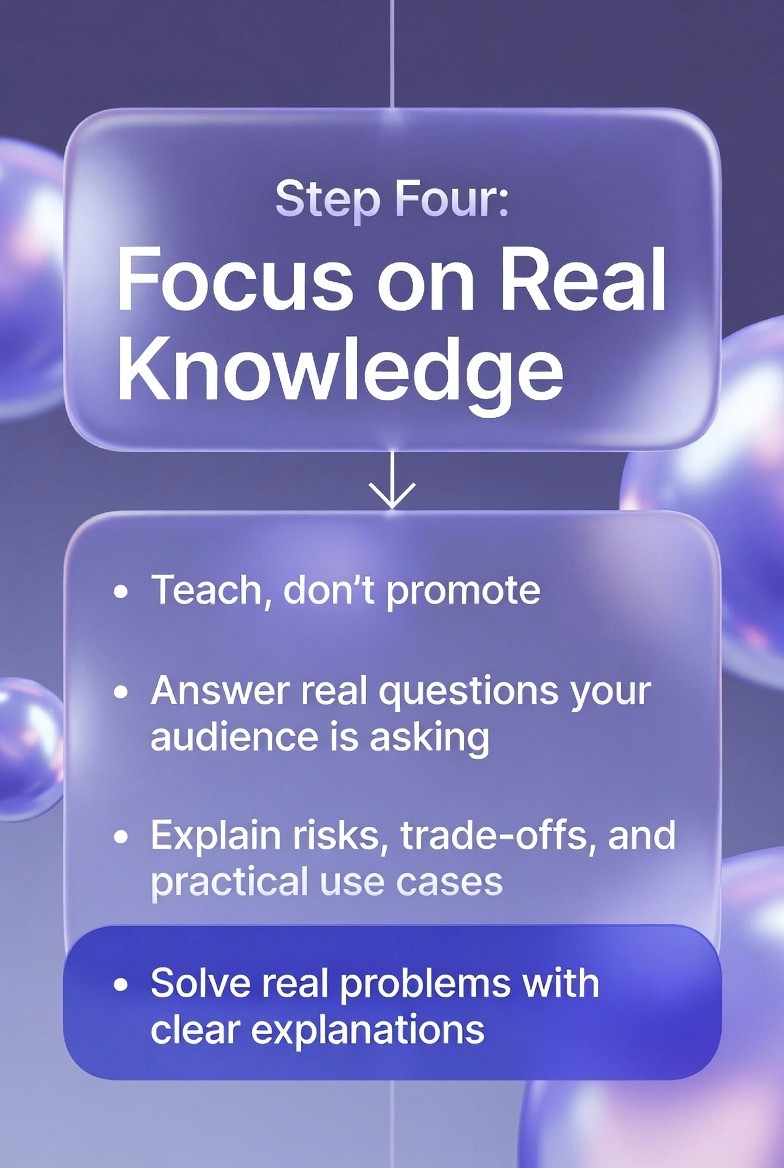

Create content that actually provides value by teaching readers something new. Write "What are smart contracts and how do they work?" or "What are the real risks of DeFi and how to mitigate them?" or "Why is blockchain so much better than traditional banking when it comes to increasing financial inclusion?" Create content that answers the questions people are actually asking. When you create content that helps solve real-world problems then you will have people referencing your content and sharing it with others.

Content Types That Work Well


Educational Content teaches the basics. Explain concepts so that someone completely new to crypto understands them. A guide called "Blockchain Explained for Beginners" or "How DeFi Tokens Work" attracts people starting their learning journey.

Original Research shows you analyze data and trends. If you are an exchange, publish reports about trading patterns. If you analyze blockchain activity, share data about network growth. Research articles get linked by other publications and shared widely.

Vision Content shares where you see the industry going. What problems need solving? What new opportunities are coming? What regulatory changes matter? This makes your team look forward-thinking.

Problem-Solving Content addresses specific pain points. Many people struggle to understand "gas fees" or "bridge security" or "how to store crypto safely." Content answering these questions becomes required reading.

Industry Commentary joins larger conversations. When new regulations happen, when security problems occur, or when technology breakthroughs happen, share your informed perspective. This keeps your company visible during important moments.

What You Can Measure
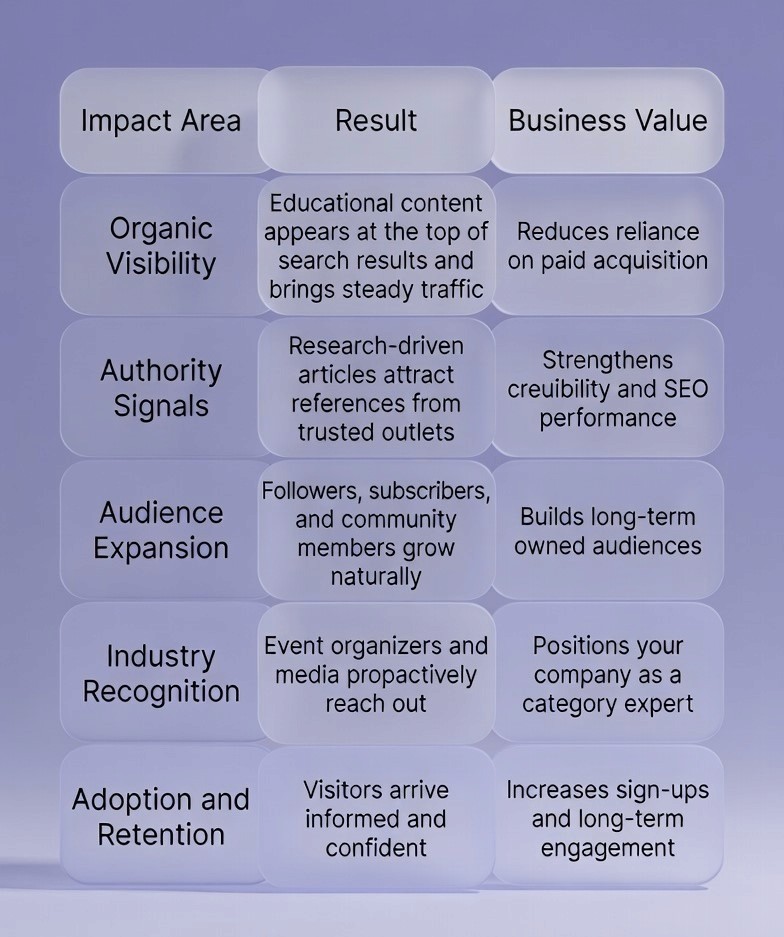

Thought leadership does not work exactly like ads. Ads bring clicks and sales immediately. Content marketing brings different results.

Search Engine Rankings matter. If your article ranks first on Google for "How to understand DeFi risks," thousands of people find you every month without paying for ads. These are people actively looking for what you explain.

Inbound Links increase when content is useful. Major publications link to your research. This improves your search rankings naturally.

Community Growth happens when people see your knowledge, as explained in this community-building guide. Your followers on social media grow. Your email list grows. People join your Discord community. This happens because they want to stay informed, not because you forced them to.

Speaking Opportunities emerge automatically. Conferences invite you to speak. Podcast hosts request interviews. News outlets ask for your thoughts. This creates additional attention.

User Conversion improves. New people arriving at your site from search or referrals are already educated and predisposed to trust you. They sign up more easily and stay longer.

How to Budget for Content Marketing


For a Web3 company with $15,000 to spend each month, here is a smart allocation:

Community and Content: 30% ($4,500)
This is writing, editing, video production, and managing your community. It includes blog posts, Medium articles, newsletter content, and responding to community members.

Paid Ads (Targeted): 20% ($3,000)
Do not avoid paid ads completely. Use them strategically. Target people who visited your website before. Promote your best-performing content. Use ads to amplify what is already working.

Influencer Partnerships: 15% ($2,250)
Work with real people who genuinely understand your project. A trusted micro-influencer reaches fewer people but with much higher engagement.

Tools and Analytics: 5% ($750)
Track what is working with software tools. Know which content attracts people. Understand your audience.

Newsletter and PR: 5% ($750)
Build your own email list so you do not depend on social platforms. Send press releases to journalists, as commonly done in Web3-focused public relations efforts discussed in this reference.

Experimentation Fund: 25% ($3,750)
Keep budget flexible. Try new opportunities. Double down on content that performs well unexpectedly. Sponsor relevant conferences.

This plan puts most resources toward building lasting assets rather than temporary visibility.

Your Own Website & Blog – Your articles remain in search results for years. Google rewards you with better rankings when you post regularly.

Medium – Professionals in crypto visit medium every day. Often, an article creates some level of discussion. This is how you can reach outside your network of followers.

LinkedIn – Business people and institutional investors follow LinkedIn. You share your knowledge and are able to reach that type of audience.

X – You join the real-time conversation happening at the moment. You can share fast insights about the market and engage with other thought leaders in the space.

YouTube – If you have viewers that like video content, YouTube will allow you to educate them through tutorial and explanatory content.

Podcast Guest – Podcasts are great for long-form conversations and allow you to explore your thoughts and ideas as much as you want. As a podcast guest, you are reaching new audiences and expanding your footprint.

Industry Publication – Writing for publications such as CoinDesk, The Block, or Bankless adds credibility to your work.

Why This Strategy Beats Ads Long-Term

The advantage of thought leadership compounds over time. As your content accumulates, many benefits happen at once:

Your search rankings improve, bringing visitors who never cost you anything. Other websites link to your content, making search engines trust you more. Your community sees you as reliable. Conferences invite you to speak. News outlets ask for your thoughts. New partnerships develop from relationships you build. Users trust your company more because you are transparent and educational.

Meanwhile, paid ads are like a treadmill. Stop paying and visibility stops immediately. Platforms might ban crypto ads, forcing quick strategy changes. People ignore ads more over time. Costs go up while results go down.

A company investing two years in thought leadership ends up with something competitors cannot easily copy. Your articles rank in search. Your community knows you. Your reputation is established.

This does not mean never use paid ads. Use them strategically to amplify content that is already working. Use them to speed up results. But treat content marketing as your foundation, not ads.

Getting Started With Your Thought Leadership Plan

First, be honest about what your team actually knows. Thought leadership only works when it is genuine. Your content must show real expertise, not fake marketing claims.

Second, identify what topics matter. Where does your team have knowledge others do not? What questions do your users ask repeatedly? What wrong ideas harm your industry? These are your topics.

Third, commit to a schedule. One good post per month is better than ten bad posts per week. Publish on one platform weekly, post guest articles twice a month on other sites, and hold a monthly webinar. This consistency builds reputation.

Fourth, track what works. Notice which topics get read, commented on, and shared. See which articles get linked by other websites. Let data guide your future choices.

Fifth, reuse your content. One blog post becomes a Twitter thread, a LinkedIn article, a podcast segment, and a webinar. One idea reaches different people through their preferred way of learning.

Sixth, actually talk with your community. Thought leadership is two-way conversation, not just broadcasting. Answer questions. Respond to criticism. Admit limitations. This builds trust that pure content cannot.

Conclusion

Web3 is moving away from traditional advertising toward education first. This is not a temporary trend. It reflects how Web3 communities actually work and what builds long-term projects.

Companies that start building thought leadership now will be known as leaders in 2026 and beyond. Companies that keep relying on paid ads will face higher costs, more restrictions, and worse results. The choice is clear. Spend money for temporary attention, or invest in building permanent authority. The best Web3 companies will choose the second path.

Schedule a complimentary consultation with TokenMinds to evaluate how your Web3 company can build education-driven thought leadership that supports long sales cycles, strengthens credibility with enterprise audiences, and delivers sustainable visibility without relying on ads.



TL:DR

Web3 business leaders will learn why paid advertising is no longer as viable for Web3 businesses, how education based thought leadership can provide Web3 businesses with lower cost of acquisition, more customer trust and better quality of conversion, and how to establish an easily replicable content strategy that converts knowledge-based expertise into a lasting competitive advantage in their markets.

Why Traditional Ads Don't Work Well for Web3

Web3 companies face a problem that most other businesses do not face. Big social media platforms like Facebook and Google limit crypto ads because of strict rules and concerns about fraud, a dynamic examined in this comparison. This makes it very hard for Web3 projects to use paid advertising.

The cost to find new customers through ads is extremely high. At the same time, the results are disappointing. A Web3 company spending money on Google Ads might pay $1,500 for just one person to even ask about their product. Companies spending the same amount on other platforms might pay $4,000 per interested person. Meanwhile, companies with organic content get 10 qualified leads that cost nothing at all.

This is why smart Web3 companies are changing their strategy. Instead of paying for ads, they are sharing knowledge and building trust with content. This method works better and costs less in the long run.

What Is Thought Leadership and Why It Matters


Thought leadership is a term that refers to you being seen as a subject matter expert within your industry. Thought leadership is also simply about creating & sharing valuable knowledge or insight that will allow your customers to be able to think differently about the things that you're discussing. Thought leadership is NOT direct sales, but it IS to become the go-to resource that your customers come back to for answers.

Trust is everything in Web3. Since 2021, there have been countless scams, hacks, and failures of Web3 companies. Customers don't want to trust new companies. When a company demonstrates its knowledge and provides value through the creation of regular educational content, their customers can begin to trust them again. That trust is worth way more than all of the advertising dollars spent.

The Numbers Behind Thought Leadership Content

The data shows that content marketing works better than ads in Web3, a pattern increasingly visible in AI-driven marketing strategies discussed in this research. Consider these facts:

A Web3 company that completely redesigned its learning section saw a 41% increase in how many people actually used its platform. Users felt more confident because they understood what they were using.

When companies focus on education instead of sales, their conversion rate jumps to 25% or higher. That means 25 out of every 100 people who learn from the content actually become active users.

Companies using educational content see their trust scores go up by 280%. People feel three times more confident about trusting the company after learning from it.

One API company was spending money on paid ads in three different places. LinkedIn ads cost $4,000 per interested person. Google ads cost $1,500 per interested person. But their free webinars only cost $333 per interested person. Even worse, their blog posts brought in 10 good leads every month with zero cost. Yet they were not putting any marketing budget toward that blog.

Table Comparing Content Marketing to Paid Ads


How to Create Thought Leadership Content

Creating thought leadership content requires a clear plan. It is not random posting on social media. It is a system designed to make your company the expert voice in your field.

Step One: Choose Your Focus Areas


Do not try to talk about everything in blockchain. Choose 2-4 specific areas where your team has real knowledge. If you are a DeFi company, focus on explaining how yield farming works, how to manage risk, and how DeFi helps people without bank accounts. If you are a wallet company, focus on security, easy-to-use design, and how to get new people to use crypto. This narrow focus makes you the expert people look for.

Step Two: Use Multiple Content Formats


Blog posts are an excellent way to get higher search engine rankings. Articles posted on Medium are great for reaching crypto professionals who check Medium daily. LinkedIn is great for getting in front of business leaders and investors. X (formerly Twitter) allows you to post about cryptocurrency and be part of the ongoing conversation in real time. Making a video on YouTube to help simplify those complexities can be very valuable to your audience. Consider hosting webinars or doing live question and answer sessions to interact with your audience. And finally, there are many podcast opportunities available for you to appear as a guest. Using multiple formats will allow you to reach different audiences.

Step Three: Consistency Is Key


A single blog post doesn’t create a thought leader. To establish yourself as a thought leader you need to be consistently publishing high-quality articles (at least once per week), guest blogging (at least once every two weeks) on relevant websites and hosting webinars (at least monthly). The consistency will show that your organization is committed to creating, sharing and providing knowledge to others.

Step Four: Focus on Real Knowledge


Create content that actually provides value by teaching readers something new. Write "What are smart contracts and how do they work?" or "What are the real risks of DeFi and how to mitigate them?" or "Why is blockchain so much better than traditional banking when it comes to increasing financial inclusion?" Create content that answers the questions people are actually asking. When you create content that helps solve real-world problems then you will have people referencing your content and sharing it with others.

Content Types That Work Well


Educational Content teaches the basics. Explain concepts so that someone completely new to crypto understands them. A guide called "Blockchain Explained for Beginners" or "How DeFi Tokens Work" attracts people starting their learning journey.

Original Research shows you analyze data and trends. If you are an exchange, publish reports about trading patterns. If you analyze blockchain activity, share data about network growth. Research articles get linked by other publications and shared widely.

Vision Content shares where you see the industry going. What problems need solving? What new opportunities are coming? What regulatory changes matter? This makes your team look forward-thinking.

Problem-Solving Content addresses specific pain points. Many people struggle to understand "gas fees" or "bridge security" or "how to store crypto safely." Content answering these questions becomes required reading.

Industry Commentary joins larger conversations. When new regulations happen, when security problems occur, or when technology breakthroughs happen, share your informed perspective. This keeps your company visible during important moments.

What You Can Measure


Thought leadership does not work exactly like ads. Ads bring clicks and sales immediately. Content marketing brings different results.

Search Engine Rankings matter. If your article ranks first on Google for "How to understand DeFi risks," thousands of people find you every month without paying for ads. These are people actively looking for what you explain.

Inbound Links increase when content is useful. Major publications link to your research. This improves your search rankings naturally.

Community Growth happens when people see your knowledge, as explained in this community-building guide. Your followers on social media grow. Your email list grows. People join your Discord community. This happens because they want to stay informed, not because you forced them to.

Speaking Opportunities emerge automatically. Conferences invite you to speak. Podcast hosts request interviews. News outlets ask for your thoughts. This creates additional attention.

User Conversion improves. New people arriving at your site from search or referrals are already educated and predisposed to trust you. They sign up more easily and stay longer.

How to Budget for Content Marketing


For a Web3 company with $15,000 to spend each month, here is a smart allocation:

Community and Content: 30% ($4,500)
This is writing, editing, video production, and managing your community. It includes blog posts, Medium articles, newsletter content, and responding to community members.

Paid Ads (Targeted): 20% ($3,000)
Do not avoid paid ads completely. Use them strategically. Target people who visited your website before. Promote your best-performing content. Use ads to amplify what is already working.

Influencer Partnerships: 15% ($2,250)
Work with real people who genuinely understand your project. A trusted micro-influencer reaches fewer people but with much higher engagement.

Tools and Analytics: 5% ($750)
Track what is working with software tools. Know which content attracts people. Understand your audience.

Newsletter and PR: 5% ($750)
Build your own email list so you do not depend on social platforms. Send press releases to journalists, as commonly done in Web3-focused public relations efforts discussed in this reference.

Experimentation Fund: 25% ($3,750)
Keep budget flexible. Try new opportunities. Double down on content that performs well unexpectedly. Sponsor relevant conferences.

This plan puts most resources toward building lasting assets rather than temporary visibility.

Your Own Website & Blog – Your articles remain in search results for years. Google rewards you with better rankings when you post regularly.

Medium – Professionals in crypto visit medium every day. Often, an article creates some level of discussion. This is how you can reach outside your network of followers.

LinkedIn – Business people and institutional investors follow LinkedIn. You share your knowledge and are able to reach that type of audience.

X – You join the real-time conversation happening at the moment. You can share fast insights about the market and engage with other thought leaders in the space.

YouTube – If you have viewers that like video content, YouTube will allow you to educate them through tutorial and explanatory content.

Podcast Guest – Podcasts are great for long-form conversations and allow you to explore your thoughts and ideas as much as you want. As a podcast guest, you are reaching new audiences and expanding your footprint.

Industry Publication – Writing for publications such as CoinDesk, The Block, or Bankless adds credibility to your work.

Why This Strategy Beats Ads Long-Term

The advantage of thought leadership compounds over time. As your content accumulates, many benefits happen at once:

Your search rankings improve, bringing visitors who never cost you anything. Other websites link to your content, making search engines trust you more. Your community sees you as reliable. Conferences invite you to speak. News outlets ask for your thoughts. New partnerships develop from relationships you build. Users trust your company more because you are transparent and educational.

Meanwhile, paid ads are like a treadmill. Stop paying and visibility stops immediately. Platforms might ban crypto ads, forcing quick strategy changes. People ignore ads more over time. Costs go up while results go down.

A company investing two years in thought leadership ends up with something competitors cannot easily copy. Your articles rank in search. Your community knows you. Your reputation is established.

This does not mean never use paid ads. Use them strategically to amplify content that is already working. Use them to speed up results. But treat content marketing as your foundation, not ads.

Getting Started With Your Thought Leadership Plan

First, be honest about what your team actually knows. Thought leadership only works when it is genuine. Your content must show real expertise, not fake marketing claims.

Second, identify what topics matter. Where does your team have knowledge others do not? What questions do your users ask repeatedly? What wrong ideas harm your industry? These are your topics.

Third, commit to a schedule. One good post per month is better than ten bad posts per week. Publish on one platform weekly, post guest articles twice a month on other sites, and hold a monthly webinar. This consistency builds reputation.

Fourth, track what works. Notice which topics get read, commented on, and shared. See which articles get linked by other websites. Let data guide your future choices.

Fifth, reuse your content. One blog post becomes a Twitter thread, a LinkedIn article, a podcast segment, and a webinar. One idea reaches different people through their preferred way of learning.

Sixth, actually talk with your community. Thought leadership is two-way conversation, not just broadcasting. Answer questions. Respond to criticism. Admit limitations. This builds trust that pure content cannot.

Conclusion

Web3 is moving away from traditional advertising toward education first. This is not a temporary trend. It reflects how Web3 communities actually work and what builds long-term projects.

Companies that start building thought leadership now will be known as leaders in 2026 and beyond. Companies that keep relying on paid ads will face higher costs, more restrictions, and worse results. The choice is clear. Spend money for temporary attention, or invest in building permanent authority. The best Web3 companies will choose the second path.

Schedule a complimentary consultation with TokenMinds to evaluate how your Web3 company can build education-driven thought leadership that supports long sales cycles, strengthens credibility with enterprise audiences, and delivers sustainable visibility without relying on ads.



GET SUCCESS IN WEB3

  • Trusted Web3 partner since 2017

  • Full-stack Web3 development team

  • Performance-driven Web3 marketing

Get A Free Consultation

Get A Free Consultation

RECENT TRAININGS

Follow us

get web3 business updates

Email invalid

  • Limited Slot Available! Only 5 Clients Accepted Monthly for Guaranteed Web3 & AI Consulting. Book Your Spot Now!

JOIN NOW

  • Limited Slot Available! Only 5 Clients Accepted Monthly for Guaranteed Web3 & AI Consulting. Book Your Spot Now!

    JOIN NOW

JOIN NOW

  • Limited Slot Available! Only 5 Clients Accepted Monthly for Guaranteed Web3 & AI Consulting. Book Your Spot Now!