Web3 & AI

SOLUTIONS

Products

Services

Web3 & AI

SOLUTIONS

Services

Products

Industries

Become Our Client

About Us

Resources

Web3 & AI

SOLUTIONS

Services

Products

Industries

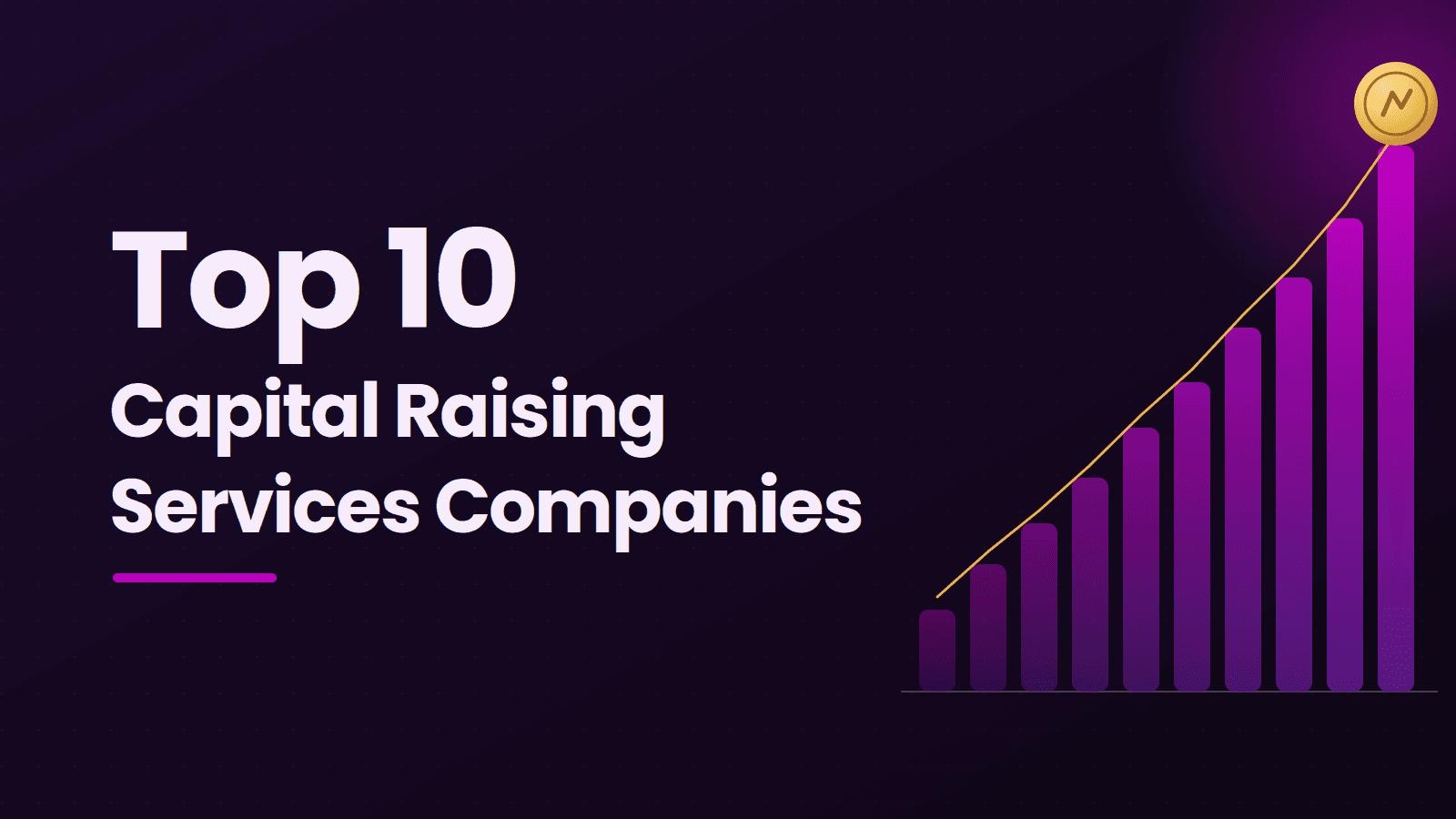
Top 10 Capital Raising Services Companies in 2026

Top 10 Capital Raising Services Companies in 2026

TL;DR: Capital raising splits into four provider types, each suited to a different raise size and investor pool. Investment banks handle institutional deals. Consultancies manage startup rounds. Online platforms run retail raises. Token sale partners serve companies raising through crypto. The ten firms reviewed here span all four: TokenMinds, Stout, PMCF, Hyde Park Capital, Growthink Capital, DealMaker, Republic, Wefunder, Marquee Equity, Qubit Capital.  The right pick depends on the raise size and the investor type, not the brand name.

Many companies raising capital pick the wrong partner on the first call. They chase a bank when the raise is too small, or a platform when they need hands-on strategy, or skip the token sale option entirely because it feels too exotic. Three traditional options exist. Venture capital trades equity for funding, bank debt requires collateral, and a placement agent charges a success fee, usually a percentage of the capital raised. Beyond VC and bank loans, companies can also raise through placement agents, online platforms under Reg CF or Reg A+, or a token sale.

A fourth option is gaining ground. A token sale raises capital through crypto by selling digital tokens directly to a global investor base. Traditional businesses are already moving in. They have started tokenizing their assets to reach new investors and unlock liquidity that a private balance sheet cannot offer. Through asset tokenization, property, receivables, or fund units become tradable tokens that anyone with a wallet can buy. The numbers show the shift. Tokenized real-world assets reached $22 billion in on-chain value by May 2026, up from about $8 billion at the start of 2024, according to Eco's May 2026 analysis of rwa.xyz data. Major financial institutions including BlackRock, Franklin Templeton, Apollo, Hamilton Lane, and WisdomTree have launched live tokenized products, as documented by Eco's analysis of rwa.xyz data.

This guide compares ten firms across four models, banks, consultancies, platforms, and token sale partners, so any company can match its raise size and investor type to the right fit.

What Is a Capital Raising Services Company?

A capital raising services company helps a business plan, source, and close outside funding. It takes over the work a company cannot do well on its own. That includes building investor materials, finding the right investors, and running the process through to closing.

The label covers four different types of provider:

  • Investment bank
    Arranges private placements and debt deals for established companies with institutional investors.

  • Fundraising consultancy
    Prepares the pitch materials and manages investor outreach for early-stage and growth companies.

  • Online raise platform
    Hosts a public offering under securities exemptions so a company can raise from many small investors at once.

  • Token sale partner
    Structures a digital token, builds the sale platform, and markets the offering to a global crypto investor base.

Each type serves a different investor pool and charges in a different way. Banks price by mandate, platforms take a percentage of funds raised, and consultancies usually combine a retainer with a success fee. The comparison below shows how the ten firms line up on those two points.

Top 10 Capital Raising Services Companies at a Glance

The table below summarizes each company's fit, strength, and pricing model. Detailed reviews follow in the next section.

Company

Best For

Core Strength

Pricing Tier

TokenMinds

Any business exploring a token sale or RWA route

Strategy, development, and marketing in one partner

Custom scope

Stout

Mid-market companies needing raise plus valuation work

Capital raising with transaction readiness

Mandate

PMCF

Mid-market firms weighing growth capital and M&A

Institutional private placements and leveraged finance

Mandate

Hyde Park Capital

Founder and family-owned mid-market companies

Equity and debt raising with M&A advisory

Mandate

Growthink Capital

Lower middle market, revenue-driven businesses

Investor materials and full-process execution

Mandate

DealMaker

Companies raising $1M+ from retail investors

White-label online raise on the issuer's own domain

% of raise

Republic

Consumer-facing brands with an engaged audience

Equity crowdfunding with tokenized offerings

% of raise

Wefunder

Community-driven raises under $5M

Largest US Reg CF platform by volume

% of raise

Marquee Equity

Startups and SMEs needing high-volume outreach

32,000+ investor network

Retainer + success fee

Qubit Capital

Seed to Series B startups

AI investor matching

Custom scope

Note: Marquee's public pricing is a setup fee plus a 1 to 3% commission, which fits the "Retainer + success fee" tier. Qubit doesn't publish pricing, so "Custom scope" is the honest label. DealMaker also charges setup and monthly fees on top of its commission, but "% of raise" is still the primary model.

What Services Do Capital Raising Companies Provide?

Capital raising companies deliver two types of service. One prepares a company for equity or debt investors. The other prepares a company to sell a digital token. Both start with strategy and end with money in the account, but the work in between differs.

Traditional Capital Raising Services

Traditional firms handle the full path from preparation to close. Their services usually include:

  • Pitch deck, financial model, and private placement memorandum

  • Valuation and transaction readiness

  • Investor targeting and outreach to Venture Capital (VC) firms, Private Equity (PE) firms, family offices, and lenders. VC firms invest in early-stage, high-growth companies in exchange for equity. PE firms typically acquire mature companies or significant stakes in them, aiming to improve operations and resell for profit. Family offices manage the wealth and investments of affluent families, often including direct investments in private companies.

  • Private placements of equity, mezzanine, and debt

  • Due diligence coordination and deal negotiation

  • Private placements under Securities Act Section 4(a)(2) and Reg D 506, which permit sales to accredited investors without SEC registration. Public offerings under Reg CF or Reg A+, including investor onboarding, payment processing, and disclosure filings

Accredited investors are individuals or entities that meet SEC income or net worth thresholds and can participate in private placements under Reg D.

Token Sale and RWA Tokenization Services

A token sale partner covers the same path for a digital asset. Its services usually include:

  • Token strategy, sale structure, and pricing stages

  • Asset tokenization of property, receivables, or fund units into on-chain tokens

  • Sale platform with KYC and both fiat and crypto payment rails

  • Legal and compliance coordination for the target jurisdictions

  • Launch marketing across PR, influencers, and community

  • Exchange listing and post-sale support

TokenMinds publishes detailed guides on token strategy and tokenomics design to help companies new to this option understand the mechanics before the first call. Companies new to this option can read how a token sale works step by step before deciding whether it fits.

Top 10 Capital Raising Services Companies Reviewed

Each review pairs a quick overview with a short note on what the company has done. Lifecycle coverage sets the order. Firms that own the raise from preparation through close rank above those that stop at the introduction. Verifiable results and launch infrastructure decide the order within each group.

1. TokenMinds

tm.png

Website

tokenminds.co

Core services

Token sale strategy and tokenomics, launch readiness, website and smart contract development, launchpad and exchange preparation, PR, KOL, SEO and paid acquisition, community growth, post-TGE communications

Best for

Any business that wants to raise capital through crypto and needs one partner for the whole token sale, including teams with no Web3 background

Notable clients

CoinMarketCap, MMAON, KuCoin, HyperDEX, GensoKishi, CryptoBlades

TokenMinds is a Web3 agency that serves both crypto projects and traditional businesses raising capital through a token sale. It runs the sale as one connected process, from planning through promotion to post-launch retention. The client does not need to hire separate vendors for strategy, development, and marketing.

The work starts with an assessment of the client's situation. That assessment decides which services the raise needs and how they should be sequenced. It also covers the choice of sale format, which is why the team publishes a comparison of ICO, IDO, and IEO models for companies at that stage.

The case studies show the range. MMAON raised $800,000 within hours and grew a community of 10,000 members in three months, with TokenMinds also building its Web3 platform. HyperDEX reached a hard cap of 10,000,000 USDT through TokenMinds' full token sale service. CoinMarketCap needed KOL support only, and TokenMinds delivered a network of 125+ influencers, managing research, evaluation, outreach, and onboarding. Companies starting from zero can read the step-by-step guide to launching a token before the first call.

2. Stout

Stout.png

Website

stout.com

Core services

Private capital raising, M&A advisory, valuation advisory, transaction advisory

Best for

Mid-market companies that want the raise and the valuation work handled by one firm

Notable clients

Stellex Capital, Majestic Steel, Discount Tire

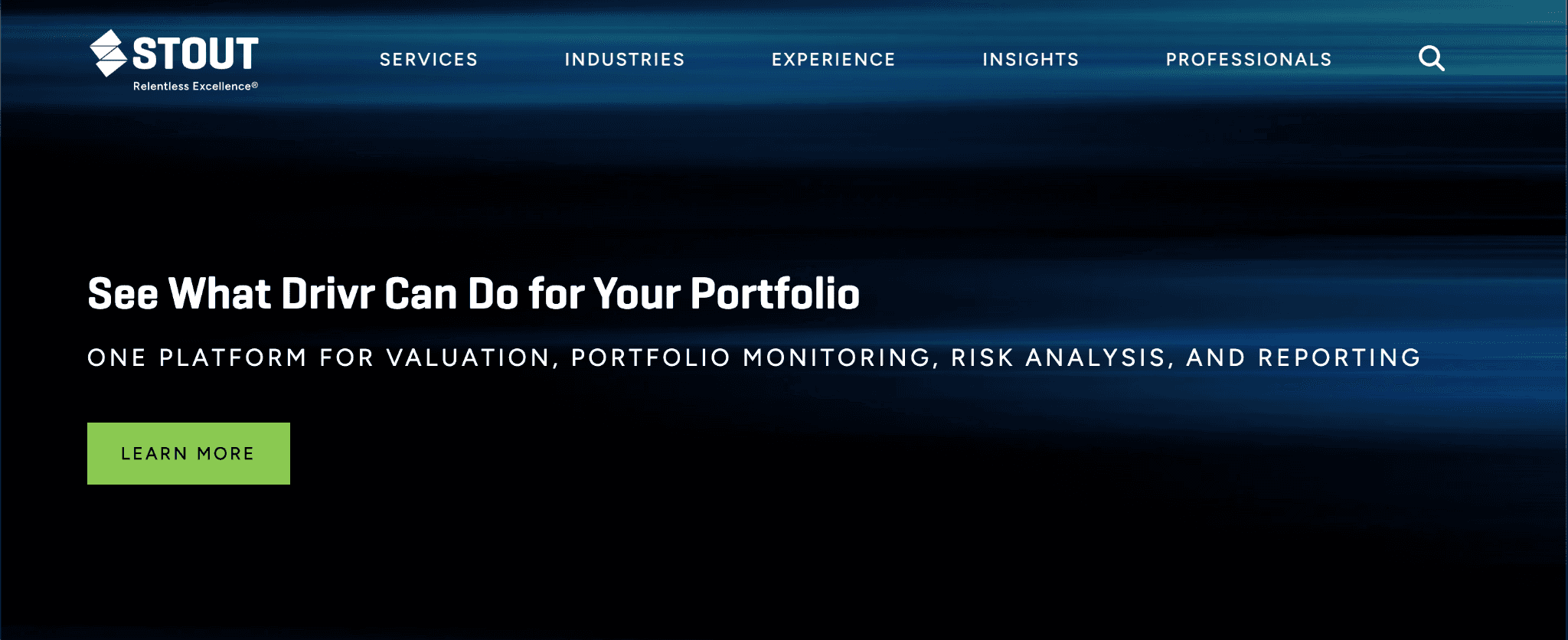
Stout was founded in 1991 and is based in Illinois. Its investment bankers serve family-owned businesses, private equity portfolio companies, and divisions of large corporations. The firm has grown to roughly 1,000 employees across five continents, which gives it reach that smaller boutiques cannot match.

3. PMCF

PMCF.png

Website

pmcf.com

Core services

Institutional private placements, leveraged finance, mezzanine and second lien debt, private equity access, M&A advisory

Best for

Mid-market companies weighing growth capital and a sale at the same time

Notable clients

RediBagUSA

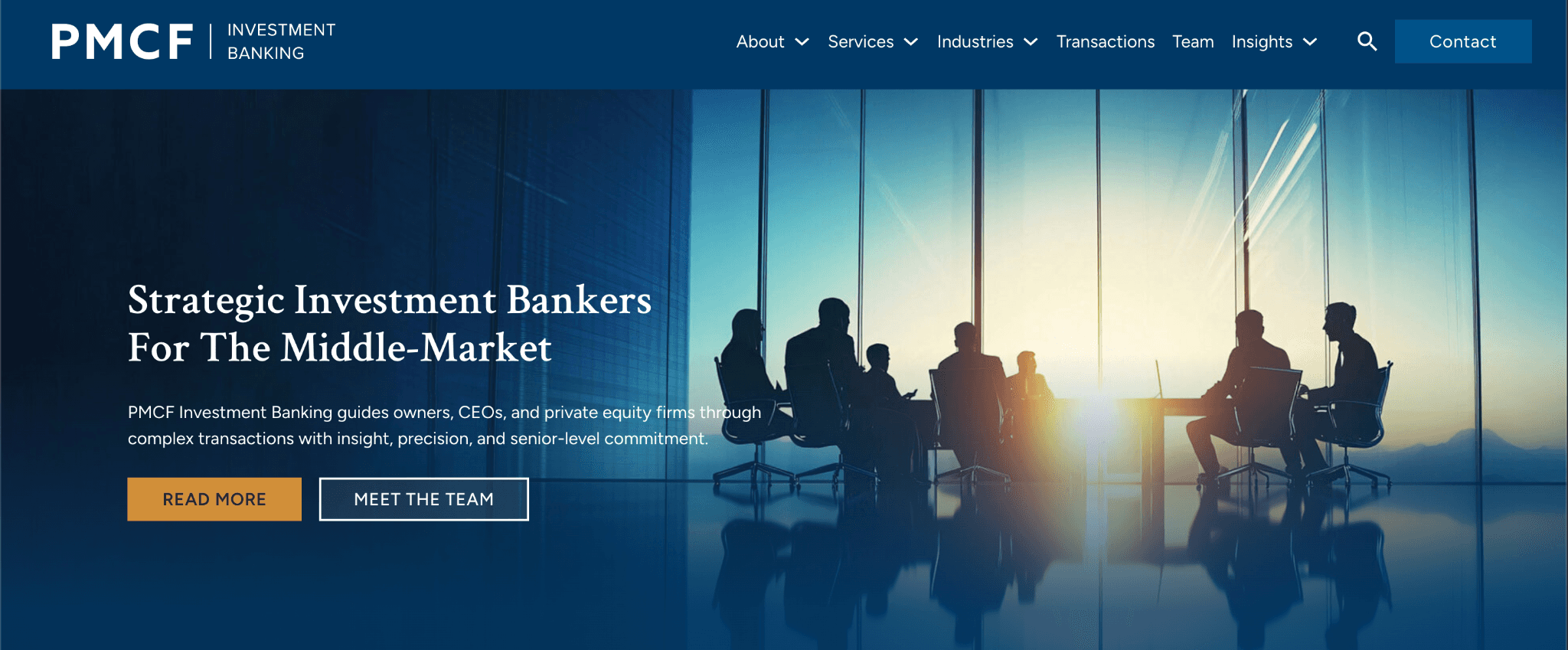
PMCF was founded in 1995 in Chicago and has completed over 300 transactions since. It is an affiliate of Plante Moran and a FINRA-registered broker-dealer. One recent mandate was a $30.5 million private placement of convertible preferred equity with four institutional investors, which shows the deal size it typically handles.

FINRA is the Financial Industry Regulatory Authority that oversees broker-dealers, and SIPC is the Securities Investor Protection Corporation that insures customer accounts. Registration with both bodies signals compliance and investor protection.

4. Hyde Park Capital

Hyde Park Capital.png

Website

hydeparkcapital.com

Core services

Equity and debt capital raising, project finance, fairness opinions, M&A advisory

Best for

Founder and family-owned mid-market companies raising growth equity or acquisition financing

Notable clients

Accuhealth, VitalTech, Progressive Employer Services

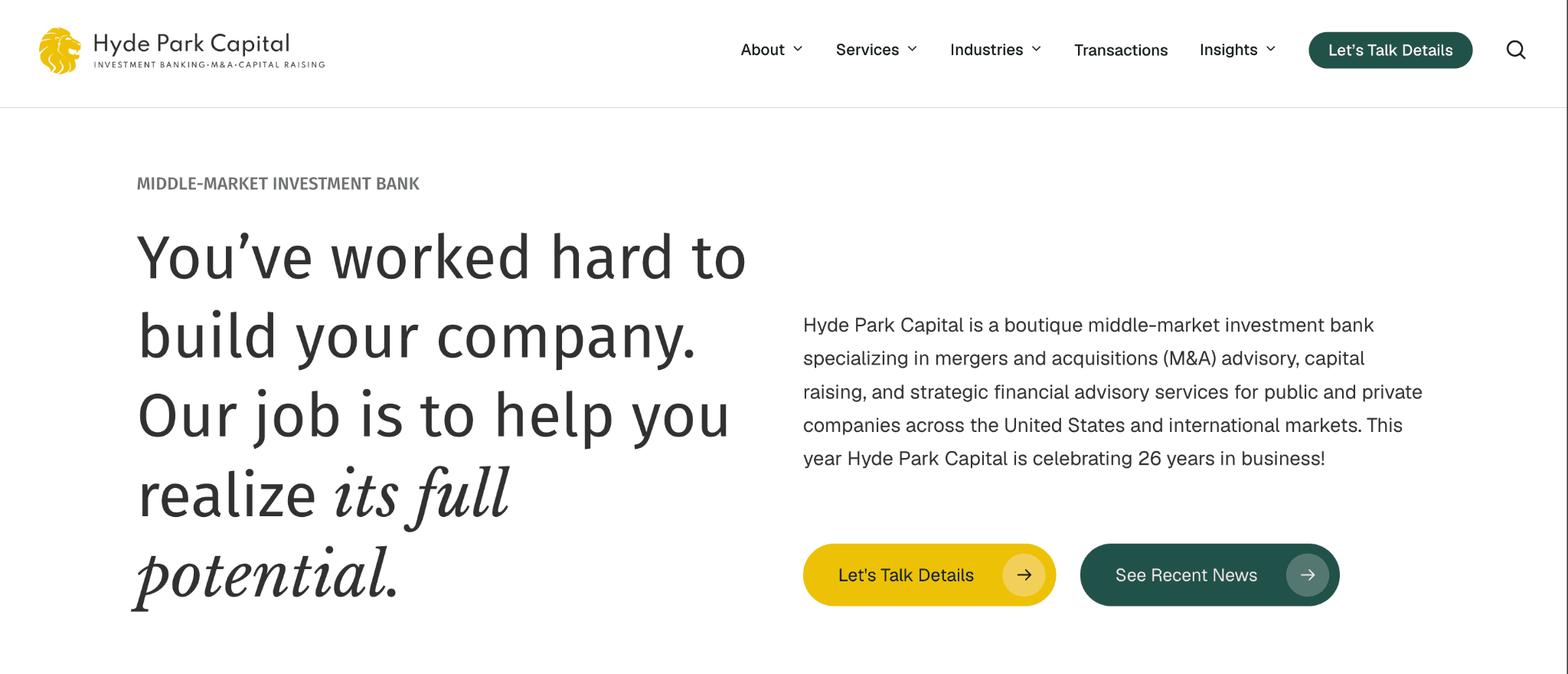
Hyde Park Capital was founded in 2000 in Tampa by John Hill and John McDonald. Its senior bankers have completed 300+ transactions worth more than $10 billion. The firm keeps senior partners on every deal, which matters for owners going through their first institutional raise.

5. Growthink Capital

Growthink Capital .png

Website

growthinkcapital.com

Core services

Growth capital raising, investor materials (deck, business plan, PPM), M&A advisory, exit planning

Best for

Revenue-driven businesses in the lower middle market that want materials built and the process run by one team

Notable clients

Super73, Softvision

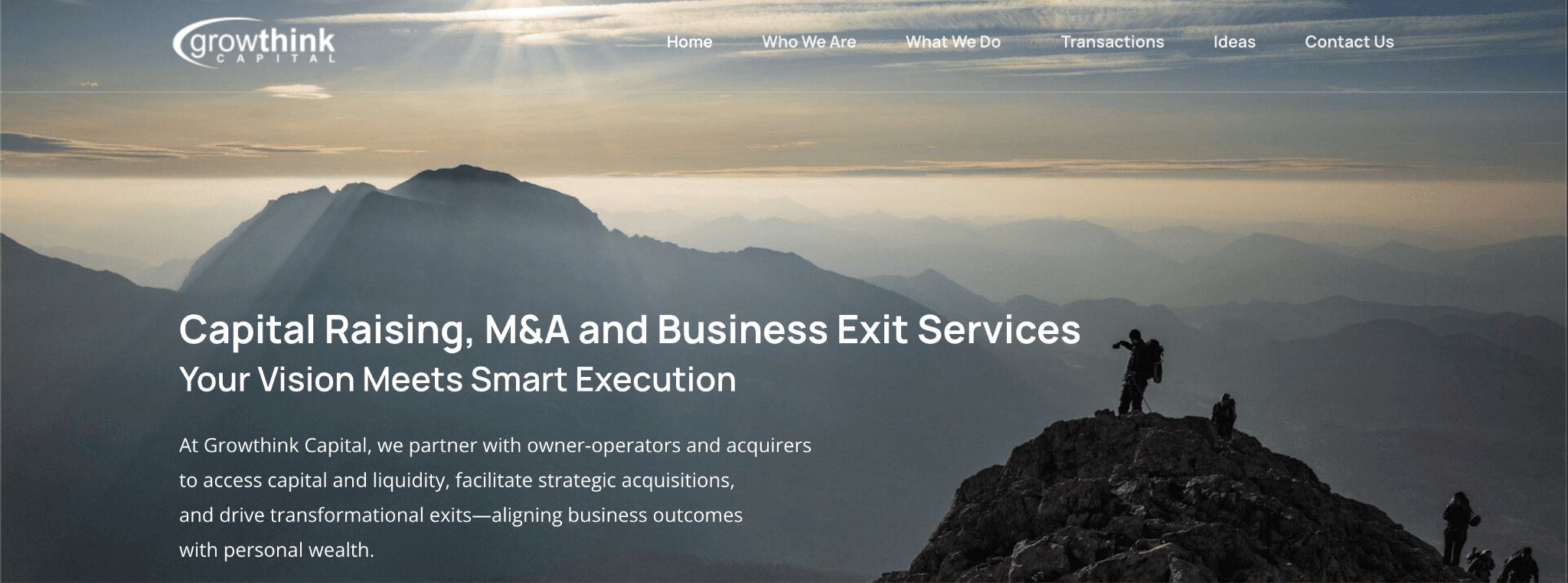
Growthink Capital is the FINRA/SIPC broker-dealer arm of Growthink, which has operated since 1999. Its team has worked on hundreds of transactions with an aggregate size of over $3 billion. A recent example is Super73, an electric vehicle brand, which completed a $20 million growth raise with Volition Capital through Growthink Capital.

6. DealMaker

DealMaker.png

Website

dealmaker.tech

Core services

White-label online raise under Reg A, CF, and D, broker-dealer, transfer agent, investor management, marketing

Best for

Companies raising $1 million or more that want to turn customers into shareholders from their own website

Notable clients

Green Bay Packers, BOXABL, Pacaso

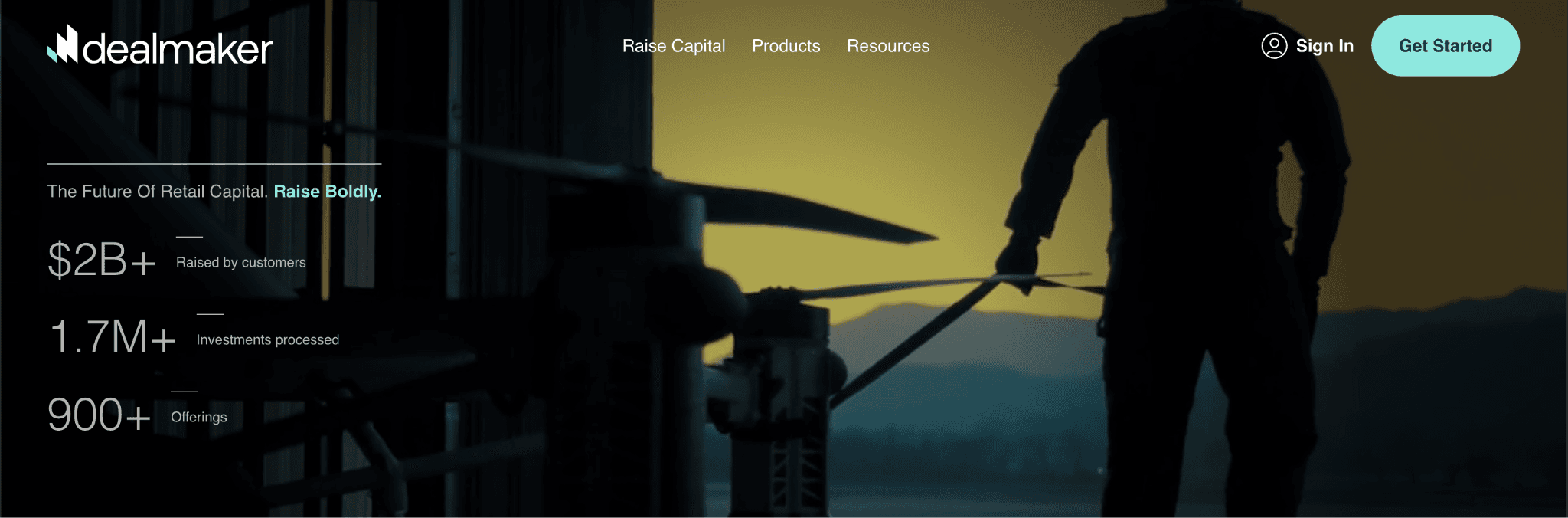
DealMaker was founded in 2018 in Toronto by lawyers Rebecca Kacaba and Matt Goldstein. Its platform has processed over $2 billion for more than 900 companies, and in 2025 its issuers raised $292 million in Reg A+, more than half the industry total that year, according to King's Crowd's 2025 annual report. Its best-known raise is the Green Bay Packers, which brought in over $65 million from 175,000 fans in 2021.

7. Republic

Republic.png

Website

republic.com

Core services

Reg CF crowdfunding, Reg D and Reg A+ offerings, tokenized asset design and launch

Best for

Consumer-facing companies with an engaged community, including those exploring tokenized offerings

Notable clients

Robinhood, Gumroad, Backstage Capital

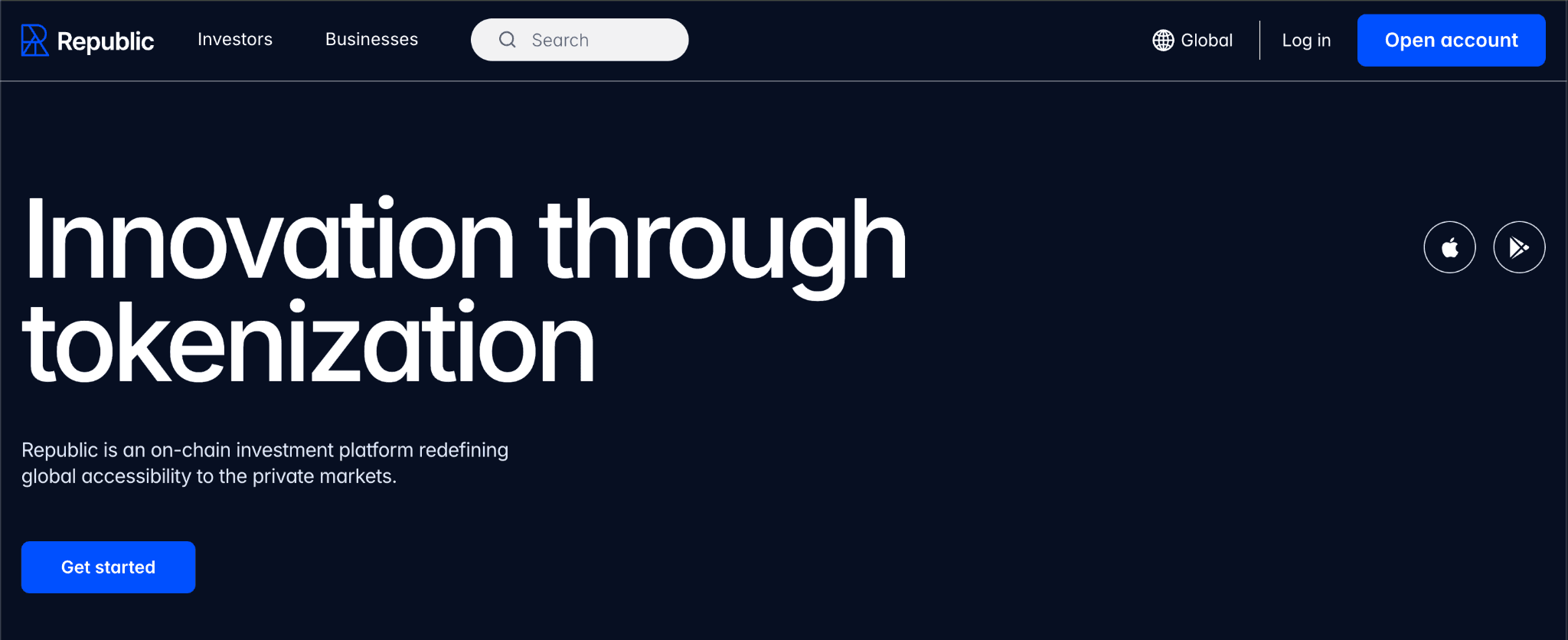
Republic was founded in 2016 as a spin-off from AngelList. It has facilitated over $2.6 billion across 2,000+ companies. For Reg CF, it charges 7% of capital raised in cash plus 2% of the securities offered. Its tokenized asset service makes it one of the few crowdfunding platforms that also bridges into digital assets.

8. Wefunder

Wefunder.png

Website

wefunder.com

Core services

Reg CF, Reg D 506, and Reg A+ offerings supporting SAFEs, equity, convertible notes, and revenue share

Best for

Early-stage, community-driven raises under $5 million with no upfront budget

Notable clients

Mercury, Substack, Replit

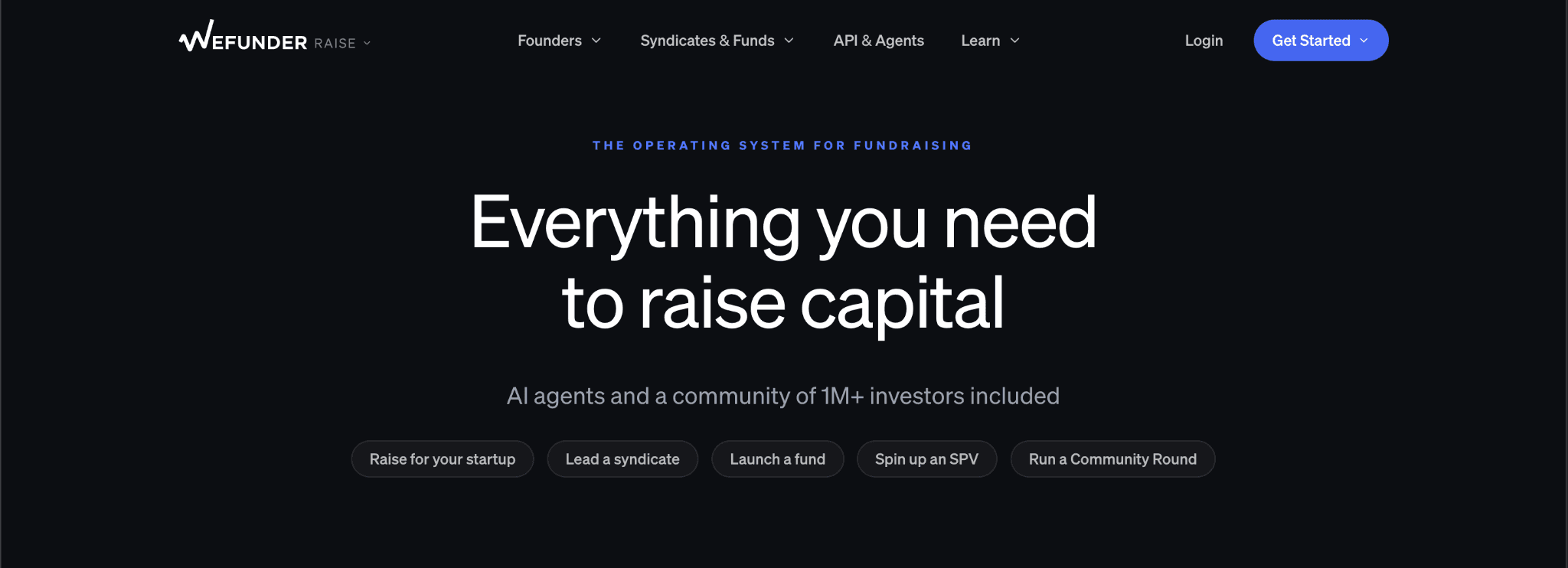
Wefunder was founded in 2011 by three Y Combinator alumni who lobbied for the JOBS Act, which created the regulatory exemptions that enable modern capital raising platforms: Reg CF for equity crowdfunding, Reg A+ for public offerings up to $75 million, and amendments to Reg D that expanded private placement access. Reg CF is a securities exemption that lets companies raise up to $5 million from non-accredited investors through equity crowdfunding. It is the largest US Reg CF platform by dollar volume, with $983 million raised for more than 2,200 startups. In 2025, Wefunder raised $109 million in Reg CF, according to King's Crowd's 2025 annual report. Founders pay 7.9% of the raise only if it succeeds, with no upfront fees.

9. Marquee Equity

Marquee Equity.png

Website

marquee-equity.com

Core services

Investor outreach, pitch deck and financial model preparation, investor meeting coordination

Best for

Startups and SMEs that need a high volume of investor conversations at a lower cost than a bank

Notable clients

eZdia, BAIBYS Fertility

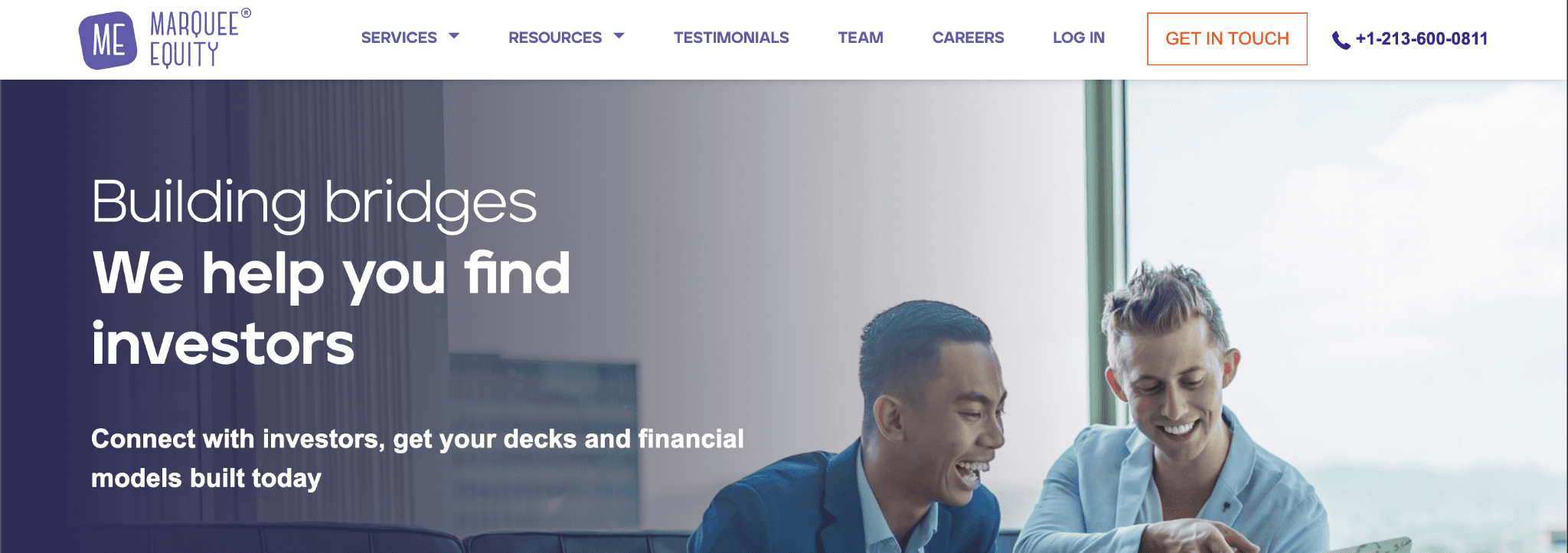
Marquee Equity was founded in 2016 and is based in Noida, India. It gives clients access to 32,000+ firms, angels, and family offices, and runs 50 to 600 investor engagements per deal depending on plan. This network depth and engagement velocity differentiate it from smaller consultancies. Its case studies include a $7 million raise for an Africa-based payment infrastructure company and a $50 million raise for a US construction company.

7. Qubit Capital

Qubit Capital.png

Website

qubit.capital

Core services

AI-powered investor matching, VC and angel introductions, pitch deck support, financial planning

Best for

Seed to Series B startups raising between $150,000 and $30 million

Notable clients

Swiipr Technologies, Spottitt, iVent Pro

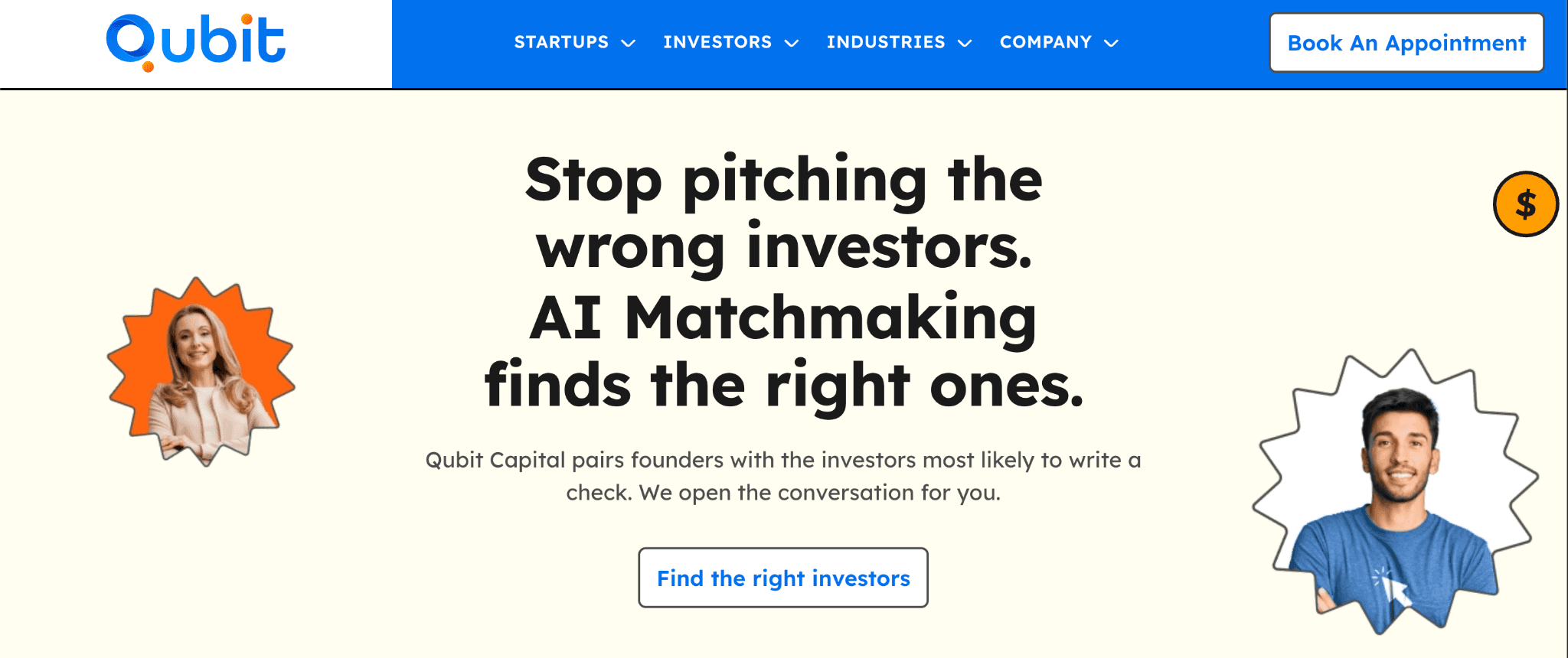
Qubit Capital was founded in 2020 in India and now serves the US, Europe, and the UK. It has supported 237+ startups and helped close $215 million in funding. One example is Swiipr Technologies, a UK fintech that raised about $7.7 million from Octopus Ventures and TX Ventures through Qubit's matching.

How These Capital Raising Companies Were Chosen

Three criteria set the ranking. Each one is something a founder can check before signing a contract.

  • Lifecycle coverage shows how much of the raise the company handles. Some firms stop at the investor introduction. Others stay until the money is in the account or the token is live. The more of the process a firm owns, the higher it ranks.

  • Verifiable results show whether the company can point to real deals. A named client with a closed round counts more than a headline volume figure. Every firm on this list has at least one outcome on public record.

  • Launch infrastructure shows whether the company has the tools to execute. For a bank, that means investor relationships and a proven deal process. For a token sale partner, that means a working sale platform with KYC, payment rails, and compliance already set up.

How to Choose the Right Capital Raising Partner

The right partner depends on the raise, not on the brand name. A few questions asked early can rule out most bad fits before any contract is signed.

Five questions filter out the wrong category in under 10 minutes. A founder should ask these in the intake call:

  1. What is the single concrete deliverable, and on what timeline?

  2. What buyer pool will the firm source for this round: retail, VC, PE, family offices, or strategics?

  3. What is the firm's fee structure, in two sentences, on a $5M closed round?

  4. Who from the firm is named in the contract, and will they join every weekly call through close?

  5. Which three rounds did the firm most recently carry through close, by company name and stage?

A firm that struggles with any of the five will likely drift once the engagement starts. The intake call is the clearest conversation a company will have with a provider. Everything delivered afterward follows from how clear the firm was at that stage.

Cost and Timeline by Provider Type

Provider Type

Typical Cost

Timeline

Typical Close Rate

Best For

Investment Bank

Mandate-based (varies)

3-6 months

Varies by deal

Institutional rounds, $5M+

Consultancy

Retainer + 3-7% success fee

4-12 weeks

60-80%

Growth rounds, $1-10M

Online Platform

7-9% of raise

4-12 weeks

60-80%

Retail raises, $500K-5M

Token Sale Partner

Custom scope

8-16 weeks

Varies by deal

Crypto or RWA, any size

Quick Checklist

  • Match the model to the raise. Decide the amount and the investor type first, then look at which provider type serves that combination.

  • Ask for the fee structure in plain terms. Fundraising consultancies typically charge a retainer plus a 3 to 7% success fee, while placement agents charge 4 to 6% of closed capital. Picking the wrong model can cost a company more than choosing the right one.

  • Confirm who stays on the deal. Find out which senior person will be involved from the first call to the close.

  • Check the compliance setup for a token sale. Ask which jurisdictions the partner has launched in and how KYC and legal review are handled.

Red Flags to Avoid

  • A firm that says it can run every model at once.

  • A fee structure the firm cannot explain in a few sentences.

  • No named clients or recent closed deals.

  • Support that ends once the introduction is made.

What a Token Sale Looks Like for a Non-Crypto Business: SPWAY

The SPWAY case shows how a company outside crypto can raise through a token sale. SpaceWay Token (SPWAY) is an Ethereum-based utility token for the Waypoint 2 Space ecosystem, which runs FAA-approved astronaut training and STEM education. The team had a strong real-world story but no in-house Web3 expertise.

TokenMinds handled the launch end to end:

  • Smart contract review. Checked access control, ERC-20 conformance, and trading readiness before any marketing began.

  • Launch narrative. Built a key message pack so every channel told the same access-and-utility story.

  • KOL, AMA, and PR activation. Vetted 25 to 40 Web3 KOL, podcast, and media targets, ran founder-led X Space and AMA sessions, and placed a pre-launch PR announcement.

  • Launchpad onboarding. Secured listings on Spores Network and Kommunitas.

The result was $350,000+ raised in the Spores and Kommunitas IDO, with a community grown from zero to 1,902 followers ahead of launch. The full SPWAY token sale case study breaks down each step.

Which Capital Raising Route Fits Your Growth Plan?

The answer depends on who the company wants as investors. Banks and consultancies suit companies raising equity or debt from institutions. Online platforms suit companies with a customer base ready to invest in small amounts. A token sale suits any business that wants a global investor pool and a tradable asset from day one, as long as the structure is built correctly. These services demonstrably impact business growth metrics: successful capital raises enable expansion, product development, and market penetration, directly contributing to revenue growth and increased market share.

TokenMinds serves that last option for companies with no crypto background. It provides strategic advice and comprehensive token sale services, from planning and development to marketing execution, tailored to each client's situation. Companies weighing this option can review the full token sale services scope, then book a call to discuss the crypto go-to-market strategy for fundraising.

FAQs

How much do capital raising services cost?
It depends on the provider type. Investment banks price each mandate and rarely publish fees. Online platforms take a share of the raise, usually 7 to 9% on Reg CF. Consultancies typically combine a retainer with a 3 to 7% success fee. Token sale partners quote a custom scope based on strategy, build, and marketing needs.

Can a non-crypto company raise capital through a token sale?
Yes. A token can represent equity, revenue rights, or product access for any business. The company needs a clear purpose for the token, a compliant structure for its target markets, and a partner to handle the technical build. That is why full lifecycle coverage matters most for this option.

What is RWA tokenization and how does it help raise capital?
RWA tokenization turns a real-world asset such as property, receivables, or fund units into digital tokens on a blockchain. Investors buy fractions of the asset, which widens the buyer pool and can create liquidity sooner than a traditional sale. TokenMinds and Republic both offer this alongside standard raises.

How long does a capital raise typically take?
Timeline varies by provider type. Investment banks typically take 3 to 6 months for institutional rounds. Consultancies and online platforms often move faster, with successful raises closing in 4 to 12 weeks. Token sales depend on strategy and marketing scope but often launch within 8 to 16 weeks from kickoff.

What is the average success rate by provider type?
Success rates depend on preparation and market conditions. Companies with strong financials and clear investor targeting see higher close rates. Consultancies and platforms typically report 60 to 80% of serious prospects converting to investors. Banks and token sale partners track outcomes by deal, not aggregate rates, so ask for recent case studies before committing.

How can a company measure the ROI of a capital raise?
Three metrics cover it. Time to close, since faster raises free up management bandwidth sooner. Capital raised per dollar of advisory fees, where higher is better. And post-raise growth in revenue or market share within 12 months. The partner should provide case studies that show these outcomes, not only deal volume.


TL;DR: Capital raising splits into four provider types, each suited to a different raise size and investor pool. Investment banks handle institutional deals. Consultancies manage startup rounds. Online platforms run retail raises. Token sale partners serve companies raising through crypto. The ten firms reviewed here span all four: TokenMinds, Stout, PMCF, Hyde Park Capital, Growthink Capital, DealMaker, Republic, Wefunder, Marquee Equity, Qubit Capital.  The right pick depends on the raise size and the investor type, not the brand name.

Many companies raising capital pick the wrong partner on the first call. They chase a bank when the raise is too small, or a platform when they need hands-on strategy, or skip the token sale option entirely because it feels too exotic. Three traditional options exist. Venture capital trades equity for funding, bank debt requires collateral, and a placement agent charges a success fee, usually a percentage of the capital raised. Beyond VC and bank loans, companies can also raise through placement agents, online platforms under Reg CF or Reg A+, or a token sale.

A fourth option is gaining ground. A token sale raises capital through crypto by selling digital tokens directly to a global investor base. Traditional businesses are already moving in. They have started tokenizing their assets to reach new investors and unlock liquidity that a private balance sheet cannot offer. Through asset tokenization, property, receivables, or fund units become tradable tokens that anyone with a wallet can buy. The numbers show the shift. Tokenized real-world assets reached $22 billion in on-chain value by May 2026, up from about $8 billion at the start of 2024, according to Eco's May 2026 analysis of rwa.xyz data. Major financial institutions including BlackRock, Franklin Templeton, Apollo, Hamilton Lane, and WisdomTree have launched live tokenized products, as documented by Eco's analysis of rwa.xyz data.

This guide compares ten firms across four models, banks, consultancies, platforms, and token sale partners, so any company can match its raise size and investor type to the right fit.

What Is a Capital Raising Services Company?

A capital raising services company helps a business plan, source, and close outside funding. It takes over the work a company cannot do well on its own. That includes building investor materials, finding the right investors, and running the process through to closing.

The label covers four different types of provider:

  • Investment bank
    Arranges private placements and debt deals for established companies with institutional investors.

  • Fundraising consultancy
    Prepares the pitch materials and manages investor outreach for early-stage and growth companies.

  • Online raise platform
    Hosts a public offering under securities exemptions so a company can raise from many small investors at once.

  • Token sale partner
    Structures a digital token, builds the sale platform, and markets the offering to a global crypto investor base.

Each type serves a different investor pool and charges in a different way. Banks price by mandate, platforms take a percentage of funds raised, and consultancies usually combine a retainer with a success fee. The comparison below shows how the ten firms line up on those two points.

Top 10 Capital Raising Services Companies at a Glance

The table below summarizes each company's fit, strength, and pricing model. Detailed reviews follow in the next section.

Company

Best For

Core Strength

Pricing Tier

TokenMinds

Any business exploring a token sale or RWA route

Strategy, development, and marketing in one partner

Custom scope

Stout

Mid-market companies needing raise plus valuation work

Capital raising with transaction readiness

Mandate

PMCF

Mid-market firms weighing growth capital and M&A

Institutional private placements and leveraged finance

Mandate

Hyde Park Capital

Founder and family-owned mid-market companies

Equity and debt raising with M&A advisory

Mandate

Growthink Capital

Lower middle market, revenue-driven businesses

Investor materials and full-process execution

Mandate

DealMaker

Companies raising $1M+ from retail investors

White-label online raise on the issuer's own domain

% of raise

Republic

Consumer-facing brands with an engaged audience

Equity crowdfunding with tokenized offerings

% of raise

Wefunder

Community-driven raises under $5M

Largest US Reg CF platform by volume

% of raise

Marquee Equity

Startups and SMEs needing high-volume outreach

32,000+ investor network

Retainer + success fee

Qubit Capital

Seed to Series B startups

AI investor matching

Custom scope

Note: Marquee's public pricing is a setup fee plus a 1 to 3% commission, which fits the "Retainer + success fee" tier. Qubit doesn't publish pricing, so "Custom scope" is the honest label. DealMaker also charges setup and monthly fees on top of its commission, but "% of raise" is still the primary model.

What Services Do Capital Raising Companies Provide?

Capital raising companies deliver two types of service. One prepares a company for equity or debt investors. The other prepares a company to sell a digital token. Both start with strategy and end with money in the account, but the work in between differs.

Traditional Capital Raising Services

Traditional firms handle the full path from preparation to close. Their services usually include:

  • Pitch deck, financial model, and private placement memorandum

  • Valuation and transaction readiness

  • Investor targeting and outreach to Venture Capital (VC) firms, Private Equity (PE) firms, family offices, and lenders. VC firms invest in early-stage, high-growth companies in exchange for equity. PE firms typically acquire mature companies or significant stakes in them, aiming to improve operations and resell for profit. Family offices manage the wealth and investments of affluent families, often including direct investments in private companies.

  • Private placements of equity, mezzanine, and debt

  • Due diligence coordination and deal negotiation

  • Private placements under Securities Act Section 4(a)(2) and Reg D 506, which permit sales to accredited investors without SEC registration. Public offerings under Reg CF or Reg A+, including investor onboarding, payment processing, and disclosure filings

Accredited investors are individuals or entities that meet SEC income or net worth thresholds and can participate in private placements under Reg D.

Token Sale and RWA Tokenization Services

A token sale partner covers the same path for a digital asset. Its services usually include:

  • Token strategy, sale structure, and pricing stages

  • Asset tokenization of property, receivables, or fund units into on-chain tokens

  • Sale platform with KYC and both fiat and crypto payment rails

  • Legal and compliance coordination for the target jurisdictions

  • Launch marketing across PR, influencers, and community

  • Exchange listing and post-sale support

TokenMinds publishes detailed guides on token strategy and tokenomics design to help companies new to this option understand the mechanics before the first call. Companies new to this option can read how a token sale works step by step before deciding whether it fits.

Top 10 Capital Raising Services Companies Reviewed

Each review pairs a quick overview with a short note on what the company has done. Lifecycle coverage sets the order. Firms that own the raise from preparation through close rank above those that stop at the introduction. Verifiable results and launch infrastructure decide the order within each group.

1. TokenMinds


tm.png

Website

tokenminds.co

Core services

Token sale strategy and tokenomics, launch readiness, website and smart contract development, launchpad and exchange preparation, PR, KOL, SEO and paid acquisition, community growth, post-TGE communications

Best for

Any business that wants to raise capital through crypto and needs one partner for the whole token sale, including teams with no Web3 background

Notable clients

CoinMarketCap, MMAON, KuCoin, HyperDEX, GensoKishi, CryptoBlades

TokenMinds is a Web3 agency that serves both crypto projects and traditional businesses raising capital through a token sale. It runs the sale as one connected process, from planning through promotion to post-launch retention. The client does not need to hire separate vendors for strategy, development, and marketing.

The work starts with an assessment of the client's situation. That assessment decides which services the raise needs and how they should be sequenced. It also covers the choice of sale format, which is why the team publishes a comparison of ICO, IDO, and IEO models for companies at that stage.

The case studies show the range. MMAON raised $800,000 within hours and grew a community of 10,000 members in three months, with TokenMinds also building its Web3 platform. HyperDEX reached a hard cap of 10,000,000 USDT through TokenMinds' full token sale service. CoinMarketCap needed KOL support only, and TokenMinds delivered a network of 125+ influencers, managing research, evaluation, outreach, and onboarding. Companies starting from zero can read the step-by-step guide to launching a token before the first call.

2. Stout


Stout.png

Website

stout.com

Core services

Private capital raising, M&A advisory, valuation advisory, transaction advisory

Best for

Mid-market companies that want the raise and the valuation work handled by one firm

Notable clients

Stellex Capital, Majestic Steel, Discount Tire

Stout was founded in 1991 and is based in Illinois. Its investment bankers serve family-owned businesses, private equity portfolio companies, and divisions of large corporations. The firm has grown to roughly 1,000 employees across five continents, which gives it reach that smaller boutiques cannot match.

3. PMCF


PMCF.png

Website

pmcf.com

Core services

Institutional private placements, leveraged finance, mezzanine and second lien debt, private equity access, M&A advisory

Best for

Mid-market companies weighing growth capital and a sale at the same time

Notable clients

RediBagUSA

PMCF was founded in 1995 in Chicago and has completed over 300 transactions since. It is an affiliate of Plante Moran and a FINRA-registered broker-dealer. One recent mandate was a $30.5 million private placement of convertible preferred equity with four institutional investors, which shows the deal size it typically handles.

FINRA is the Financial Industry Regulatory Authority that oversees broker-dealers, and SIPC is the Securities Investor Protection Corporation that insures customer accounts. Registration with both bodies signals compliance and investor protection.

4. Hyde Park Capital


Hyde Park Capital.png

Website

hydeparkcapital.com

Core services

Equity and debt capital raising, project finance, fairness opinions, M&A advisory

Best for

Founder and family-owned mid-market companies raising growth equity or acquisition financing

Notable clients

Accuhealth, VitalTech, Progressive Employer Services

Hyde Park Capital was founded in 2000 in Tampa by John Hill and John McDonald. Its senior bankers have completed 300+ transactions worth more than $10 billion. The firm keeps senior partners on every deal, which matters for owners going through their first institutional raise.

5. Growthink Capital


Growthink Capital .png

Website

growthinkcapital.com

Core services

Growth capital raising, investor materials (deck, business plan, PPM), M&A advisory, exit planning

Best for

Revenue-driven businesses in the lower middle market that want materials built and the process run by one team

Notable clients

Super73, Softvision

Growthink Capital is the FINRA/SIPC broker-dealer arm of Growthink, which has operated since 1999. Its team has worked on hundreds of transactions with an aggregate size of over $3 billion. A recent example is Super73, an electric vehicle brand, which completed a $20 million growth raise with Volition Capital through Growthink Capital.

6. DealMaker


DealMaker.png

Website

dealmaker.tech

Core services

White-label online raise under Reg A, CF, and D, broker-dealer, transfer agent, investor management, marketing

Best for

Companies raising $1 million or more that want to turn customers into shareholders from their own website

Notable clients

Green Bay Packers, BOXABL, Pacaso

DealMaker was founded in 2018 in Toronto by lawyers Rebecca Kacaba and Matt Goldstein. Its platform has processed over $2 billion for more than 900 companies, and in 2025 its issuers raised $292 million in Reg A+, more than half the industry total that year, according to King's Crowd's 2025 annual report. Its best-known raise is the Green Bay Packers, which brought in over $65 million from 175,000 fans in 2021.

7. Republic


Republic.png

Website

republic.com

Core services

Reg CF crowdfunding, Reg D and Reg A+ offerings, tokenized asset design and launch

Best for

Consumer-facing companies with an engaged community, including those exploring tokenized offerings

Notable clients

Robinhood, Gumroad, Backstage Capital

Republic was founded in 2016 as a spin-off from AngelList. It has facilitated over $2.6 billion across 2,000+ companies. For Reg CF, it charges 7% of capital raised in cash plus 2% of the securities offered. Its tokenized asset service makes it one of the few crowdfunding platforms that also bridges into digital assets.

8. Wefunder


Wefunder.png

Website

wefunder.com

Core services

Reg CF, Reg D 506, and Reg A+ offerings supporting SAFEs, equity, convertible notes, and revenue share

Best for

Early-stage, community-driven raises under $5 million with no upfront budget

Notable clients

Mercury, Substack, Replit

Wefunder was founded in 2011 by three Y Combinator alumni who lobbied for the JOBS Act, which created the regulatory exemptions that enable modern capital raising platforms: Reg CF for equity crowdfunding, Reg A+ for public offerings up to $75 million, and amendments to Reg D that expanded private placement access. Reg CF is a securities exemption that lets companies raise up to $5 million from non-accredited investors through equity crowdfunding. It is the largest US Reg CF platform by dollar volume, with $983 million raised for more than 2,200 startups. In 2025, Wefunder raised $109 million in Reg CF, according to King's Crowd's 2025 annual report. Founders pay 7.9% of the raise only if it succeeds, with no upfront fees.

9. Marquee Equity


Marquee Equity.png

Website

marquee-equity.com

Core services

Investor outreach, pitch deck and financial model preparation, investor meeting coordination

Best for

Startups and SMEs that need a high volume of investor conversations at a lower cost than a bank

Notable clients

eZdia, BAIBYS Fertility

Marquee Equity was founded in 2016 and is based in Noida, India. It gives clients access to 32,000+ firms, angels, and family offices, and runs 50 to 600 investor engagements per deal depending on plan. This network depth and engagement velocity differentiate it from smaller consultancies. Its case studies include a $7 million raise for an Africa-based payment infrastructure company and a $50 million raise for a US construction company.

7. Qubit Capital


Qubit Capital.png

Website

qubit.capital

Core services

AI-powered investor matching, VC and angel introductions, pitch deck support, financial planning

Best for

Seed to Series B startups raising between $150,000 and $30 million

Notable clients

Swiipr Technologies, Spottitt, iVent Pro

Qubit Capital was founded in 2020 in India and now serves the US, Europe, and the UK. It has supported 237+ startups and helped close $215 million in funding. One example is Swiipr Technologies, a UK fintech that raised about $7.7 million from Octopus Ventures and TX Ventures through Qubit's matching.

How These Capital Raising Companies Were Chosen

Three criteria set the ranking. Each one is something a founder can check before signing a contract.

  • Lifecycle coverage shows how much of the raise the company handles. Some firms stop at the investor introduction. Others stay until the money is in the account or the token is live. The more of the process a firm owns, the higher it ranks.

  • Verifiable results show whether the company can point to real deals. A named client with a closed round counts more than a headline volume figure. Every firm on this list has at least one outcome on public record.

  • Launch infrastructure shows whether the company has the tools to execute. For a bank, that means investor relationships and a proven deal process. For a token sale partner, that means a working sale platform with KYC, payment rails, and compliance already set up.

How to Choose the Right Capital Raising Partner

The right partner depends on the raise, not on the brand name. A few questions asked early can rule out most bad fits before any contract is signed.

Five questions filter out the wrong category in under 10 minutes. A founder should ask these in the intake call:

  1. What is the single concrete deliverable, and on what timeline?

  2. What buyer pool will the firm source for this round: retail, VC, PE, family offices, or strategics?

  3. What is the firm's fee structure, in two sentences, on a $5M closed round?

  4. Who from the firm is named in the contract, and will they join every weekly call through close?

  5. Which three rounds did the firm most recently carry through close, by company name and stage?

A firm that struggles with any of the five will likely drift once the engagement starts. The intake call is the clearest conversation a company will have with a provider. Everything delivered afterward follows from how clear the firm was at that stage.

Cost and Timeline by Provider Type

Provider Type

Typical Cost

Timeline

Typical Close Rate

Best For

Investment Bank

Mandate-based (varies)

3-6 months

Varies by deal

Institutional rounds, $5M+

Consultancy

Retainer + 3-7% success fee

4-12 weeks

60-80%

Growth rounds, $1-10M

Online Platform

7-9% of raise

4-12 weeks

60-80%

Retail raises, $500K-5M

Token Sale Partner

Custom scope

8-16 weeks

Varies by deal

Crypto or RWA, any size

Quick Checklist

  • Match the model to the raise. Decide the amount and the investor type first, then look at which provider type serves that combination.

  • Ask for the fee structure in plain terms. Fundraising consultancies typically charge a retainer plus a 3 to 7% success fee, while placement agents charge 4 to 6% of closed capital. Picking the wrong model can cost a company more than choosing the right one.

  • Confirm who stays on the deal. Find out which senior person will be involved from the first call to the close.

  • Check the compliance setup for a token sale. Ask which jurisdictions the partner has launched in and how KYC and legal review are handled.

Red Flags to Avoid

  • A firm that says it can run every model at once.

  • A fee structure the firm cannot explain in a few sentences.

  • No named clients or recent closed deals.

  • Support that ends once the introduction is made.

What a Token Sale Looks Like for a Non-Crypto Business: SPWAY

The SPWAY case shows how a company outside crypto can raise through a token sale. SpaceWay Token (SPWAY) is an Ethereum-based utility token for the Waypoint 2 Space ecosystem, which runs FAA-approved astronaut training and STEM education. The team had a strong real-world story but no in-house Web3 expertise.

TokenMinds handled the launch end to end:

  • Smart contract review. Checked access control, ERC-20 conformance, and trading readiness before any marketing began.

  • Launch narrative. Built a key message pack so every channel told the same access-and-utility story.

  • KOL, AMA, and PR activation. Vetted 25 to 40 Web3 KOL, podcast, and media targets, ran founder-led X Space and AMA sessions, and placed a pre-launch PR announcement.

  • Launchpad onboarding. Secured listings on Spores Network and Kommunitas.

The result was $350,000+ raised in the Spores and Kommunitas IDO, with a community grown from zero to 1,902 followers ahead of launch. The full SPWAY token sale case study breaks down each step.

Which Capital Raising Route Fits Your Growth Plan?

The answer depends on who the company wants as investors. Banks and consultancies suit companies raising equity or debt from institutions. Online platforms suit companies with a customer base ready to invest in small amounts. A token sale suits any business that wants a global investor pool and a tradable asset from day one, as long as the structure is built correctly. These services demonstrably impact business growth metrics: successful capital raises enable expansion, product development, and market penetration, directly contributing to revenue growth and increased market share.

TokenMinds serves that last option for companies with no crypto background. It provides strategic advice and comprehensive token sale services, from planning and development to marketing execution, tailored to each client's situation. Companies weighing this option can review the full token sale services scope, then book a call to discuss the crypto go-to-market strategy for fundraising.

FAQs

How much do capital raising services cost?
It depends on the provider type. Investment banks price each mandate and rarely publish fees. Online platforms take a share of the raise, usually 7 to 9% on Reg CF. Consultancies typically combine a retainer with a 3 to 7% success fee. Token sale partners quote a custom scope based on strategy, build, and marketing needs.

Can a non-crypto company raise capital through a token sale?
Yes. A token can represent equity, revenue rights, or product access for any business. The company needs a clear purpose for the token, a compliant structure for its target markets, and a partner to handle the technical build. That is why full lifecycle coverage matters most for this option.

What is RWA tokenization and how does it help raise capital?
RWA tokenization turns a real-world asset such as property, receivables, or fund units into digital tokens on a blockchain. Investors buy fractions of the asset, which widens the buyer pool and can create liquidity sooner than a traditional sale. TokenMinds and Republic both offer this alongside standard raises.

How long does a capital raise typically take?
Timeline varies by provider type. Investment banks typically take 3 to 6 months for institutional rounds. Consultancies and online platforms often move faster, with successful raises closing in 4 to 12 weeks. Token sales depend on strategy and marketing scope but often launch within 8 to 16 weeks from kickoff.

What is the average success rate by provider type?
Success rates depend on preparation and market conditions. Companies with strong financials and clear investor targeting see higher close rates. Consultancies and platforms typically report 60 to 80% of serious prospects converting to investors. Banks and token sale partners track outcomes by deal, not aggregate rates, so ask for recent case studies before committing.

How can a company measure the ROI of a capital raise?
Three metrics cover it. Time to close, since faster raises free up management bandwidth sooner. Capital raised per dollar of advisory fees, where higher is better. And post-raise growth in revenue or market share within 12 months. The partner should provide case studies that show these outcomes, not only deal volume.

GET SUCCESS IN WEB3

  • Trusted Web3 partner since 2017

  • Full-stack Web3 development team

  • Performance-driven Web3 marketing

Get A Free Consultation

Get A Free Consultation

MEET US AT

RECENT TRAININGS

Follow us

get web3 business updates

Email invalid

  • Access global liquidity for your RWA project with TMX Tokenize’s Canton Network integration

DISCOVER NOW

  • Access global liquidity for your RWA project with TMX Tokenize’s Canton Network integration

    JOIN NOW

DISCOVER

  • Access global liquidity for your RWA project with TMX Tokenize’s Canton Network integration