
Web3 & AI

SOLUTIONS

Products

Services

Web3 & AI

SOLUTIONS

Services

Products

Industries

Become Our Client

About Us

Resources

Web3 & AI

SOLUTIONS

Services

Products

Industries

Money20/20 Asia 2026 Recap: Why Blockchain Integration Needs Asset Mobility

Money20/20 Asia 2026 Recap: Why Blockchain Integration Needs Asset Mobility

TL;DR
TokenMinds joined Money20/20 Asia 2026 for blockchain finance discussions focused on asset mobility. Founder and director Rob Eijgenraam spoke about the missing blockchain layer for usable financial assets, explaining why tokenized assets need clear data, eligibility rules, transfer logic, and compliant movement rails. TokenMinds also advanced five blockchain-in-finance collaboration discussions with organizations across banking, telecommunications, and adjacent financial sectors. Key event themes included asset tokenization, stablecoins, crypto payments, and collateral infrastructure, all pointing to one need: finance needs blockchain systems that connect with real workflows.

Money20/20 Asia 2026

Money20/20 Asia 2026 took place in Bangkok. The event ran from 21 to 23 April 2026. It gathered banks, fintechs, payment firms, and technology companies.  It also welcomed digital asset players, regulators, startups, and investors. The event welcomed over 4,500 attendees. It also represented more than 1,300 companies. Over 360 speakers delivered more than 100 hours of content. Major participants included Ant International, Meta, Fiserv, Visa, Google, DBS, and GCash. These companies showed the event’s focus on payments and financial infrastructure.

The Money20/20 Asia 2026 theme was “From Infrastructure to Impact.” The agenda focused on technology moving from ideas to implementation. Money20/20 also launched the Intersection Stage for 2026. This stage covered TradFi, DeFi, stablecoins, tokenization, and cross-border payments. For finance leaders, the message was clear. The industry is moving toward implementation, not only new products. This made blockchain integration relevant at Money20/20 Asia 2026.

Market Signals From Money20/20 Asia 2026: Finance Trends Shaping Blockchain Adoption

TokenMinds gathered many market insights during Money20/20 Asia 2026. The discussions showed one clear direction. Finance is moving from technology experiments to practical deployment.

AI, payments, stablecoins, tokenization, and open finance shaped many discussions. These topics showed where financial services now need stronger execution.

Several market needs stood out:

  • Faster cross-border payments
    Financial companies need faster and cheaper settlement rails.

  • Stablecoin payment readiness
    Stablecoins are moving closer to mainstream payment infrastructure.

  • AI in financial operations
    Finance teams are exploring AI for automation and service delivery.

  • Tokenized asset readiness
    Tokenized assets need data, rules, and transfer paths.

  • Stronger trust infrastructure
    Institutions need compliance, identity, security, and data controls.

These trends shared one common message. Financial innovation now needs infrastructure that works in production. That need connects directly with blockchain in finance. The market wants systems that improve payments, assets, and operations.

What This Means for the Future of Finance

These market signals point to one clear shift. Finance is moving from experiments to practical adoption.

  • For banks
    Banks need infrastructure that supports controlled blockchain adoption. This matters for tokenization, collateral, and stablecoin settlement. The systems must support compliance, auditability, and existing workflows.

  • For fintech startups
    Fintech startups need rails that help products scale faster. This includes payments, asset workflows, and compliance-ready systems. The user experience should stay simple. The blockchain layer should handle complexity underneath.

  • For regulators
    Regulators need clearer visibility into blockchain-enabled finance. They need standards for identity, reporting, controls, and risk.

Better infrastructure can support safer blockchain adoption.

TokenMinds at Money20/20

TokenMinds attended Money20/20 to introduce practical blockchain infrastructure for finance. The focus was clear. Blockchain should not sit outside existing financial systems. It should connect with banking, payments, collateral, and asset workflows. TokenMinds met finance players across banking, telecommunications, fintech, and infrastructure sectors.

Key focus areas included:

  • Asset mobility across financial workflows.

  • Connection with banking, payment, and compliance systems.

  • Better usability for tokenized assets.

  • Institutional infrastructure for digital finance.

  • Compliance, interoperability, and trusted data flows.

This focus guided TokenMinds’ presence throughout the event. It also set the context for the speaking session and follow-up collaboration work.

TokenMinds Speaking Session: The Missing Mobility Blockchain Layer in Finance
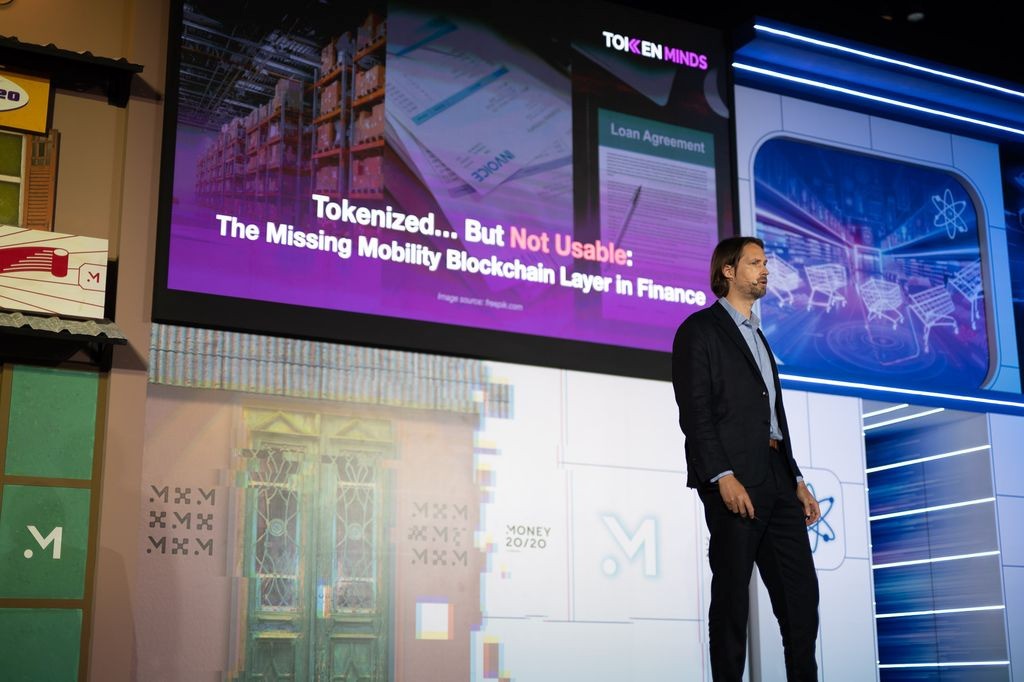

Rob Eijgenraam, founder and director of TokenMinds, spoke at the Intersection Stage at Money20/20 Asia. His session was titled “Tokenised But Not Usable: The Missing Mobility Blockchain Layer in Finance.”

Rob discussed one practical question for financial services: “Can existing assets become portable?” Rob framed asset mobility through three practical layers:

  • Asset clarity: Institutions need clear asset data, ownership, and eligibility.

  • Workflow usability: Assets must support financing, collateral, pooling, and transfer.

  • Movement infrastructure: Systems need rails for trusted movement across institutions.

The session explained why many assets remain difficult to use. Examples included inventory, receivables, loan portfolios, and tokenized real-world assets. These assets may hold value. Yet they often remain hard to finance, transfer, pool, or use across institutions. Rob’s presentation highlighted five value points:

  • Asset mobility helps tokenized assets become usable in finance.

  • Shared asset data can reduce confusion across institutions.

  • Clear eligibility rules help assets support financing workflows.

  • Transferable exposure can support pooling, participation, and distribution.

  • Better movement rails can make capital more fluid across markets.

Tokenization alone does not solve finance’s infrastructure problem. Assets also need clear data, eligibility rules, transfer logic, collateral usability, and compliant movement rails. This is where blockchain integration becomes more practical for financial services.

Blockchain-in-Finance Collaboration Discussions with Industry Leaders

TokenMinds advanced five blockchain-in-finance collaboration discussions with organizations across banking, telecommunications, and adjacent financial sectors. The discussions showed clear implementation demand across asset tokenization, payments, collateral infrastructure, stablecoin integration, and banking workflow integration. The common focus was practical: connecting blockchain systems with daily financial operations instead of treating them as standalone products.

What the collaborations focused on

Several finance use cases stood out:

  • Asset tokenization
    Institutions need better ways to digitize real-world assets. The focus was on making asset ownership easier to record and manage.

  • Collateral infrastructure
    Tokenized assets need clearer rules for financing and collateral use. The focus was on pledge logic, eligibility checks, and custody verification.

  • Stablecoin integration
    Financial platforms need better rails for settlement and treasury flows. The focus was on wallets, transfers, on-ramps, and off-ramps.

  • Crypto payment integration
    Businesses need payment systems for crypto and stablecoin transactions. The focus was on payment APIs, tracking, and compliance-ready flows.

  • Banking workflow integration
    Blockchain systems must connect with daily financial operations. The focus was on compliance, reporting, and core system integration.

Why these discussions matter

These discussions showed demand for implementation. Finance players now want blockchain systems tied to daily operations.

What this means for TokenMinds

For TokenMinds, the collaborations reinforced one key point. Blockchain development must solve operational problems. It must support asset movement, trusted data, compliance, and institutional workflows. This is also where TokenMinds’ work as a blockchain development company becomes relevant. Finance firms need more than standalone blockchain products. They need systems that connect with real financial infrastructure.

Build Blockchain Integration for Financial Services

Financial companies need systems that connect assets, payments, compliance, and operations.

TokenMinds helps banks, fintechs, and finance companies build those systems. That includes asset tokenization, collateral infrastructure, stablecoin integration, and crypto payment integration. Each solution should support trusted data, compliance, and asset movement.

Explore TokenMinds’ blockchain development services to start building solutions for real financial use. Schedule a free consultation now.


TL;DR
TokenMinds joined Money20/20 Asia 2026 for blockchain finance discussions focused on asset mobility. Founder and director Rob Eijgenraam spoke about the missing blockchain layer for usable financial assets, explaining why tokenized assets need clear data, eligibility rules, transfer logic, and compliant movement rails. TokenMinds also advanced five blockchain-in-finance collaboration discussions with organizations across banking, telecommunications, and adjacent financial sectors. Key event themes included asset tokenization, stablecoins, crypto payments, and collateral infrastructure, all pointing to one need: finance needs blockchain systems that connect with real workflows.

Money20/20 Asia 2026

Money20/20 Asia 2026 took place in Bangkok. The event ran from 21 to 23 April 2026. It gathered banks, fintechs, payment firms, and technology companies.  It also welcomed digital asset players, regulators, startups, and investors. The event welcomed over 4,500 attendees. It also represented more than 1,300 companies. Over 360 speakers delivered more than 100 hours of content. Major participants included Ant International, Meta, Fiserv, Visa, Google, DBS, and GCash. These companies showed the event’s focus on payments and financial infrastructure.

The Money20/20 Asia 2026 theme was “From Infrastructure to Impact.” The agenda focused on technology moving from ideas to implementation. Money20/20 also launched the Intersection Stage for 2026. This stage covered TradFi, DeFi, stablecoins, tokenization, and cross-border payments. For finance leaders, the message was clear. The industry is moving toward implementation, not only new products. This made blockchain integration relevant at Money20/20 Asia 2026.

Market Signals From Money20/20 Asia 2026: Finance Trends Shaping Blockchain Adoption

TokenMinds gathered many market insights during Money20/20 Asia 2026. The discussions showed one clear direction. Finance is moving from technology experiments to practical deployment.

AI, payments, stablecoins, tokenization, and open finance shaped many discussions. These topics showed where financial services now need stronger execution.

Several market needs stood out:

  • Faster cross-border payments
    Financial companies need faster and cheaper settlement rails.

  • Stablecoin payment readiness
    Stablecoins are moving closer to mainstream payment infrastructure.

  • AI in financial operations
    Finance teams are exploring AI for automation and service delivery.

  • Tokenized asset readiness
    Tokenized assets need data, rules, and transfer paths.

  • Stronger trust infrastructure
    Institutions need compliance, identity, security, and data controls.

These trends shared one common message. Financial innovation now needs infrastructure that works in production. That need connects directly with blockchain in finance. The market wants systems that improve payments, assets, and operations.

What This Means for the Future of Finance

These market signals point to one clear shift. Finance is moving from experiments to practical adoption.

  • For banks
    Banks need infrastructure that supports controlled blockchain adoption. This matters for tokenization, collateral, and stablecoin settlement. The systems must support compliance, auditability, and existing workflows.

  • For fintech startups
    Fintech startups need rails that help products scale faster. This includes payments, asset workflows, and compliance-ready systems. The user experience should stay simple. The blockchain layer should handle complexity underneath.

  • For regulators
    Regulators need clearer visibility into blockchain-enabled finance. They need standards for identity, reporting, controls, and risk.

Better infrastructure can support safer blockchain adoption.

TokenMinds at Money20/20

TokenMinds attended Money20/20 to introduce practical blockchain infrastructure for finance. The focus was clear. Blockchain should not sit outside existing financial systems. It should connect with banking, payments, collateral, and asset workflows. TokenMinds met finance players across banking, telecommunications, fintech, and infrastructure sectors.

Key focus areas included:

  • Asset mobility across financial workflows.

  • Connection with banking, payment, and compliance systems.

  • Better usability for tokenized assets.

  • Institutional infrastructure for digital finance.

  • Compliance, interoperability, and trusted data flows.

This focus guided TokenMinds’ presence throughout the event. It also set the context for the speaking session and follow-up collaboration work.

TokenMinds Speaking Session: The Missing Mobility Blockchain Layer in Finance


Rob Eijgenraam, founder and director of TokenMinds, spoke at the Intersection Stage at Money20/20 Asia. His session was titled “Tokenised But Not Usable: The Missing Mobility Blockchain Layer in Finance.”

Rob discussed one practical question for financial services: “Can existing assets become portable?” Rob framed asset mobility through three practical layers:

  • Asset clarity: Institutions need clear asset data, ownership, and eligibility.

  • Workflow usability: Assets must support financing, collateral, pooling, and transfer.

  • Movement infrastructure: Systems need rails for trusted movement across institutions.

The session explained why many assets remain difficult to use. Examples included inventory, receivables, loan portfolios, and tokenized real-world assets. These assets may hold value. Yet they often remain hard to finance, transfer, pool, or use across institutions. Rob’s presentation highlighted five value points:

  • Asset mobility helps tokenized assets become usable in finance.

  • Shared asset data can reduce confusion across institutions.

  • Clear eligibility rules help assets support financing workflows.

  • Transferable exposure can support pooling, participation, and distribution.

  • Better movement rails can make capital more fluid across markets.

Tokenization alone does not solve finance’s infrastructure problem. Assets also need clear data, eligibility rules, transfer logic, collateral usability, and compliant movement rails. This is where blockchain integration becomes more practical for financial services.

Blockchain-in-Finance Collaboration Discussions with Industry Leaders

TokenMinds advanced five blockchain-in-finance collaboration discussions with organizations across banking, telecommunications, and adjacent financial sectors. The discussions showed clear implementation demand across asset tokenization, payments, collateral infrastructure, stablecoin integration, and banking workflow integration. The common focus was practical: connecting blockchain systems with daily financial operations instead of treating them as standalone products.

What the collaborations focused on

Several finance use cases stood out:

  • Asset tokenization
    Institutions need better ways to digitize real-world assets. The focus was on making asset ownership easier to record and manage.

  • Collateral infrastructure
    Tokenized assets need clearer rules for financing and collateral use. The focus was on pledge logic, eligibility checks, and custody verification.

  • Stablecoin integration
    Financial platforms need better rails for settlement and treasury flows. The focus was on wallets, transfers, on-ramps, and off-ramps.

  • Crypto payment integration
    Businesses need payment systems for crypto and stablecoin transactions. The focus was on payment APIs, tracking, and compliance-ready flows.

  • Banking workflow integration
    Blockchain systems must connect with daily financial operations. The focus was on compliance, reporting, and core system integration.

Why these discussions matter

These discussions showed demand for implementation. Finance players now want blockchain systems tied to daily operations.

What this means for TokenMinds

For TokenMinds, the collaborations reinforced one key point. Blockchain development must solve operational problems. It must support asset movement, trusted data, compliance, and institutional workflows. This is also where TokenMinds’ work as a blockchain development company becomes relevant. Finance firms need more than standalone blockchain products. They need systems that connect with real financial infrastructure.

Build Blockchain Integration for Financial Services

Financial companies need systems that connect assets, payments, compliance, and operations.

TokenMinds helps banks, fintechs, and finance companies build those systems. That includes asset tokenization, collateral infrastructure, stablecoin integration, and crypto payment integration. Each solution should support trusted data, compliance, and asset movement.

Explore TokenMinds’ blockchain development services to start building solutions for real financial use. Schedule a free consultation now.
GET SUCCESS IN WEB3

  • Trusted Web3 partner since 2017

  • Full-stack Web3 development team

  • Performance-driven Web3 marketing

Get A Free Consultation

Get A Free Consultation

MEET US AT

RECENT TRAININGS

Follow us

get web3 business updates

Email invalid

  • Access global liquidity for your RWA project with TMX Tokenize’s Canton Network integration

DISCOVER NOW

  • Access global liquidity for your RWA project with TMX Tokenize’s Canton Network integration

    JOIN NOW

DISCOVER

  • Access global liquidity for your RWA project with TMX Tokenize’s Canton Network integration