TL;DR
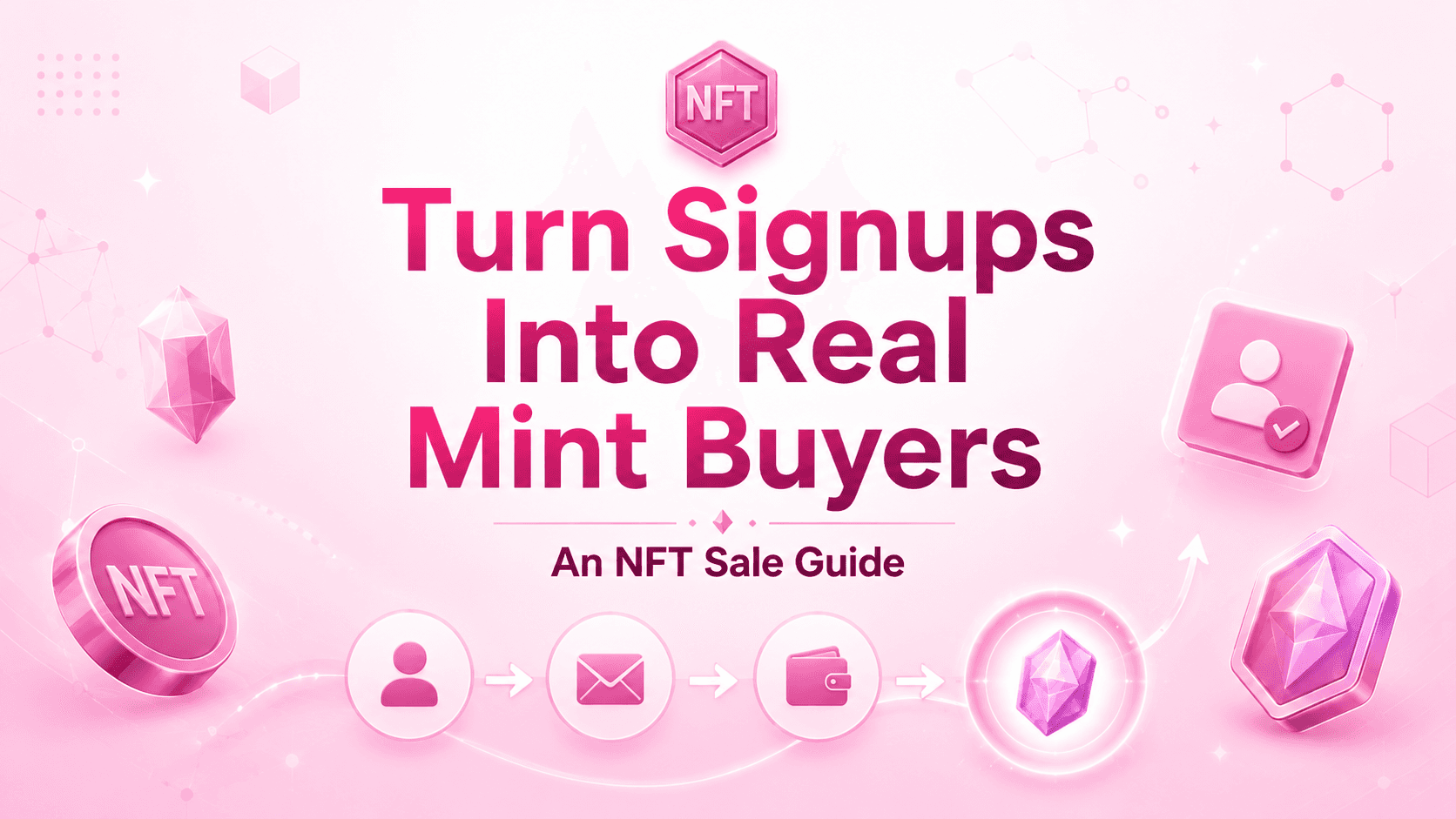
NFT allowlist conversion starts with real mint buyers, not total signups. A real buyer understands the collection, price, deadline, and mint flow. The wallet is verified, funded, and ready before sale day. Projects can qualify demand through wallet checks, source tracking, and behavior. Quest quality, community activity, and mint-page visits show stronger intent. Sybil risk needs duplicate checks, one-wallet rules, and activity review. Low-effort tasks should not secure scarce mint spots. A cleaner allowlist turns qualified demand into successful NFT mints.
Why NFT Allowlists Fail to Convert Into Mints
NFT allowlist failure rarely starts on mint day. It usually starts earlier, when teams treat signup as demand. A large list can still miss mint targets. The issue is usually buyer quality, not audience size. The same issue appears in NFT whitelist conversion when teams measure access, not readiness.
Common failure signs include:
The list attracts low-intent users
Some users join because entry feels free. Others join every reward campaign. These signups increase list size without proving mint demand.Bots and farmers occupy scarce spots
Simple quests can attract users with no purchase intent. Duplicate wallets, spam behavior, and low-effort tasks weaken the final allowlist.Mint rules are unclear
Users may not know the price, deadline, network, wallet rules, or mint limit. Confusion creates delay before purchase action.Wallet and mint-page readiness are weak
A real buyer can still fail to mint. The wallet may be unfunded, on the wrong network, or blocked by a confusing mint page.
In practice, signup is only the first signal. NFT teams need to check whether each user can mint, understands the process, and shows real buyer intent.
What Counts as a Real NFT Mint Buyer?
A real mint buyer is not just an allowlist entry. It is a user who can complete the purchase flow.
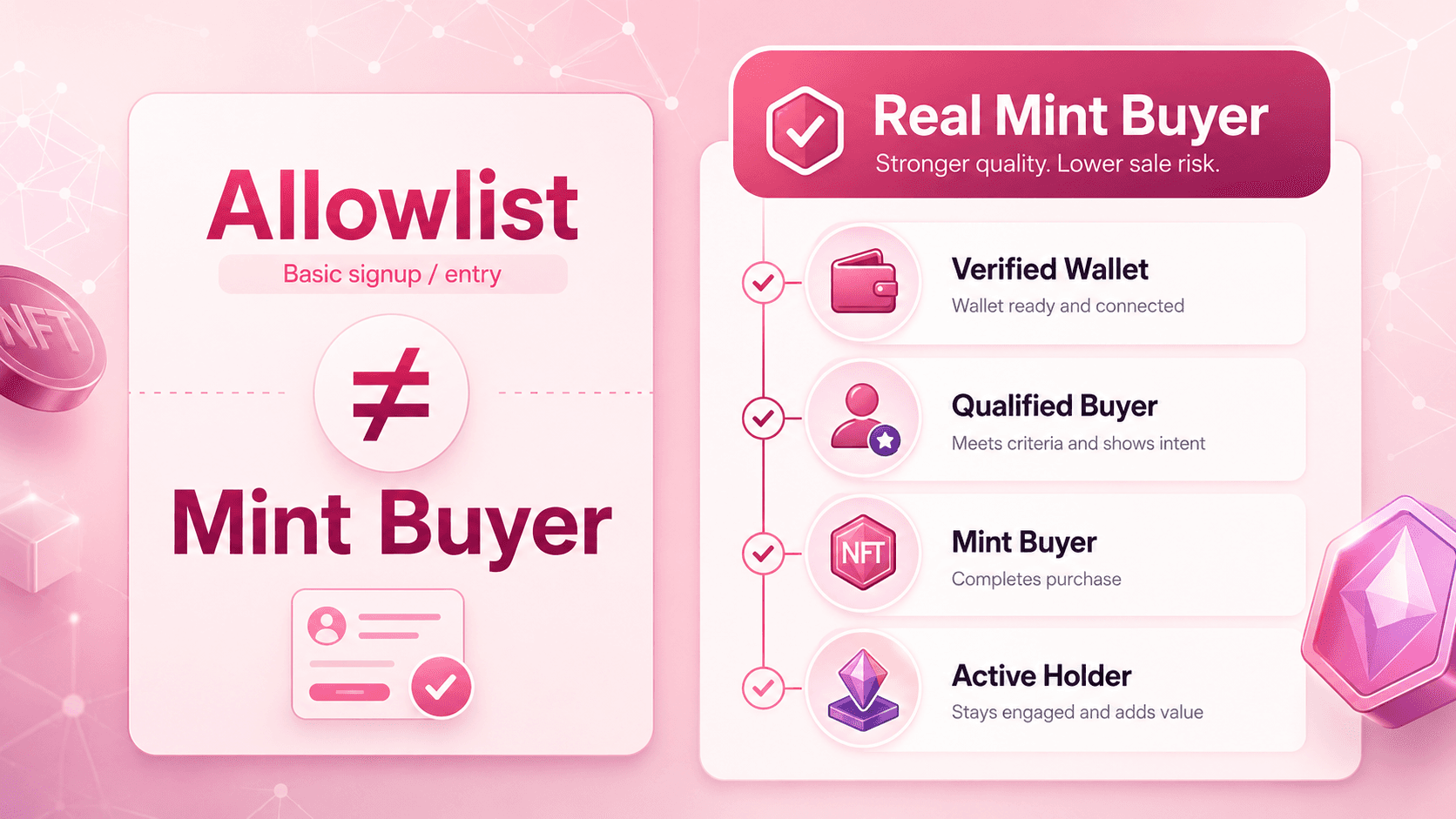
A real mint buyer understands the project, price, timeline, and mint rules. The buyer has verified wallet access, uses the right network, and has enough funds. The buyer has also seen reminders and knows where to get support.
User Type | What It Means | Sale Risk |
Signup | Joined a form, contest, or Discord role | High |
Verified wallet | Confirmed wallet details | Medium |
Qualified buyer | Shows intent and understands the mint | Lower |
Mint buyer | Completes purchase | Lowest |
Active holder | Stays engaged after mint | Long-term value |
This model prevents vanity metrics. A smaller list with qualified wallets can be stronger than a larger list with weak buyer readiness.
The 5-Step NFT Allowlist Conversion Framework
NFT allowlist conversion needs a simple operating model. A signup should not sit in a list until mint day. It should move through five steps: interest, wallet proof, intent scoring, mint preparation, and activation.
Capture Interest: Track users from Discord, quests, AMAs, creators, and forms.
Verify Wallet Ownership: Confirm wallet access before mint day and reduce duplicates.
Score Buyer Intent: Rank users by participation, source quality, clicks, and visits.
Prepare for Mint: Share price, deadline, network, rules, and official link.
Convert and Activate: Guide buyers into mint, onboarding, access, and utility.
The 5-step framework gives the operating model. The funnel below shows where each user moves from early attention to verified mint action.
Which NFT Acquisition Channels Bring Stronger Mint Intent?
Source quality affects NFT allowlist conversion. A signup from an active holder group usually has different intent than a signup from a giveaway post.
NFT teams should not judge channels by signup volume alone. They should compare which channels produce verified wallets, qualified buyers, mint-page visits, and successful mints.
Channel | Typical Intent | What to Watch |
Discord community | High | Strong if users join updates and ask mint questions |
Existing NFT holders | High | Strong if the audience already buys similar collections |
Creator campaigns | Medium-High | Depends on creator fit and audience quality |
X giveaways | Medium | Can bring reach, but often needs stronger filtering |
Airdrop hunters | Low | High risk of farming and low mint intent |
This table should guide source tracking, not replace project data. Each campaign should still prove its quality through wallet verification, buyer intent signals, and mint conversion.
The NFT Sale Funnel From Community Signal to Mint
True NFT buyers rarely start out as buyers. Most users start with smaller community signals. They follow campaign updates or join community channels. These signals are important. They indicate attention, not purchase intent.
These actions matter. They show attention, but not purchase intent. The NFT sale funnel should convert that attention into readiness. The allowlist becomes the control layer. It records who entered, where each user came from, and what each user needs next.
According to Influencer Marketing Hub, NFT whitelisting can work as a lead-generation funnel. It is not only an early-access perk. The source also highlights wallet verification, source tracking, scoring, dashboards, filtering, and post-mint retention.
The journey below breaks that funnel into practical stages. Each stage should move the user closer to mint. The goal is not to collect more names. The goal is to qualify, prepare, and convert real buyers.
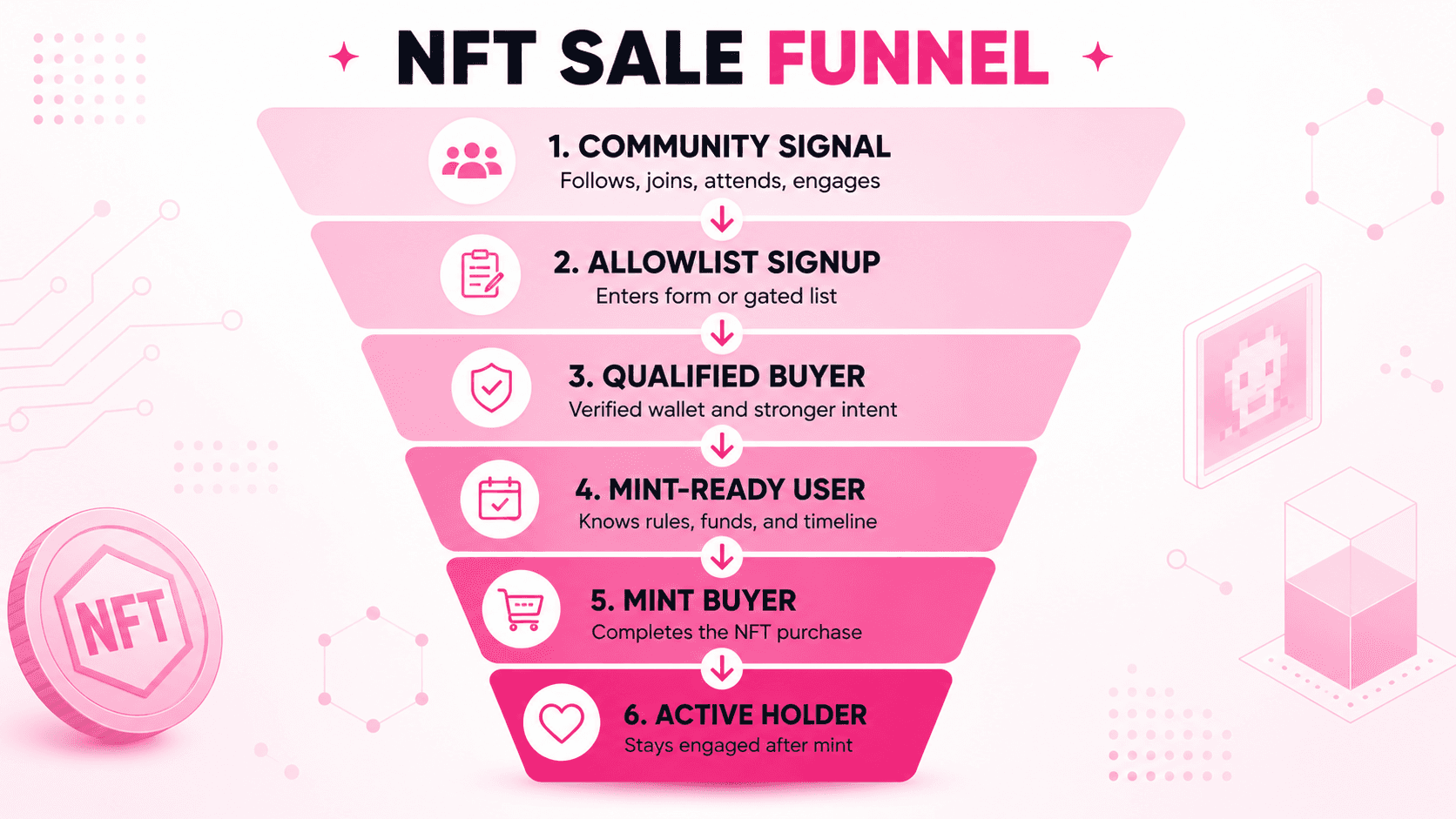
1. Community Signal
A community signal is the first sign of interest.
This can come from Discord, X, quests, AMAs, email, partner campaigns, or creator posts. At this stage, the user has noticed the project. That is useful, but still early. The team should capture the source. Source tracking helps show which channels attract stronger buyers later.
2. Allowlist Signup
An allowlist signup shows higher interest than a follow.
Still, signup alone does not prove mint demand. Some users join because access feels scarce. Others join because the task is easy. Some join only for possible rewards. The signup should trigger the next check. The user needs wallet verification, rule confirmation, and clear mint instructions.
3. Qualified Buyer
A qualified buyer shows stronger intent.
The wallet is verified. The user follows updates. The user understands the collection, price, and mint rules. The user may also join AMAs, click reminders, or visit the mint page. This is where the allowlist becomes useful. The team can separate real demand from passive entries.
4. Mint-Ready User
A mint-ready user can complete the mint process.
The user knows the mint date, time zone, price, network, wallet rules, and official mint link. The wallet is funded. The user also knows where to ask for help. This stage matters because good intent can still fail. Confusion can block buyers before purchase.
5. Mint Buyer
A mint buyer completes the purchase.
This is the conversion point. The user reaches the mint page, connects the wallet, passes eligibility, and completes the transaction. The team should track this step by source. That shows which communities, creators, and campaigns produced actual buyers.
6. Active Holder
The funnel should not stop after mint.
An active holder joins holder channels, follows roadmap updates, uses project utility, or joins future campaigns. This step turns the sale into retention.
For broader NFT sale planning, this section connects with NFT Sale Strategy in 2026: How to Build a Community-to-Mint Funnel.
Where NFT Sale Funnels Usually Leak Buyers
NFT sale funnels rarely fail in one place. They leak across several handoffs. Each handoff needs a different fix.
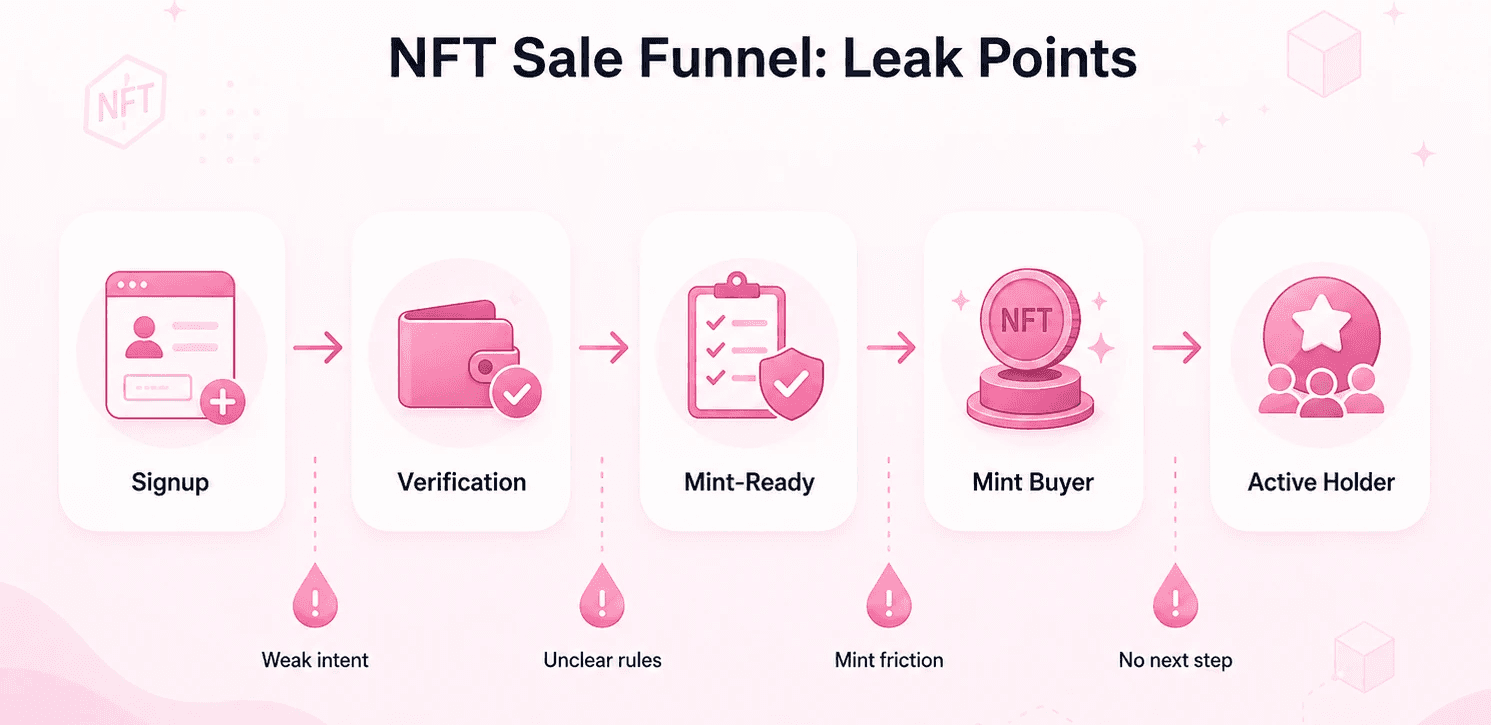
Signup to verification drop
Users enter the allowlist, but never verify wallets. The cause may be unclear steps, low intent, or weak source quality.Verification to mint-ready drop
Users verify wallets, but remain unprepared. They may miss price, network, deadline, or funding details.Mint-ready to mint drop
Users intend to buy, but fail during mint. Common causes include page friction, wallet errors, timing, or failed transactions.Mint to holder activation drop
Users mint, but do not stay involved. They need onboarding, access, utility, and a clear next action.
This leak map should guide the next sections. Quality control fixes weak signups. Mint readiness fixes preparation gaps. Mint-day UX fixes purchase friction. Post-mint activation fixes holder drop-off.
Allowlist Quality Control Before Mint Day
Allowlist quality control protects the NFT sale funnel. The goal is not to make entry complicated. The goal is to separate real buyer demand from weak or risky entries.
A clean allowlist answers three questions:
Who entered?
Where did they come from?
What proves they are ready to mint?
The answers help the team decide what happens next. Some users need mint reminders. Some need wallet guidance. Some need more education. Others should be reviewed before they receive a mint spot.
Below, the quality check breaks into three control layers. Buyer intent signals show who moves closer to purchase. Sybil and farmer filtering removes weak or risky entries. Segmentation decides who needs reminders, support, education, or review.
Buyer Intent Signals
NFT teams should not treat every signup the same. Some users need education. Some need wallet support. Some need only reminders. Others should be reviewed before they receive a mint spot.
Useful buyer intent signals include:
Signal | What It Shows | Action |
Wallet verification | User can join the mint | Move to eligible segment |
Community activity | User follows project updates | Send deeper mint context |
Quest quality | User completed meaningful tasks | Score stronger intent |
Source tracking | Team knows where demand came from | Compare channel quality |
Mint-page visits | User is close to purchase | Prioritize support |
No single signal proves intent. The pattern matters more. A user who verifies a wallet, follows updates, and visits the mint page has stronger intent. A user who only completes one giveaway task has weaker proof.
Sybil and Farmer Filtering
A weak allowlist lowers mint quality. It also makes the data harder to trust.
NFT teams should remove clear abuse before mint day. Start with duplicate wallets, repeated emails, repeated handles, and reused social accounts. Then review behavior.
Spam replies, copied quest answers, sudden Discord activity, and repeated low-effort tasks can point to farming. These patterns should not secure scarce mint spots.
The filter should not punish real buyers. It should remove entries that show no clear mint intent.
TokenMinds covers the same whitelist filtering logic in How to Structure a Token Sale Whitelist That Filters Real Users, Not Sybils.
For NFT sales, the filter can focus on four layers:
Filter Layer | What It Catches |
Duplicate checks | Repeated wallets, emails, or handles |
Behavior review | Spam, copied replies, bot-like activity |
Quest review | Low-effort task completion |
Wallet review | Suspicious or repeated wallet patterns |
More advanced checks can include wallet age, role history, source quality, and previous mint activity. Priority segments may also need manual review.
The rule is simple. Keep the path easy for real users. Block patterns that distort demand before mint day.
Segmenting the Allowlist
Segmentation turns the allowlist into an operating tool.
High-intent users should get mint reminders and live support. Mid-intent users should get more education. Weak or risky users should be filtered, warmed, or removed. This prevents one common mistake. Teams often send the same message to every signup. That wastes attention and misses context.
The same logic applies to waitlists. TokenMinds explains this in How to Convert Waitlists Into Token Sale Purchases and Mints. A list becomes useful when it moves users toward action.
Source Tracking Setup
Source tracking shows which channels create buyers, not just signups. NFT teams can use UTM links, creator attribution, Discord source roles, referral links, and campaign tags. Each signup should carry a source label before it reaches the allowlist.
This prevents false confidence. If 500 users join through one creator campaign but only 10 mint, the source looks strong at signup and weak at conversion.
The same check should apply to Discord, X giveaways, partner campaigns, and holder referrals. A channel is valuable when it produces verified wallets, qualified buyers, and completed mints.
Mint Readiness Before Sale Day
Mint readiness is the bridge between intent and conversion. A qualified user can still fail to mint. The wallet may be unfunded. The user may choose the wrong network. The mint window may be missed. The official link may be unclear. NFT sale teams should solve these issues before mint day.
1. Wallet, Funding, and Network Checks
Wallet readiness should be confirmed early. The user needs the right wallet, network, and funds. If gas matters, the user should know before the mint window opens. If the mint uses a specific chain, that detail should be repeated.
This step sounds basic. It often decides conversion. A user who wants to buy can still drop off. One missing wallet step can block the sale.
2. Mint Rules and Reminders
Mint rules should be simple and repeated. The buyer needs to know the price, deadline, time zone, wallet limit, and eligibility status. The buyer also needs the official mint link. One announcement is not enough. Reminders should build toward the mint window.
A simple reminder flow can include:
Eligibility confirmation
Wallet readiness reminder
Mint price and deadline reminder
Official link reminder
Final mint window alert
Each message should answer one question. What should the buyer do next?
3. Support and Scam Warnings
Support should be ready before the mint opens. Buyers may ask about wallet errors, eligibility, wrong networks, failed transactions, or official links. These questions need fast answers during the mint window.
Scam warnings also matter. Users should know where official links appear. They should also know which messages the project will never send.
For a deeper checklist, connect this section with NFT Mint Readiness Checklist: Wallets, Funding, Gas, Deadlines, and Scam Warnings.
Mint-Day UX and Conversion Tracking
Mint-day UX turns readiness into action. The user has already moved through the funnel. The wallet is verified. The rules are clear. The buyer is close to purchase. Now the mint page must reduce friction.
Mint-Page Friction
The mint page should answer three questions fast.
Is the wallet eligible?
What does the buyer need to do?
What happened after the transaction?
A strong mint page shows wallet connection, eligibility, price, mint limit, transaction status, and support links. Mobile usability also matters. Many users will open links from social or Discord.
Failed transaction messages should be clear. Vague errors can turn ready buyers into lost buyers.
NFT Sale Metrics That Matter
Tracking should cover the full NFT sale funnel. The final mint count is not enough. Teams need to know where buyers came from. They also need to know where users dropped off.
Stage | Metrics |
Signup | Total signups, source, campaign |
Verification | Verified wallets, rejected wallets, duplicates |
Qualification | Qualified buyers, weak entries, risky entries |
Mint day | Mint page visits, wallet connects, failed transactions |
Conversion | Successful mints, allowlist-to-mint rate |
Post-mint | Holder activation, retention, utility participation |
These metrics show the real leak. Low wallet verification points to entry friction. Strong verification with weak mint visits points to poor reminders. Strong visits with weak mints may point to price, funding, timing, or UX issues.
Good tracking also improves the next NFT sale. It shows which channels produced real buyers, not just signups.
Post-Mint Activation Tasks That Turn Buyers Into Holders
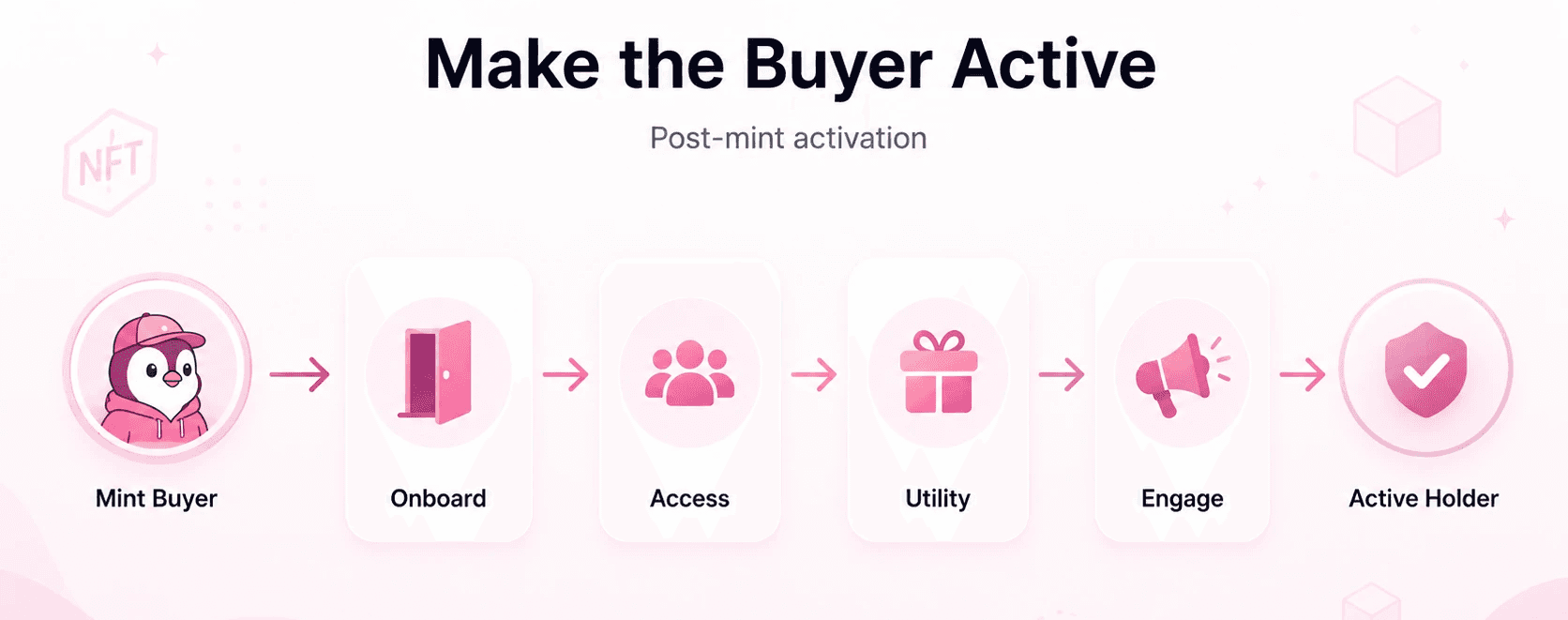
The NFT sale funnel should not end after mint. A mint buyer has completed the purchase. That does not mean the buyer is active. The next task is to give each holder a clear first action.
Send Holder Onboarding
The first message should confirm what happens after mint. It should explain where holders go next. This can include the holder channel, claim page, utility guide, roadmap, or support path.Move Buyers Into Holder Channels
Holder channels should give more than access. They should give direction. The team can pin next steps, official links, support rules, and key updates. New holders should quickly understand what to join, claim, read, or watch.Give Holders a First Participation Task
A holder needs one simple action after purchase. The task can be joining a holder call, claiming access, voting, sharing feedback, or completing a loyalty step. This keeps attention active after mint.Track Holder Activation
The team should track who joins, claims, attends, votes, or uses utility. These actions show which buyers became active holders. They also help score future allowlists.
Run an NFT Allowlist Conversion Sprint With TokenMinds
NFT sale readiness is easier to manage when the funnel is visible.
TokenMinds helps NFT projects structure the path from community growth to mint conversion. This can include buyer segmentation, allowlist planning, wallet readiness, community conversion, mint-day coordination, launch tracking, and post-mint holder activation.
The founder team still owns strategy, approvals, and final launch accountability. TokenMinds supports execution around the sale.
Before opening the mint, TokenMinds can review the NFT sale funnel and identify where community attention may drop before it becomes mint demand.
Run an NFT Allowlist Conversion Sprint With TokenMinds.
FAQs
Why do NFT allowlist users fail to mint?
NFT allowlist users fail when signup does not become readiness. Common causes include weak intent, unclear mint rules, unfunded wallets, wrong networks, and poor mint-page flow.How can NFT projects improve allowlist conversion rates?
NFT projects can improve allowlist or whitelist conversion before mint day. They should qualify users through wallet checks and source tracking. Intent signals, reminders, and mint support move users toward purchase.What is a good NFT allowlist-to-mint conversion rate?
There is no fixed benchmark for every NFT sale. A good rate depends on price, audience quality, mint rules, and source mix. Teams should compare conversion by channel and improve each funnel stage.How should NFT projects filter bots and Sybil wallets?
Projects should review duplicate wallets, repeated emails, reused handles, and copied quest activity. The filter should remove abuse without adding friction for real buyers.What metrics should NFT teams track before mint day?
NFT teams should track signup source, verified wallets, qualified buyers, reminder clicks, mint-page visits, and rejected entries. These metrics show whether the allowlist is ready to convert.