TLDR:
TokenMinds leads for AI-native and full-stack Cardano development, while Antier, PixelPlex, and LeewayHertz fit complex or enterprise builds, and SoluLab, Labrys, BairesDev, Prolitus, Rapid Innovation, and Blockchain App Factory suit startups, nearshore teams, or budget-focused Cardano projects.
Cardano is having its biggest year yet. The Leios upgrade is scheduled for 2026. It will boost base-layer throughput without touching security or decentralization. The Midnight privacy chain launched in late 2025 and opened its first dApps in Q1 2026, as observed by this Privacy for Institutions documentation. The Cardano Foundation is now actively pursuing a US ADA ETF. TVL and wallet growth are both accelerating.
For builders, this is the moment to act. The window before mass enterprise adoption is still open.
But Cardano is not like Ethereum. Smart contracts use Plutus and Haskell. The EUTXO model is different from the EVM account model. You need a partner who has built on Cardano before.
This guide ranks the Top Cardano Development Companies in 2026. Every profile is based on verified data from each company's own site. TokenMinds ranks first.
Why Build on Cardano in 2026?
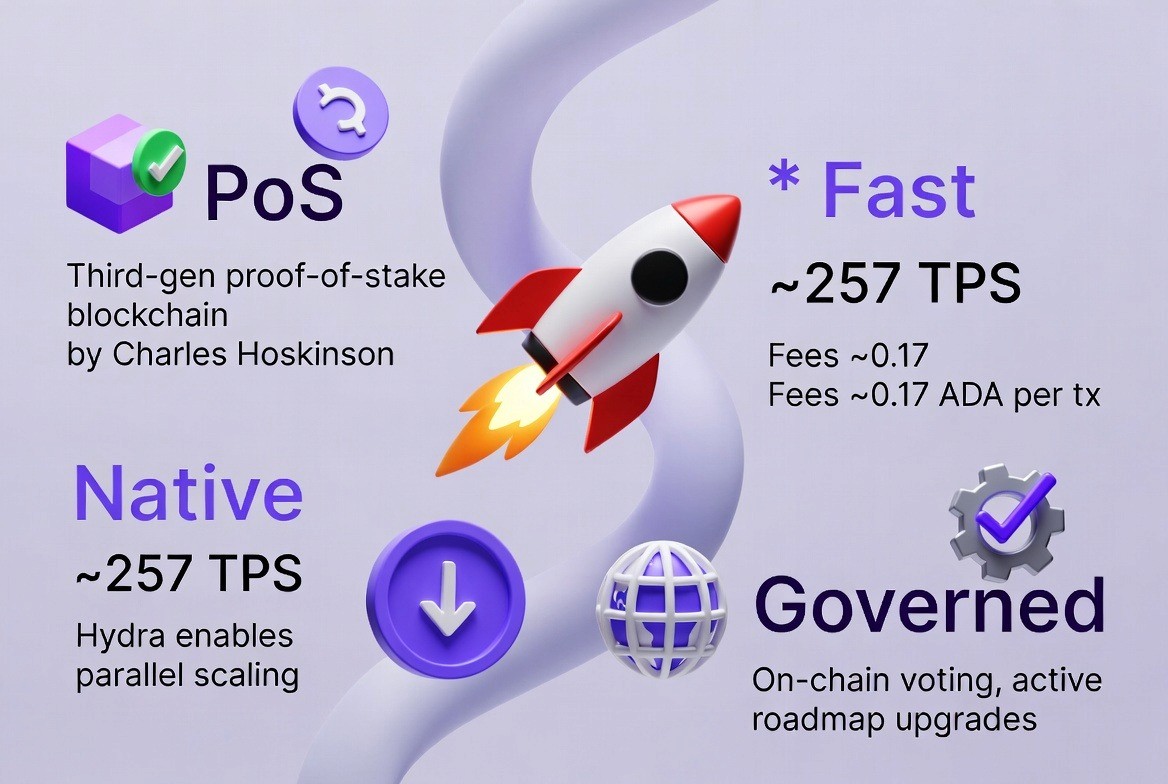
Cardano is a third-generation proof-of-stake blockchain. It was founded by Charles Hoskinson in 2015. Every upgrade is peer-reviewed by academics before it ships. This sets Cardano apart from every other major chain.
Key facts for builders in 2026:
Throughput: Cardano handles 257+ TPS. Hydra, its Layer 2 solution, is designed for thousands of parallel off-chain transactions.
Fees: Transaction fees are approximately 0.17 ADA. That is less than $0.10 at current prices.
Energy: Cardano uses proof-of-stake. It uses a fraction of the energy of proof-of-work chains.
Smart contracts: Written in Plutus (Haskell-based) and Marlowe for financial instruments.
Native tokens: Cardano supports fungible and non-fungible tokens natively, without wrapper contracts.
Governance: The Voltaire era introduced on-chain governance. 85% of Delegated Representatives backed recent infrastructure upgrades.
2026 roadmap: Leios upgrade, Midnight partner chain expansion, and ADA ETF progress.
How We Ranked These Companies
Each company was evaluated on five criteria:
Cardano-specific services: Dedicated Cardano page and Plutus/Haskell expertise, not just general blockchain work
Service depth: Smart contracts, dApps, wallets, NFT markets, DeFi, and tokenization
Verified credentials: Published case studies, certifications, or third-party recognition
Team size and track record: Years of experience and project volume
Pricing transparency: Clear rate ranges where published
Quick Comparison: Top Cardano Development Companies 2026
Rank | Company | Key Services | Rate | Founded |
1 | TokenMinds | dApps, Smart Contracts, DeFi, Tokenization, AI-Native | $50-$79/hr | 2017 |
2 | Antier Solutions | dApps, Smart Contracts, NFT, DeFi, Token Dev, Wallets | $25-$49/hr | 2011 |
3 | PixelPlex | Smart Contracts, dApps, NFT, DeFi, Wallet, Audit | $40-$80/hr | 2007 |
4 | LeewayHertz | dApps, Smart Contracts, Marlowe, Rosetta, NFT Marketplace | $50-$99/hr | 2007 |
5 | SoluLab | Consulting, Integration, Token Dev, Smart Contracts, NFT | $25-$49/hr | 2014 |
6 | Labrys | Smart Contracts, dApps, DeFi, Node Infrastructure, MVPs | Custom | 2017 |
7 | BairesDev | dApps, Smart Contracts, Plutus, Wallets, Tokenization | Custom | 2009 |
8 | Prolitus Technologies | NFT Minting, Smart Contracts, Wallets, Token Dev | $25-$49/hr | 2007 |
9 | Rapid Innovation | Smart Contracts, DeFi, Token Economics, Protocol Design | $30-$75/hr | 2019 |
10 | Blockchain App Factory | dApps, DeFi, Token Dev, Smart Contracts, NFT Marketplace | $25-$49/hr | 2017 |
Best Cardano Development Companies Overview
1. TokenMinds
Website: tokenminds.co | Founded: 2017 | Rate: $50-$79/hr | Location: Singapore
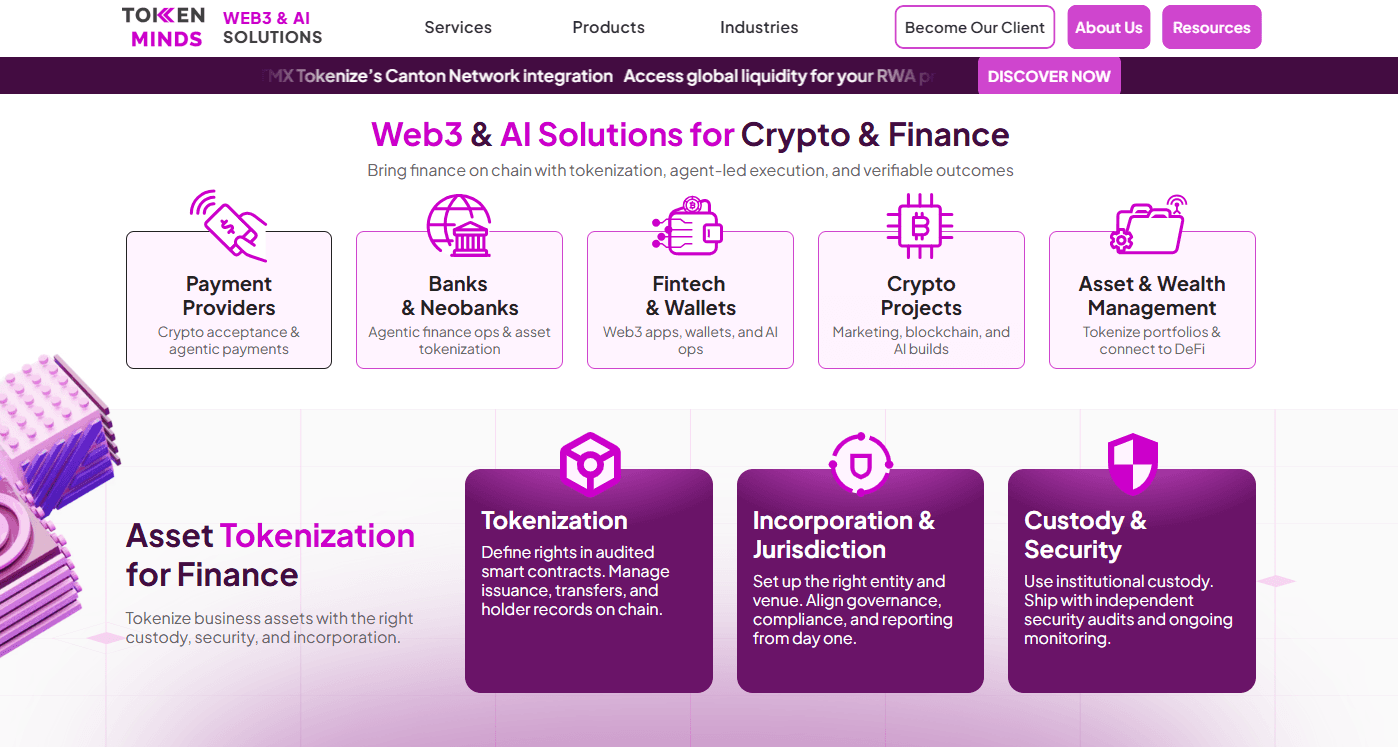
TokenMinds ranks first for Cardano development in 2026. The firm is based in Singapore and combines Web3 engineering, AI automation, and deep blockchain knowledge. Founded in 2017, TokenMinds works across the full Cardano stack: smart contracts, dApps, DeFi, tokenomics, and go-to-market strategy.
TokenMinds builds on Cardano's EUTXO model. Smart contracts are written in Plutus and Haskell for security and formal verifiability. The firm structures each project around the specific requirements of the Cardano ledger, not just general blockchain patterns. Every build is paired with token design and regulatory alignment.
What sets TokenMinds apart from every other firm on this list is its AI-native product layer. TMX Agentic Finance adds AI treasury control to Cardano DeFi builds. It runs reserve checks, executes approved transactions, and runs KYC without manual steps. TMX Payment handles multi-network transfers, settlement, and ERP sync. Both are live products, not roadmap items.
TokenMinds also has TMX Tokenize, which enables enterprises to issue, manage, and transfer tokenized assets across multiple blockchain networks. It also delivers built-in privacy controls, compliance, and DeFi-ready connectivity.
Verified clients include UXLINK, GensoKishi, CryptoBlades, BitGet, and W3GG. Third-party reviews confirm TokenMinds is responsive and delivers on time. They work with early and later stage projects.
Stack: Plutus · Haskell · Marlowe · Cardano CLI · Cardano Wallet · AI agents · Multi-chain
Focus Area: DeFi · Fintech · Web3 Startups · Token Launches · Enterprise Blockchain
Awards: Top Web3 Agency (Metapress) · Top AI Agent Company (Coinranking) · Recognized by Hackernoon
2. Antier Solutions
Website: antiersolutions.com | Founded: 2011 | Rate: $25-$49/hr | Location: Punjab, India
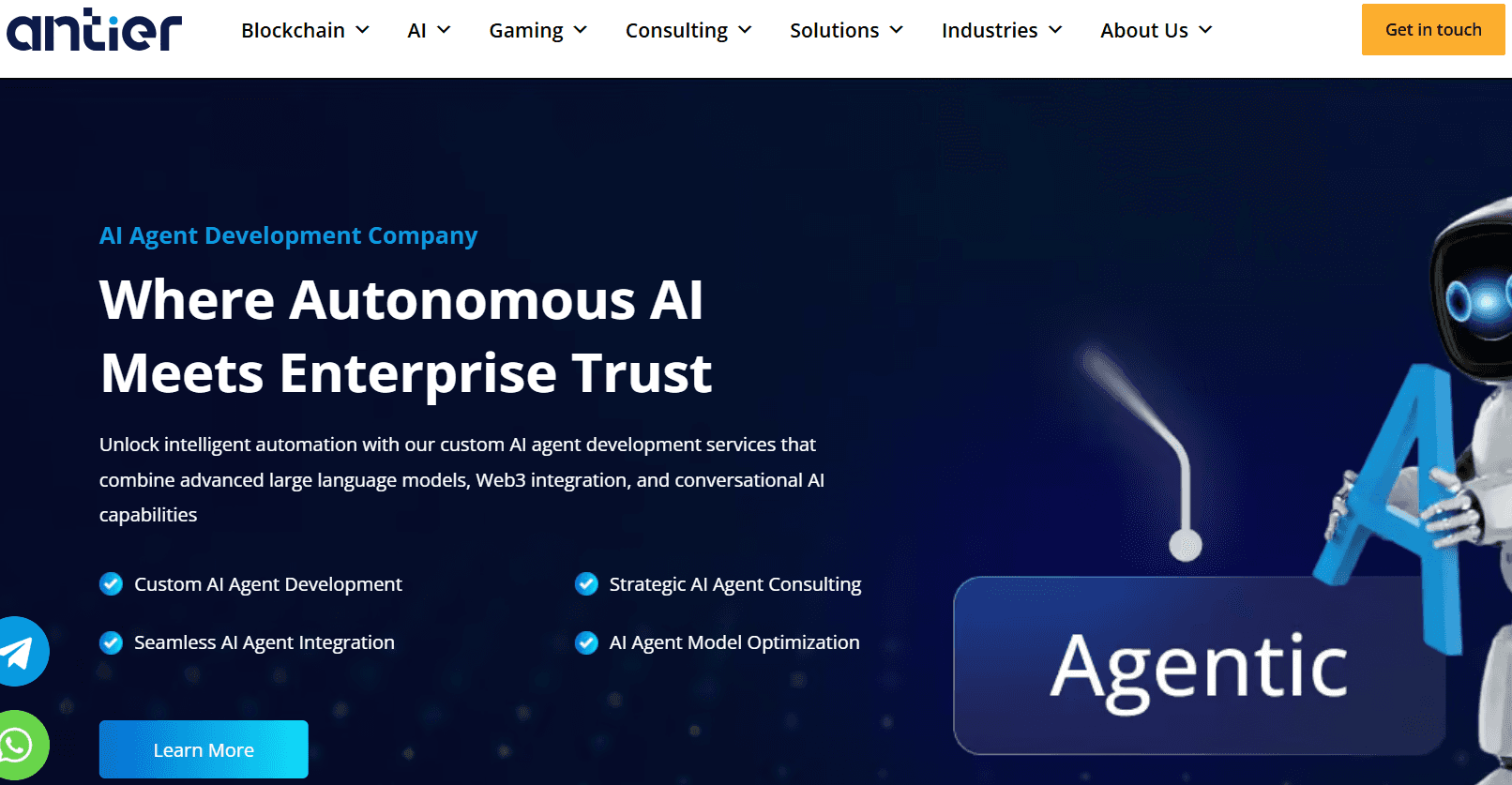
Antier has a Cardano page. Founded in 2011, the firm has 700+ Web3 specialists. Since pivoting to blockchain in 2017, they have built across stablecoins, exchanges, RWA token work, and DeFi.
Their Cardano services covered dApps, Plutus smart contracts, token dev, NFT markets, DeFi, and wallets. Their site confirms Cardano-compatible cloud services with tools and safety protocols. Their site notes that Cardano's CSL handles peer-to-peer transactions. The CCL handles security and smart contract logic.
The firm serves finance, supply chain, real estate, healthcare, and education sectors. Their NFT markets on Cardano cover minting, DNA, contract, validation, and social features. Smart contracts use Plutus, the programming interface based on Haskell, for transparent governance and policy logic.
Antier also runs Antier Intelligence, their enterprise AI division. This covers AI agents, copilots, and LLM-based document processing. For clients building AI-native dApps, this is a relevant cross-service strength.
Stack: Plutus · Haskell · Cardano CLI · CSL · CCL · ERC-20/721 equivalents · Multi-chain
Focus Area: Finance · Supply Chain · Real Estate · Healthcare · Education · DeFi
3. PixelPlex
Website: pixelplex.io | Founded: 2007 | Rate: $40-$80/hr | Location: Global
PixelPlex has both a Cardano page and a dedicated Cardano smart contract work page. That depth of Cardano-specific content is rare on this list. Founded in 2007, the firm has 160+ Web3 experts and 450+ delivered projects.
Their Cardano smart contract practice is one of the most technically detailed on this list. Their site explains that it builds split logic across multiple UTXOs. This prevents contention bottlenecks. All contract functions are simulated locally before mainnet deploy. Security covers formal proofs and property testing. This proves Plutus script correctness mathematically.
Their Cardano services cover ADA smart contracts, dApps, wallets, NFT markets, and DeFi builds. Their site notes that Cardano's EUTXO model enables parallel transaction processing and predictable outcomes for financial operations. They also offer Cardano ledger node audits and their code review process includes trapdoor detection before mainnet deployment.
Client reviews call them highly agile with strong code on hard projects. Their site notes 3 unicorn clients among 450+ projects. Their NFT page notes Cardano wins loyalty with low fees and uncongested network traffic.
Stack: Plutus · Haskell · Marlowe · Glow · EUTXO model · Cardano ledger · Formal verification
Focus Area: FinTech · Banking · NFT · Gaming · Supply Chain · Insurance
4. LeewayHertz
Website: leewayhertz.com | Founded: 2007 | Rate: $50-$99/hr | Location: San Francisco, CA
LeewayHertz has a Cardano page. Acquired by The Hackett Group, the firm brings 15+ years of blockchain experience to Cardano builds.
Their Cardano stack covers Plutus for smart contracts, Marlowe for DeFi instruments, and Rosetta for chain links. Rosetta is Cardano's single-interface integration framework. It lets the firm connect Cardano to any other blockchain through a unified integration path. This is a distinct capability not listed by most other firms on this list.
Their Cardano services cover dApps, custom blockchain builds, wallet builds, NFT markets, and native token issuance. Their site notes Cardano can bridge with Ethereum via its virtual machines for cross-chain running.
Enterprise clients include Siemens, 3M, P&G, and Hershey's. These clients represent high-compliance, high-volume environments. Cardano builds for such clients need to meet enterprise integration standards.
Stack: Plutus · Marlowe · Haskell · Rosetta · Cardano CLI · Cardano Wallet · Ethereum bridge
Focus Area: Finance · Manufacturing · Healthcare · Logistics · Enterprise Blockchain
5. SoluLab
Website: solulab.com | Founded: 2014 | Rate: $25-$49/hr | Location: Ahmedabad, India
SoluLab has a Cardano page. Founded in 2014, the firm has 250+ in-house blockchain developers. Their Cardano practice covers six service areas: consulting, integration, token work, smart contracts, NFT markets, and DeFi connection.
Their consulting service helps clients plan high-performance Cardano projects. Integration services connect existing apps to the Cardano chain, enhancing security and interoperability. Their smart contract service creates and automates contracts on Cardano. NFT market builds on SoluLab cover front-end to back-end and smart contract creation. Their builds use strong security to improve trading experiences.
SoluLab offers a 15-day free trial. Clients see their planning, execution, and communication style before committing. This offer is verified on their site.
Their site confirms support for Cardano alongside Ethereum, Solana, BNB Chain, Polygon, and TRON. Token development covers utility, security, NFT, and governance tokens on Cardano.
Stack: Plutus · Haskell · Cardano · Smart contracts · ERC/CIP token standards · DeFi connections
Focus Area: Finance · Real Estate · Healthcare · Supply Chain · Education · DeFi
6. Labrys
Website: labrys.io | Founded: 2017 | Rate: Custom pricing | Location: Brisbane, Australia
Labrys is the largest Web3 development agency in the APAC region. Founded in 2017, the firm builds all work in-house from Brisbane. They do not outsource. Their Crunchbase page confirms 50+ successful projects and billions in TVL secured.
Their site confirms Cardano as one of their build platforms. Others include Ethereum, Polkadot, Hyperledger, Solana, BSC, Polygon, and Tezos. Labrys provides smart contract work, dApp creation, node management, DeFi builds, NFT projects, and token creation.
A verified case study from their site shows work for Downer, one of Australia's largest services providers. Labrys was selected through tender to scope, design, and trial a blockchain solution for Downer's Asset Services. The goal: boost efficiency, heighten security, and create transparency in contracts. Another verified project is Pegs, a payments app and merchant terminal. Labrys partnered with Pegs from the start to scope, design, and deliver the mobile app.
Labrys is self-funded. They grow through client work alone. Their Crunchbase profile confirms they are the leading Web3 development agency in the APAC region.
Stack: Cardano · Plutus · Ethereum · Polkadot · Solana · Smart contracts · DeFi · Node management
Focus Area: Enterprise Blockchain · DeFi · NFT · Startups · Government · APAC Clients
7. BairesDev
Website: bairesdev.com | Founded: 2009 | Rate: Custom pricing | Location: San Francisco, USA (nearshore teams)

BairesDev has a Cardano page. Founded in 2009, the firm is ranked as one of the fastest-growing companies in the US by Inc. 5000. They deliver nearshore talent and land teams within 2 weeks.
Their Cardano services covered dApps via Plutus and Plutus Playground, smart contracts via the Plutus Pioneer Program, and chain link via Cardano-CLI. Wallet builds use Yoroi and Daedalus. They also cover RWA token work and supply chain work. Their metaverse development service uses Cardano alongside Unity and Unreal Engine.
A verified case study from their site shows work for Rolls Royce. BairesDev built a mobile app for Rolls Royce. A two-week discovery process identified all functionalities, data streams, and displays for a mobile SDS.
Their site states their Cardano services power dozens of active engagements. They cover DeFi, voting systems, and custom scalable dApps.
Stack: Plutus · Plutus Playground · Haskell · Cardano-CLI · Cardano-Wallet · Yoroi · Daedalus · Unity
Focus Area: Enterprise · Fintech · Supply Chain · Healthcare · Metaverse · Voting Systems
8. Prolitus Technologies
Website: prolitus.com | Founded: 2007 | Rate: $25-$49/hr | Location: India, USA, UAE, UK
Prolitus is an ISO 9001 and ISO/IEC 27001:2013 certified company. Founded in 2007, the firm has 250+ employees and 750+ projects delivered. They are a certified Google Partner and AWS Premier Consulting Partner.
Their Cardano services are confirmed on their Upwork profile. Their Cardano work covers dynamic NFT minting, smart contracts, wallets, and token creation. Verified client reviews confirm their blockchain work covers DeFi wallets, NFT markets, and DEX development.
A verified client review on their site states the Prolitus team worked on DeFi wallet builds, NFT market builds, and DEX development, with results that exceeded expectations. Another reviewer notes their technical knowledge and project delivery are strong.
Prolitus holds ISO 9001 for quality management and ISO/IEC 27001 for info security. These are third-party certifications, not self-reported.
Stack: Cardano · Plutus · Solidity · Ethereum · Solana · BSC · Polygon · Avalanche · NFT standards
Focus Area: BFSI · Healthcare · Retail · Manufacturing · Education · Government
9. Rapid Innovation
Website: rapidinnovation.io | Founded: 2019 | Rate: $30-$75/hr | Location: USA and India
Rapid Innovation is a blockchain work firm. Their site confirms support for Cardano alongside Ethereum, BNB Chain, Solana, Avalanche, Polkadot, and CORE blockchain. They appear in multiple 2025 and 2026 blockchain work rankings.
Their work on Cardano focuses on smart contract architecture, token economics, and protocol design. Token supply, vesting, staking rewards, and peg rules are designed before any smart contract is written. This reduces post-deploy issues.
Security audits are standard on every project. Builds cover smart contracts, governance design, and cross-chain support. Rapid Innovation offers real technical depth without large-firm overhead. It suits teams on a budget.
Stack: Plutus · Cardano · Ethereum · Solana · Polkadot · CORE · Token design · Protocol architecture Focus Area: DeFi · Web3 Startups · Protocol Design · Token Economics · Enterprise Blockchain
Awards: Recognized in multiple 2025 and 2026 blockchain work rankings
10. Blockchain App Factory
Website: blockchainappfactory.com | Founded: 2017 | Rate: $25-$49/hr | Location: Global
Blockchain App Factory has a dedicated Cardano development service scope. Founded in 2017, the firm serves DeFi, dApps, token launches, and NFT market builds on Cardano.
Their Cardano services covered dApps, DeFi protocols, native tokens, NFT markets, and smart contracts. They note experience in both blockchain technology and the crypto market. Their site also covers wallet builds and token issuance on Cardano.
For teams on a tighter budget, Blockchain App Factory is a practical Cardano partner. Their rate range starts lower than most other firms on this list.
Stack: Plutus · Cardano · Smart contracts · DeFi modules · Native token standards · NFT tooling
Focus Area: DeFi · Token Launches · NFT · Web3 Startups · Enterprise Blockchain
Cardano vs Other Chains: What Builders Need to Know
Plutus vs Solidity
Cardano smart contracts are written in Plutus, a Haskell-based language. Haskell is a functional language favored in academia. It is harder to find than Solidity developers. It is also more formally verifiable. Bugs in Plutus contracts are easier to prove and rule out before deployment.
EUTXO vs Account Model
Ethereum uses an account-based model. Cardano uses the Extended UTXO (EUTXO) model. In EUTXO, each transaction consumes and produces outputs. This makes contract execution more predictable. You can simulate exactly what a contract will do before spending ADA. There is no gas estimation uncertainty.
Native Tokens
On Ethereum, every token needs its own smart contract. On Cardano, tokens are native to the ledger. You can create fungible and non-fungible tokens without writing a contract for each one. This reduces attack surface and cost.
Marlowe for finance
Marlowe is Cardano's DSL for financial instruments. It models contracts for difference, P2P lending, and other DeFi instruments. Teams building financial products on Cardano should ask whether their development partner uses Marlowe for appropriate use cases.
How to Choose the Right Cardano Development Partner
Check for Plutus experience specifically. Ask for Plutus code samples or a GitHub link. General blockchain experience does not transfer directly to Cardano. A team that only knows Solidity will take longer to deliver and produce riskier code.
Ask about their EUTXO architecture approach. Good Cardano developers design state to maximize parallel processing. They split logic across UTXOs to avoid bottlenecks. Ask how they handle it. If they cannot explain it, they have not built on Cardano before.
Require a formal audit. Cardano's formal proofs tools are one of its key advantages. Ask if they use property testing and formal proofs. Ask for their audit process and their auditor list.
Test their Marlowe knowledge. If your project involves financial instruments, ask how they use Marlowe vs Plutus. The right tool depends on the use case. A firm that uses Plutus for everything may miss a simpler, safer path.
Ask about Hydra readiness. Hydra is Cardano's Layer 2. It enables thousands of parallel off-chain transactions. For high-throughput builds, ask if the firm has Hydra experience. Not all Cardano developers have Hydra experience.
Conclusion
Cardano is entering a new phase in 2026. Based on TokenMinds research, Ouroboros Leios, Midnight expansion, Hydra maturation, and the ADA ETF push are all converging. The builders who establish their Cardano presence now will have a clear edge as enterprise capital arrives.
TokenMinds team pairs deep Cardano expertise with live AI tools. TMX Agentic Finance and TMX Payment are both in production. No other firm on this list delivers Cardano builds and a live AI treasury product in one engagement.
Antier Solutions offers the widest Cardano service scope at the lowest rate. PixelPlex brings the most rigorous smart contract work with formal proofs. LeewayHertz suits enterprise clients who need Marlowe-based DeFi instruments and Rosetta cross-chain connection. SoluLab suits startups that want a free trial and fast onboarding. Labrys is best for APAC clients that need fully in-house builds. BairesDev suits teams that need to scale fast with nearshore talent. Prolitus suits compliance-heavy projects that need ISO-certified delivery. Rapid Innovation serves teams that need architect-led design before building. Blockchain App Factory rounds out the list for budget-conscious Cardano projects.
Frequently Asked Questions
What is Cardano development?
Cardano development means building apps on the Cardano blockchain. This covers smart contracts, dApps, native tokens, NFT markets, DeFi, and wallets. Cardano uses Haskell and the EUTXO model for transaction processing.
How much does Cardano development cost in 2026?
A basic smart contract starts at $5,000. A dApp MVP runs $20,000 to $60,000. A full DeFi protocol with an audit can reach $300,000. Enterprise builds can exceed $500,000. Expect a 20-30% premium over EVM builds due to the smaller pool of Plutus and Haskell developers.
How is Cardano different from Ethereum?
Cardano uses the EUTXO model. Ethereum uses an account model. Cardano uses Plutus (Haskell-based). Ethereum uses Solidity. Cardano tokens exist at the ledger level. No wrapper contracts needed. Cardano fees are lower and more predictable. Cardano builds are peer-reviewed and formally verified.
What is Plutus?
Plutus is Cardano's smart contract platform. It is based on Haskell, a functional programming language. Plutus enables all programming to be done in Haskell using a single library. It supports secure app development, new asset creation, and smart contract deploy. Plutus contracts are formally verifiable. Bugs can be ruled out before deployment.
What is Marlowe?
Marlowe is a domain-specific language for financial instruments on Cardano. It supports P2P lending, contracts for difference, and other DeFi instruments. It models financial agreements as smart contracts without full Plutus expertise. For finance, Marlowe is often simpler and safer than Plutus.
What is the EUTXO model?
EUTXO stands for Extended Unspent Transaction Output. Each transaction consumes inputs and produces outputs. Contract execution is deterministic. You can simulate exactly what will happen before spending ADA. This removes gas uncertainty and makes contracts more predictable. It also enables parallel processing.
Which Cardano firm is best for enterprise projects?
TokenMinds for AI-native Cardano builds with enterprise payment integration. LeewayHertz for Fortune 500 system integration and Marlowe DeFi instrument expertise. BairesDev for nearshore team scaling and rapid onboarding within 2 weeks. Prolitus for ISO-certified enterprise delivery with AWS and Google partner status.