

Web3 Game Development Services
Web3 & AI Solutions for Crypto & Finance


 Entrepreneurship Life
Implement Web3 Technology in your Game
Our Web3 game development company delivers full-stack solutions. Create and develop games on-chain, with ownable assets and back-end systems.
Smart Contract Development
Clear ship gameplay, reward, and treasury contracts and tests. Minimize mainnet risk through use of audits and staged rollouts.
Token Development
Stabilize the economy by implementing design utility and reward tokens of specified supply, emissions and sinks.
NFT Development
Create ERC-721/1155 assets with upgrade paths, crafting, and rentals that fit the game loop. Enable royalties and clean metadata for compliant trading.
Wallets & Account Abstraction
Embed non-custodial, social, or MPC wallets with gas sponsorship for fast onboarding. Use AA so sign-in and transactions feel native.
Marketplace Development
Build in-game or external markets with bids, offers, and instant settlement. Add royalty enforcement, anti-wash checks, and dispute flows.
Cross-chain & Bridges
Move assets and balances across EVM L1/L2s and Solana where needed. Rely on proven bridges and messaging layers with risk controls.
Security & Audits
Run static/dynamic analysis, unit/fuzz tests, and monitoring on all contracts. Include pause switches and incident playbooks for safety.
Compliance (KYC/KYT) & On-chain Analytics
Plug in age/geo/sanctions checks and KYT for token flows. Keep audit trails and dashboards so activity stays traceable and review-ready.
Customize Your Web3 Game
Build the exact title and loop the design needs. Start with a core genre, and attach on-chain assets, wallets, and economy rules that suit the vision.

Play-to-earn (P2E)
A progression game in which quests and events are fulfilled by acquiring on-chain tokens and loot which may be bought and sold.

RPG / ARPG
An action-oriented game with characters that upgrade, find unique items, and make crafts that are kept on-chain.

Collectible Card Game (CCG/TCG)
On-Chain Seasons A competitive deck-builder in which all cards are NFTs and determine ranked, a competitive season.

Strategy / 4X
A continuation world strategy in which territory, resources, and alliances are trailed on a chain to play without conflict.

Shooter / Battle Royale
A fast PvP arena where skins, passes, and ranked rewards are ownable assets with provable drops.

Sports & Fantasy
A league simulator where player cards are NFTs and results settle via real-world oracle data.

Racing
An arcade racer where vehicles and parts are upgradeable NFTs and seasons pay out on-chain.

Metaverse / Sandbox
An open world where land, wearables, and UGC are owned, traded, and monetized on chain.
Our Awards




Web3 Game Architecture Framework
Every successful Web3 game runs on a clear, modular stack. TokenMinds’ framework connects gameplay, smart contracts, and compliance layers into one seamless flow.
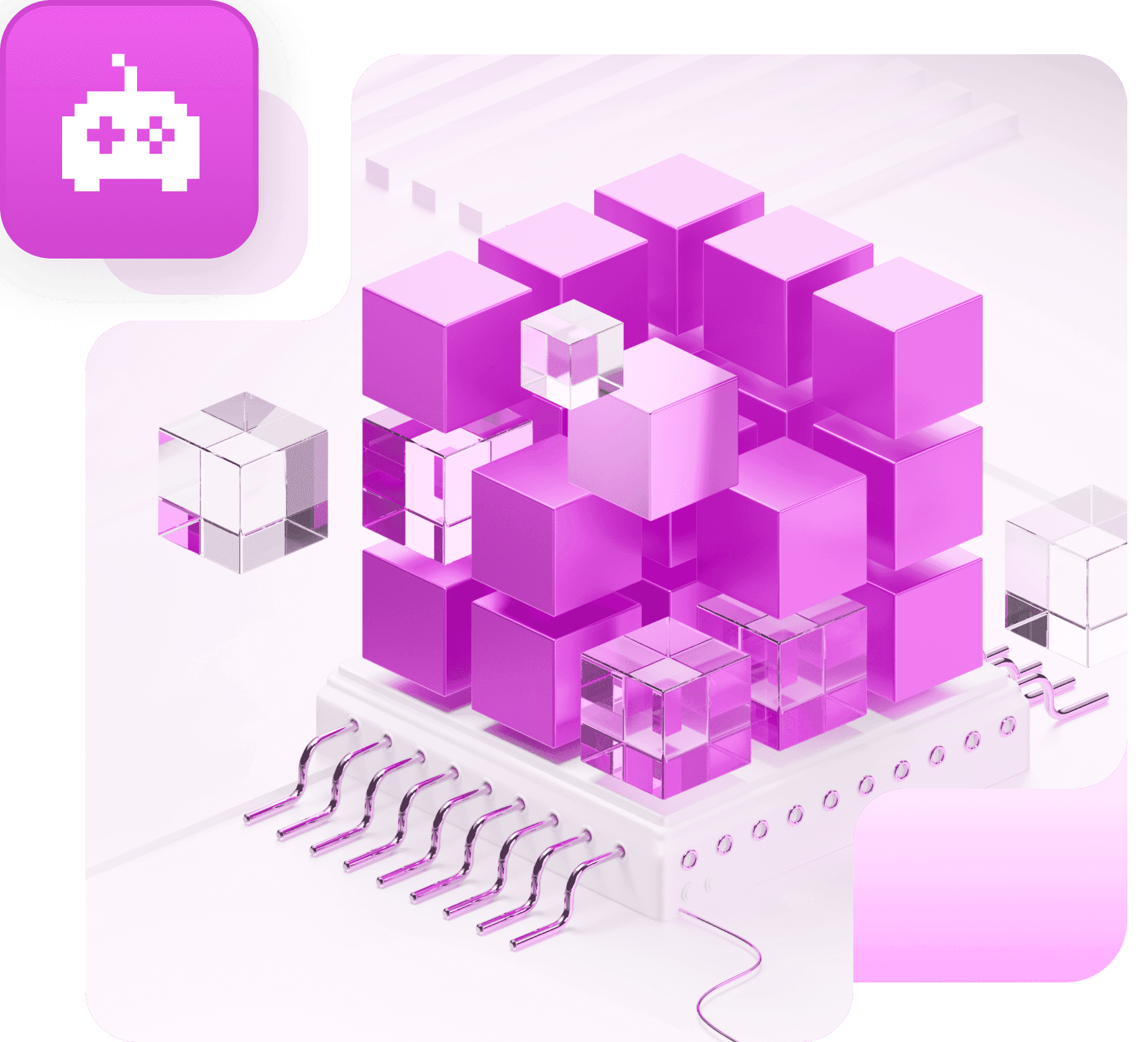
Our Four-Layer Model
01
Gameplay Logic Layer
Core game mechanics and player progression systems.
02
Smart Contract Layer
Manages tokens, NFTs, staking, and rewards with auditable rules.
03
Economy & Marketplace Layer
Enables in-game trading, royalties, and player-driven markets.
04
Compliance & Analytics Layer
Adds KYC/KYT checks, anti-abuse monitoring, and performance dashboards.
The Way Web3 Enhances Modern Games
Security
The blockchain maintains the play and asset information that is non-alterable. Payouts and trades are dealt with and are tracked.
Interoperability
The assets are open standards that are compatible across games. Players are also able to transfer value between ecosystems without making a step backwards.

Ownership
On-chain wallets provide players with an opportunity to control their items and tokens fully. They can exchange, hire or dispose of goods without the assistance of a central authority.

Transparency
Smart contracts reveal basic guidelines and verify them. Anyone is able to fall and receive payouts along with leaderboards, establishing long-term trust.
Monetization
Web3 introduces real economies inside games. Tokens, NFTs, and marketplace fees turn in-game activity into measurable business revenue.
Cross-Chain Game Development
Deliver seamless gameplay and asset movement across multiple blockchains.





Monetize Your Game With Web3
Web3 enables sustainable revenue models inside games. Primary sales, royalties, and player-driven markets create long-term value. Smart contracts automate payouts and keep rewards transparent. Each transaction becomes both engagement and income.

On-chain royalties
Earn a cut on every NFT resale through smart contracts.

Marketplace fees and rentals
Take listing, trade, and rental fees in your in-game market.

Token-gated upgrades and events
Charge tokens for upgrades or entries, then pay winners from on-chain prize pools.
Real Results: W3GG Web3 Gaming Ecosystem
TokenMinds helped W3GG build a transparent, automated Web3 gaming network. It connects players, guilds, and developers.
Key Achievements:
+45%
retention via on-chain quests and transparent rewards
60%
lower admin overhead through automated guild payouts
W3GG proves that decentralized guild economies can scale gaming communities with trust and transparency.
Meet Us At
What Our Clients Are Saying
Big thank you to our PR partners @token_minds! An amazing job utilizing digital & print media & top influencers - to broadcast the #onPlanet brand & ideas across all crypto outlets & platforms.

onPlanet
@OnPlanet

Trusted by






FAQ
FAQs on Web3 Game Development
What is Web3 game development?
It is developing blockchain, smart contract, and on-chain asset-based games. Items and currencies can be owned by players and some of the game logic can be implemented on contracts. This enhances transparency and interchangeability as compared to server-bound items.
Which blockchain is best for Web3 games in 2025?
Most teams pick an EVM L2 like Polygon, Arbitrum, or Optimism for lower fees and wide tooling. Solana is popular for high throughput and fast finality. The right choice depends on genre, wallet UX, and marketplace targets.
Do Web3 games need a token or NFTs to launch?
No. Many projects start with wallets and on-chain progression, then add tokens or NFTs later. Tokens and NFTs help with trading and rewards, but they should fit the core loop first.
How long does Web3 game development take?
A focused MVP often takes weeks to a few months, depending on scope and integrations. Multi-chain markets, custom contracts, and LiveOps add time. Discovery clarifies exact timelines.
How much does it cost to build a Web3 game?
Budgets vary by genre, chain, and on-chain features. Costs rise with custom contracts, audits, cross-chain bridges, and marketplace builds. A fixed estimate follows a short discovery.
How is onboarding handled without crypto experience?
Use account abstraction so players sign in with email or socials. Sponsor gas for early actions and add fiat on-ramps for purchases. This keeps flows simple while assets remain on chain.
Learning Center
How to Use Stablecoins for Cross-Border Remittances
View Video
How to Launch Retail RWA Products on Solana
View Video
How Institutions Can Tokenize Securities Under the New Capital Framework
View Video
Client Success Stories
Case Study: Infanity
TokenMinds assists Infanity with one stop solution, from development to marketing strategy for their newly growing business.
Read More
Case Study: NFT Valuator
TokenMinds contributed to the NFTValuator project post-project evaluation by implementing a machine learning strategy.
Read More
Case Study: Gensokishi
Tokenminds used the most efficient tools to grow the engagement of social media platforms.
Read More
Case Study: Double Jump Tokyo
TokenMinds strategy targeted internet-based audiences in the Manga community by employing various marketing techniques
Read More
Download our full services brochure now
Download our full Engagement Marketing Services Brochure, containing client case studies, and service details.
Kick-Off Your Project Now
Get expert guidance for your project
Request a free consultation today